Cape Town in Summer: A Villa Guide to the Festive Season and Beyond
Planning Christmas, New Year or a summer stay in Cape Town? How the December to March season works, which weeks suit families and groups, and five private villas.
When the northern hemisphere goes dark and cold, Cape Town is at the height of its year. The long summer here runs from December into March, and it is the reason a Christmas spent on the Atlantic Seaboard has become a fixture for families who used to spend the holidays indoors. This guide is organised by the calendar rather than the map. It walks through the season as it actually unfolds, from the festive fortnight to the Cycle Tour in March, and explains which kind of house suits which part of it. If you are still choosing between neighbourhoods, our companion guide to where to stay in Cape Town covers Camps Bay, Clifton, Constantia and Bishopscourt in detail. Here the question is different: when to go, how long to stay, and what the weeks of the summer are like from inside a private villa. Why the Cape Town summer is the one to plan around Cape Town is a southern-hemisphere city, so its seasons run the opposite way to London or New York. The villa peak sits between November and March. That inversion is the whole appeal for a traveller from the north: the school holidays, the office shutdown and the longest days of the Cape year all arrive together. The United Kingdom is the leading source market for the city, ahead of the United States, and the pattern makes sense. A family can leave a grey December and be eating lunch outside by the next afternoon. The summer is also long enough to have distinct phases. December builds toward the festive fortnight. Early January carries the city through New Year and into its own street celebrations. The weeks after that settle into a slower rhythm, when the beaches stay warm and the city returns to work around you. By mid-March the Cycle Tour marks the last big weekend of the season. Knowing which phase you want is the first decision, and it shapes the second one, which is the house. Clifton faces west, so the summer evenings end with the sun going down over the water December and the festive fortnight The two weeks around Christmas and New Year are the most contested stretch of the Cape Town calendar. Local families head to the coast, international travellers arrive in numbers, and the houses with the best positions are the first to be spoken for. The practical consequence is simple. If the festive fortnight is the trip, the decisions that matter most are the headcount and the address, and both are easier to settle months ahead than in November. A villa changes what the holidays feel like. Christmas lunch happens at your own table, cooked in your own kitchen or arranged through our concierge, rather than in a hotel dining room booked in two sittings. Children have a garden and a pool on their own schedule. Grandparents can take a quiet floor. Every home in this guide carries a minimum stay of three nights, and for the festive weeks most groups settle in for considerably longer, which suits a house far better than a hotel room. For the festive fortnight on the coast, Ocean Breeze in Camps Bay is the house most
When the northern hemisphere goes dark and cold, Cape Town is at the height of its year. The long summer here runs from December into March, and it is the reason a Christmas spent on the Atlantic Seaboard has become a fixture for families who used to spend the holidays indoors. This guide is organised by the calendar rather than the map. It walks through the season as it actually unfolds, from the festive fortnight to the Cycle Tour in March, and explains which kind of house suits which part of it.
If you are still choosing between neighbourhoods, our companion guide to where to stay in Cape Town covers Camps Bay, Clifton, Constantia and Bishopscourt in detail. Here the question is different: when to go, how long to stay, and what the weeks of the summer are like from inside a private villa.
Why the Cape Town summer is the one to plan around
Cape Town is a southern-hemisphere city, so its seasons run the opposite way to London or New York. The villa peak sits between November and March. That inversion is the whole appeal for a traveller from the north: the school holidays, the office shutdown and the longest days of the Cape year all arrive together. The United Kingdom is the leading source market for the city, ahead of the United States, and the pattern makes sense. A family can leave a grey December and be eating lunch outside by the next afternoon.
The summer is also long enough to have distinct phases. December builds toward the festive fortnight. Early January carries the city through New Year and into its own street celebrations. The weeks after that settle into a slower rhythm, when the beaches stay warm and the city returns to work around you. By mid-March the Cycle Tour marks the last big weekend of the season. Knowing which phase you want is the first decision, and it shapes the second one, which is the house.
December and the festive fortnight
The two weeks around Christmas and New Year are the most contested stretch of the Cape Town calendar. Local families head to the coast, international travellers arrive in numbers, and the houses with the best positions are the first to be spoken for. The practical consequence is simple. If the festive fortnight is the trip, the decisions that matter most are the headcount and the address, and both are easier to settle months ahead than in November.
A villa changes what the holidays feel like. Christmas lunch happens at your own table, cooked in your own kitchen or arranged through our concierge, rather than in a hotel dining room booked in two sittings. Children have a garden and a pool on their own schedule. Grandparents can take a quiet floor. Every home in this guide carries a minimum stay of three nights, and for the festive weeks most groups settle in for considerably longer, which suits a house far better than a hotel room.
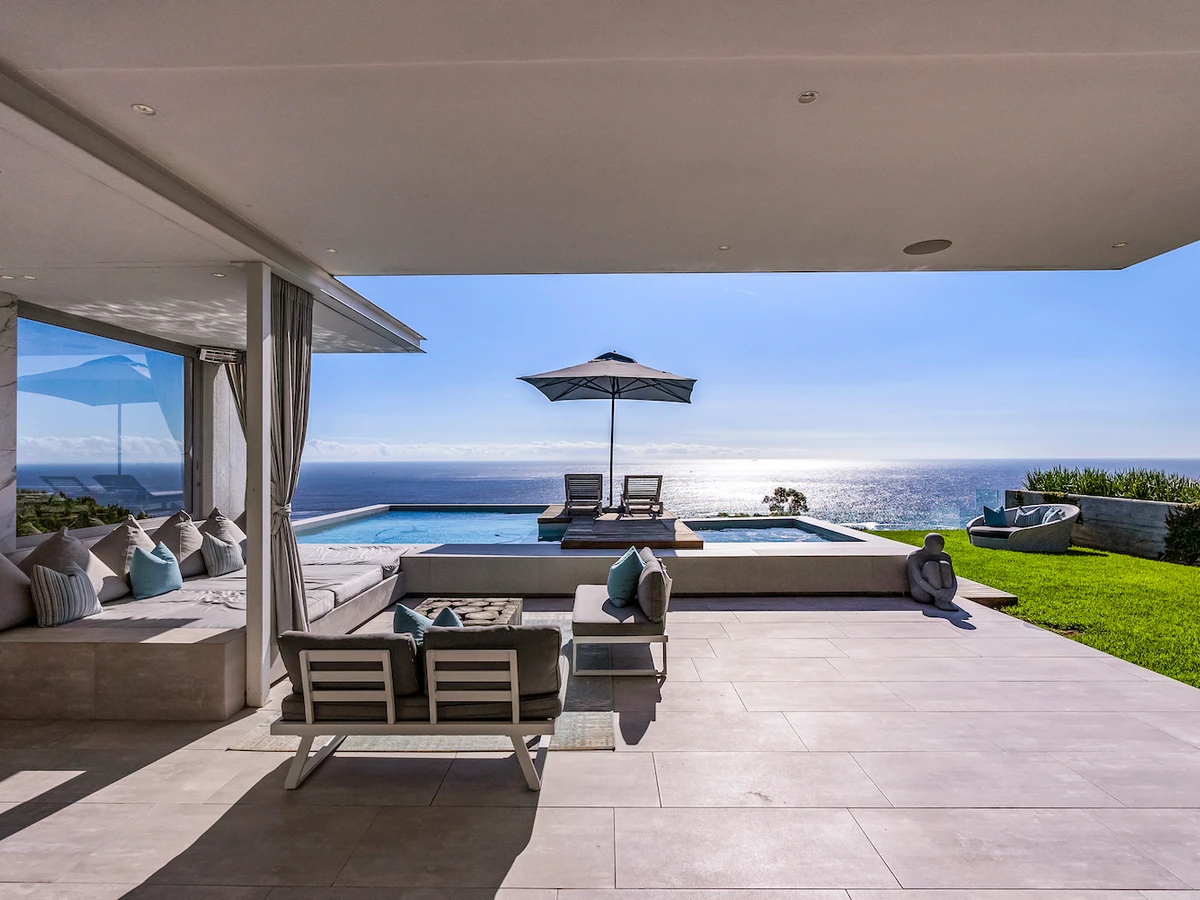
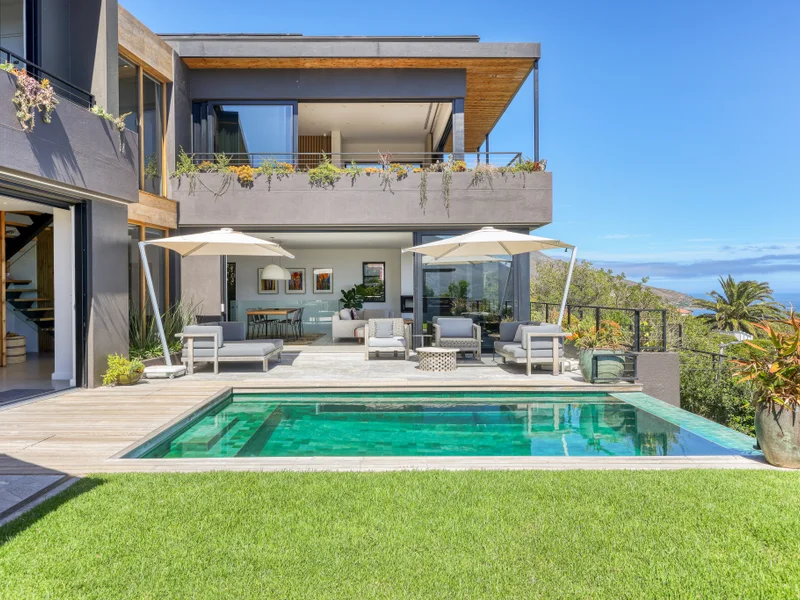
For the festive fortnight on the coast, Ocean Breeze in Camps Bay is the house most people picture: four levels cut into the slope, a rim-flow pool aimed at the sea, four en-suite bedrooms, and a self-contained guest apartment that gives a second couple or an older relative their own space. It is within walking distance of Camps Bay beach and the restaurant strip, so the evenings do not depend on a car.
New Year and Tweede Nuwe Jaar
New Year in Cape Town is a two-day affair. After the first of January comes Tweede Nuwe Jaar, the second new year, when the Cape Town Minstrel Carnival takes its street parade through the city on 2 January. It is one of the signature days of the Cape Town year, with costumed troupes, live music and crowds along the route. For visitors it is a real reason to stay in the city through the first days of January rather than flying home on the first.
Where you stay decides how you see it. A house on the Atlantic Seaboard puts the beach first and the city a short trip away. A house in the southern suburbs trades the sea view for gardens and space, which many families prefer once the holiday crowds are at their height. The villas in this guide are residential homes and host events only by prior arrangement, so the New Year plan works best as a private dinner for the people staying in the house rather than a party.
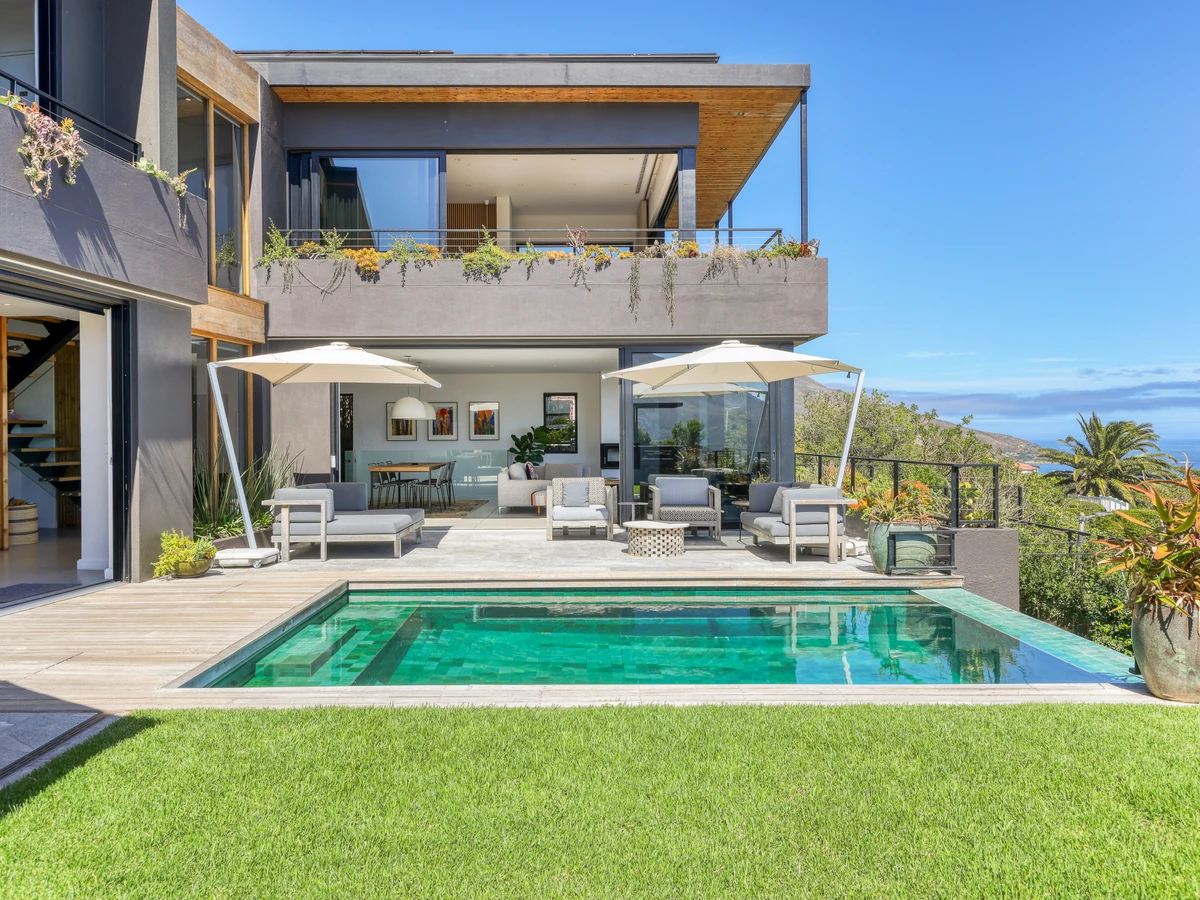
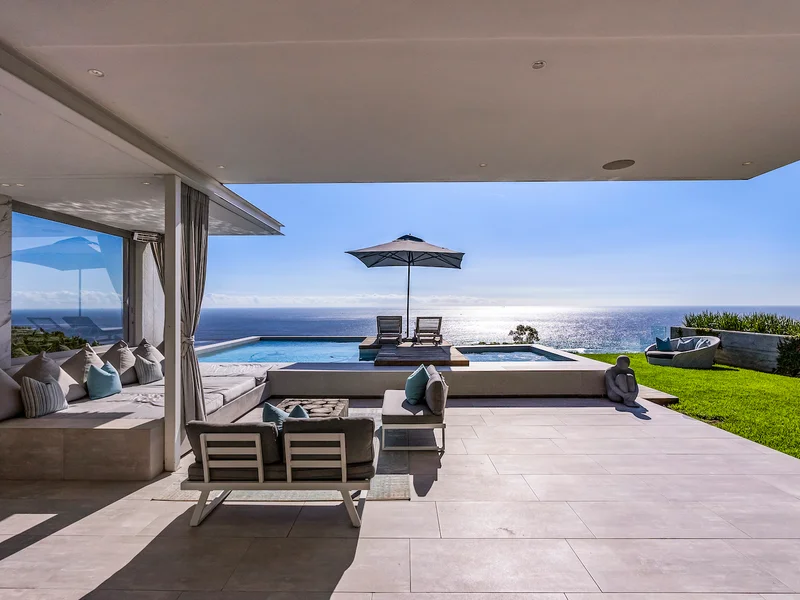
For a group of up to ten seeing in the year together, Chas Booth sits high in Camps Bay with an outlook that goes all the way around: ocean on one side, the Twelve Apostles on the other, the city lights after dark. Five en-suite bedrooms, a pool and a jacuzzi, a gym and a sauna, two gardens, and a house manager and housekeeper who run the property day to day. On a night when everyone wants to be looking at the same view, that elevation is the point.
January and February: the long settled summer
Once the festive visitors leave, Cape Town settles into the part of the summer that regular visitors often rate highest. The beaches are still the reason to be here, the city is back at work, and the pace of a stay slows down. This is the window for a longer trip rather than a holiday fortnight: a remote-working month, a family that can take children out of the northern winter for longer, or a couple who want the coast without the peak-season crowd.
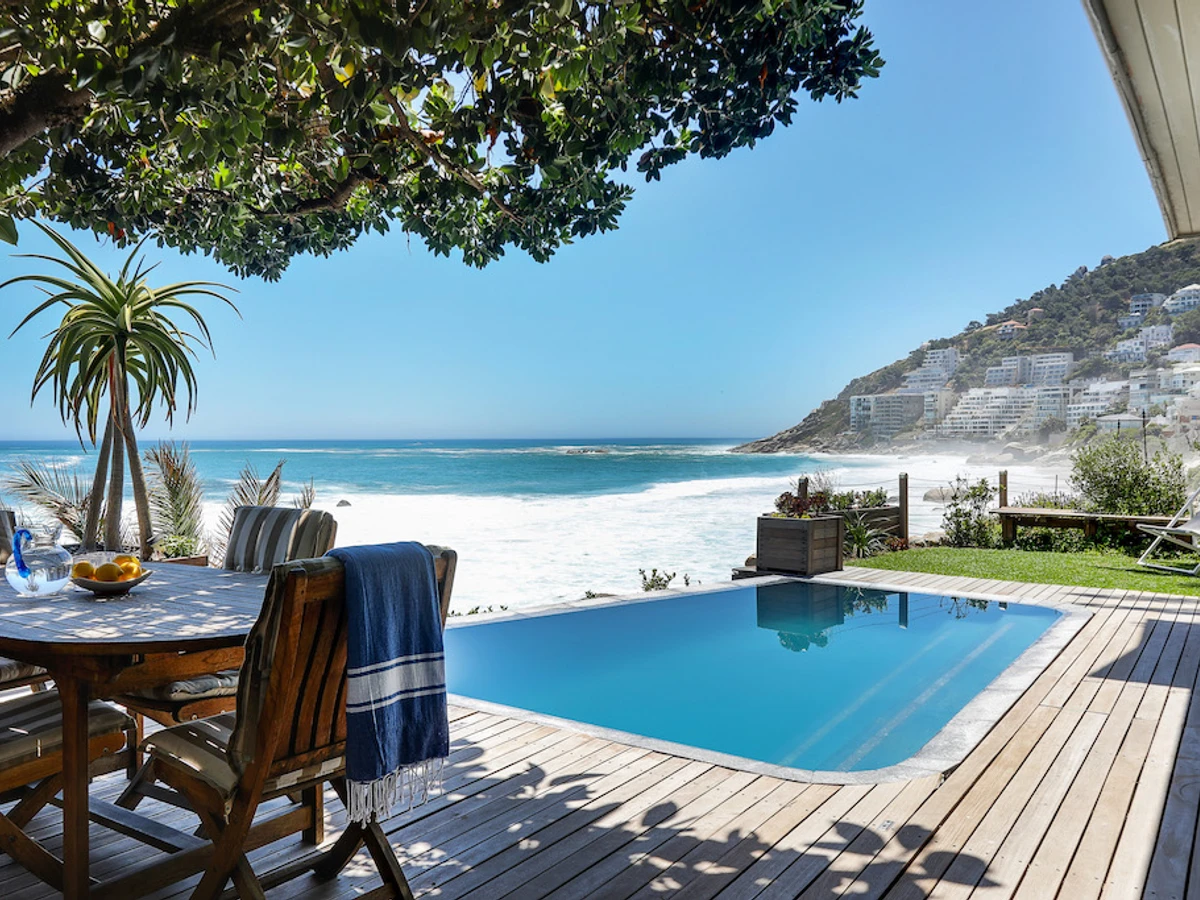
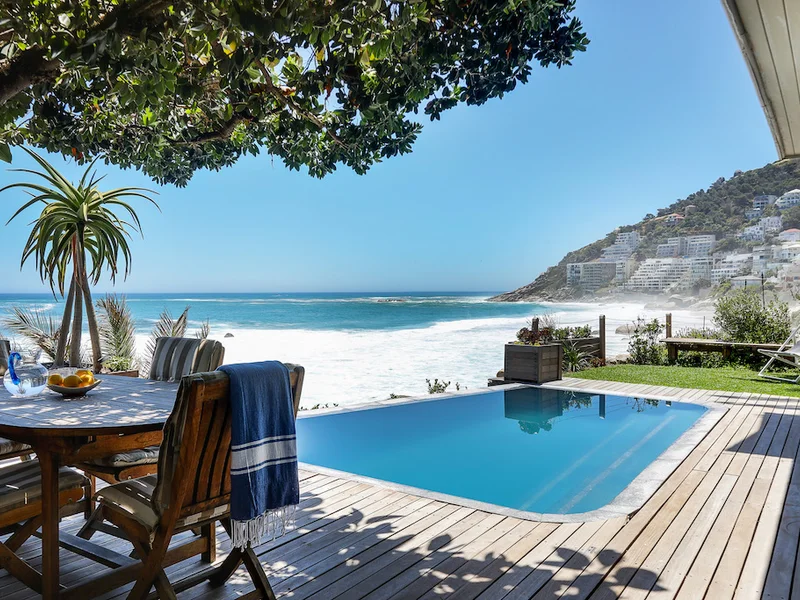
Clifton is the address for this kind of stay. Clifton Sommerhus has direct access to Clifton Second Beach, one of the sheltered white-sand coves that make Clifton the most sought-after stretch of coast in the city. Three en-suite bedrooms, an infinity pool that faces straight into the sunset, housekeeping and 24-hour security. The third bedroom is fitted with bunk beds for two children, which makes it a strong fit for a young family as well as for two couples.
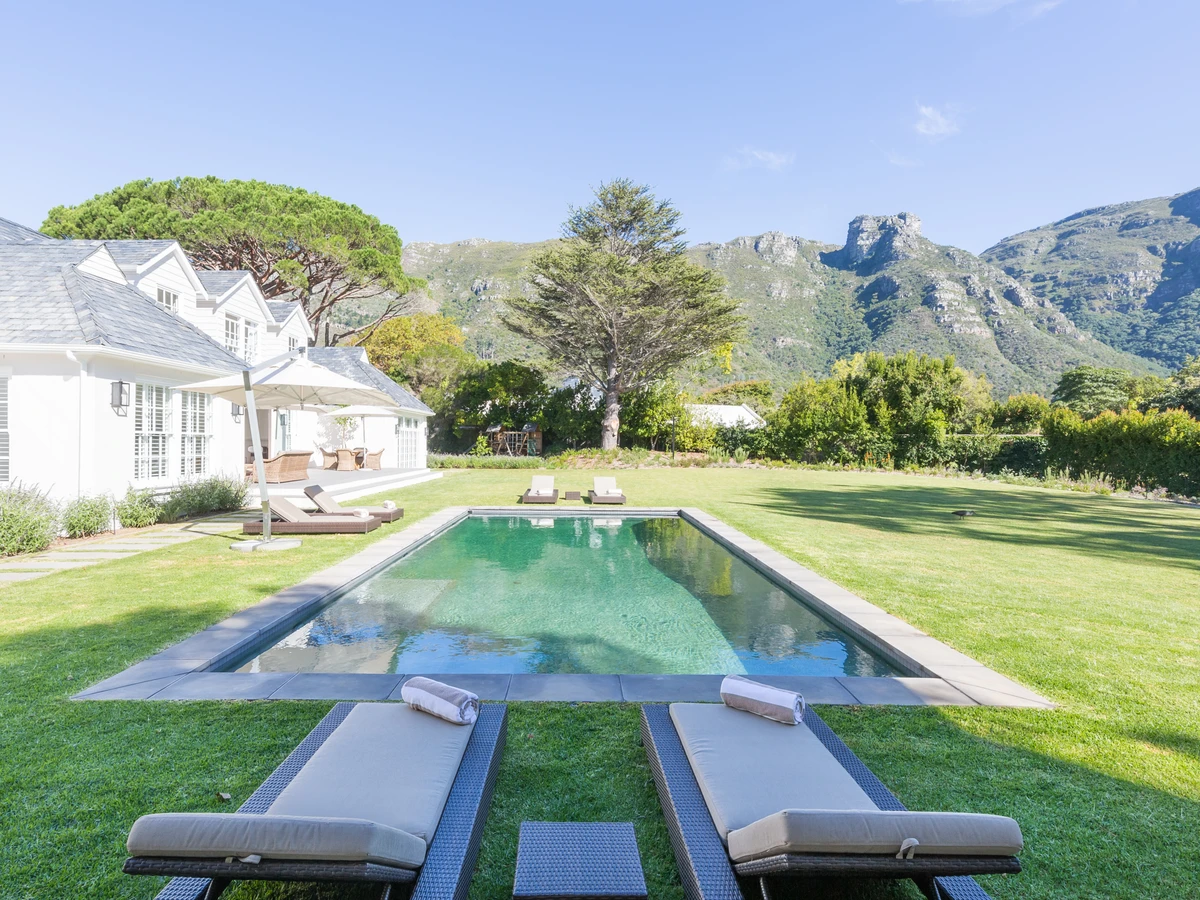
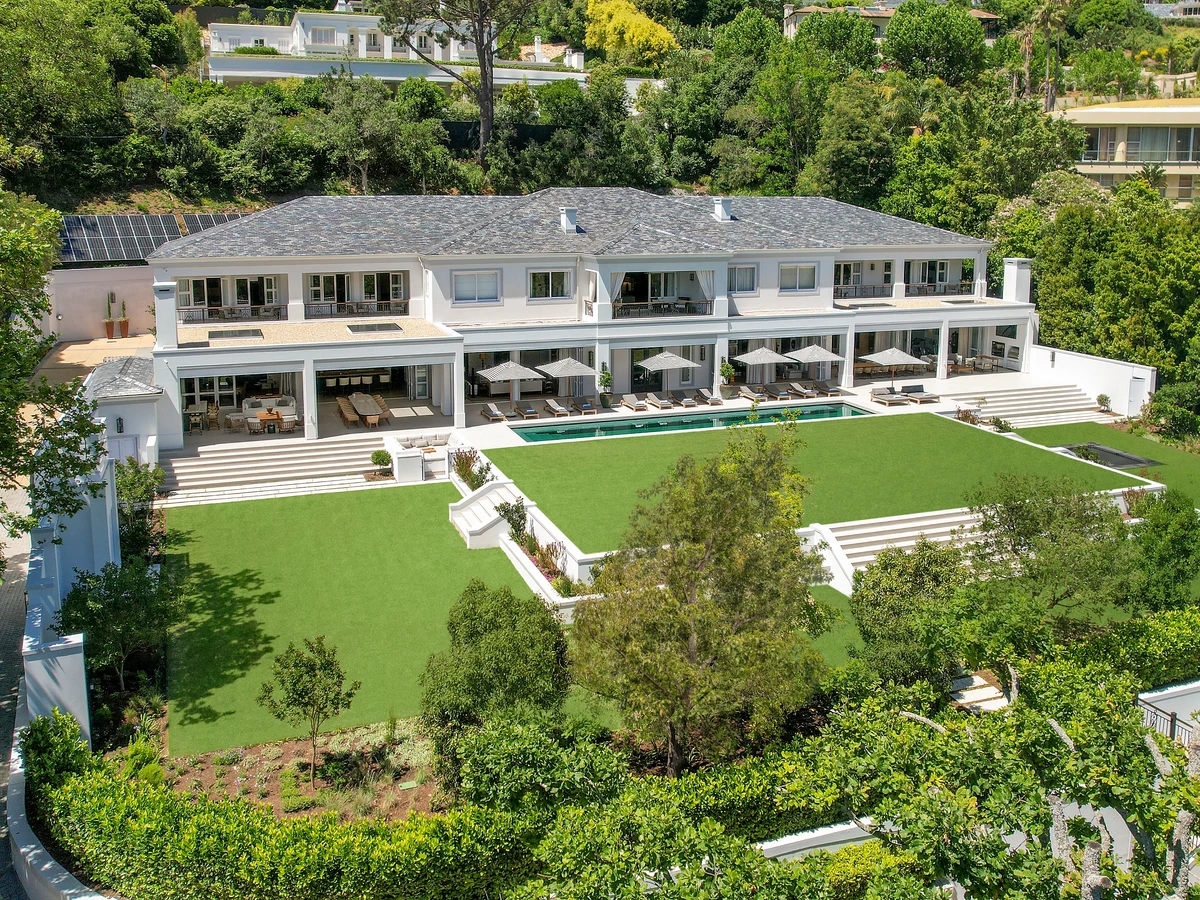
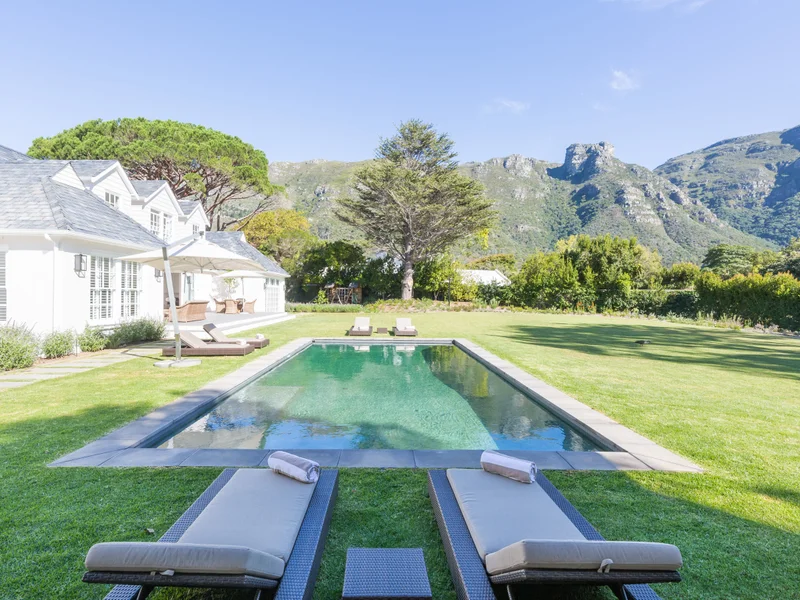
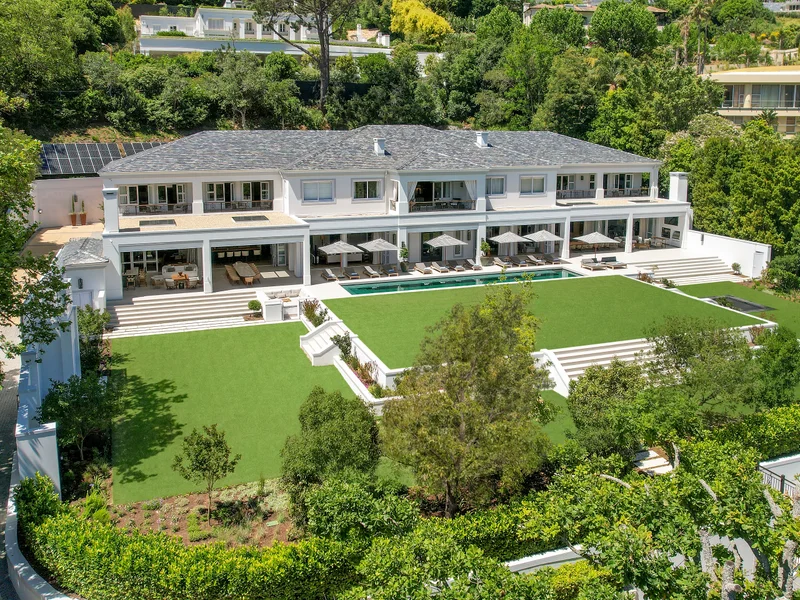
For families who want space over sand, the southern suburbs come into their own in these months. Skydance Villa in Constantia is a six-bedroom house in Cape Town wine country, close to Kirstenbosch Botanical Garden and the Constantia wine estates, with a pool and its own pool room, a gym and a study in a garden that runs to the treeline.