Amalfi for the Second-Time Visitor: Why Repeat Travelers Book Praiano, Not Positano
Why repeat Amalfi visitors book Praiano, not Positano. Villa Ferida, the 17th-century noble home with Pucci textiles, indoor 35 degree pool, and the 89-year-old NYC client who books six weeks a year.
There is a reliable signal in the rental industry: how long do guests stay. Weekend bookings tell you the property was good for a weekend. Two-week bookings tell you the property worked for a holiday. Six-week bookings, repeated year after year by the same client, tell you something else entirely. Villa Ferida's booking calendar this season has an 89-year-old New York client who books four weeks every year and asked for six this time. A new guest is taking two weeks. A returning guest from Bravo Villas is also booking four. The owner, who moved from Milan thirteen years ago and was supposed to stay two years, says the villa has shifted from the typical one-week or ten-night Amalfi stay into a long-stay rhythm where guests come for a month and let the season pass around them. That is not the kind of pattern that happens at properties that cannot hold a guest's interest beyond a long weekend. Why Praiano Instead of Positano For the first-time Amalfi visitor, Positano is the right answer. The village is the postcard, the photo, the energy. By the third or fourth visit, the same traveler starts to do the math on the trade-offs: the staircase climb, the high-season crowds on the main lanes, the difficulty of finding a quiet morning. They start asking the question that leads them to Praiano. Praiano sits ten minutes south of Positano on the coastal road, between Positano and Amalfi proper. It is a working fishing village. There is a local beach, a famous nightclub carved into a sea cave (L'Africana, since the sixties), a quieter restaurant scene, and a coastline that is the same Amalfi but turned down a few notches. The repeat traveler does not lose Positano. They drive to it for dinner, then drive home to silence. Lucia, the Milan Transplant Villa Ferida was a 17th-century noble family home before it was a luxury rental. The owner restored it without losing the original stone or proportion. She lives nearby. She arrives for every check-in personally and stays a few hours. She comes back twice a week through every stay plus the Saturday checkout. She is reachable on the phone twenty-four hours a day in between. She has been doing this for thirteen years. The two house staff arrive at seven every morning and stay four or five hours. Daily breakfast included. Bath linen changed daily. Bed linen mid-week. The rhythm is a small private hotel that happens to be wholly owned by one woman. The indoor pool sits under a glazed skylight ceiling painted with frescoes, jets and chromotherapy, held at 35 degrees year-round. The Welcome Aperitif That Is Almost a Dinner Lucia greets you with what she calls a welcome aperitif, but it is functionally a full dinner. Caprese. Finger food. The traditional confetti, chocolate on the outside and almond on the inside. Champagne, soft drinks, salami, cheeses, fresh fruit. She is the first to laugh about it. The aperitif is the calibration moment. It tells you the villa is going to over-deliver across the rest of the stay. The
There is a reliable signal in the rental industry: how long do guests stay. Weekend bookings tell you the property was good for a weekend. Two-week bookings tell you the property worked for a holiday. Six-week bookings, repeated year after year by the same client, tell you something else entirely.
Villa Ferida's booking calendar this season has an 89-year-old New York client who books four weeks every year and asked for six this time. A new guest is taking two weeks. A returning guest from Bravo Villas is also booking four. The owner, who moved from Milan thirteen years ago and was supposed to stay two years, says the villa has shifted from the typical one-week or ten-night Amalfi stay into a long-stay rhythm where guests come for a month and let the season pass around them. That is not the kind of pattern that happens at properties that cannot hold a guest's interest beyond a long weekend.
Why Praiano Instead of Positano
For the first-time Amalfi visitor, Positano is the right answer. The village is the postcard, the photo, the energy. By the third or fourth visit, the same traveler starts to do the math on the trade-offs: the staircase climb, the high-season crowds on the main lanes, the difficulty of finding a quiet morning. They start asking the question that leads them to Praiano.
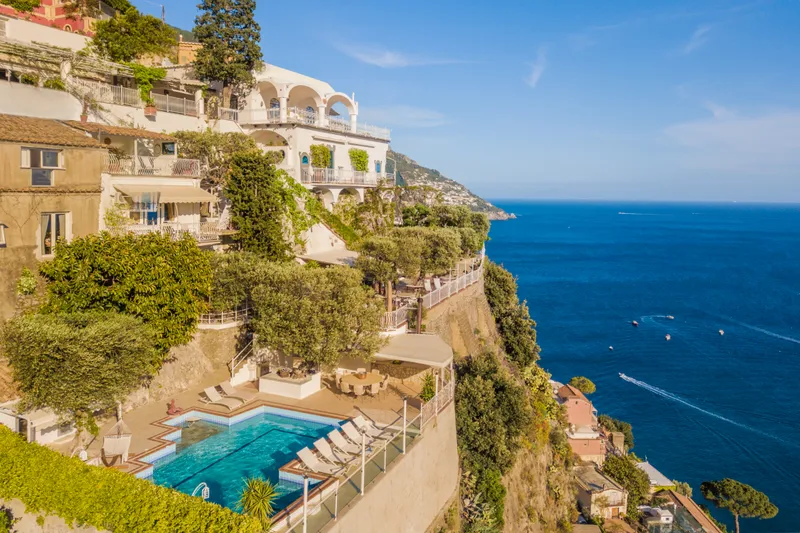
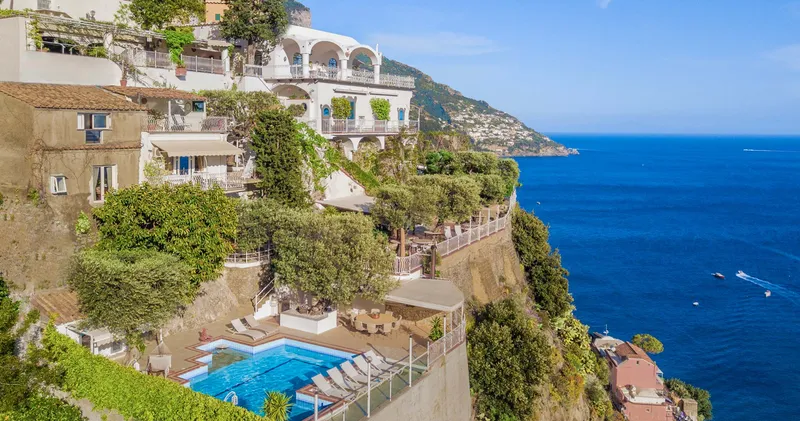
Praiano sits ten minutes south of Positano on the coastal road, between Positano and Amalfi proper. It is a working fishing village. There is a local beach, a famous nightclub carved into a sea cave (L'Africana, since the sixties), a quieter restaurant scene, and a coastline that is the same Amalfi but turned down a few notches. The repeat traveler does not lose Positano. They drive to it for dinner, then drive home to silence.
Lucia, the Milan Transplant
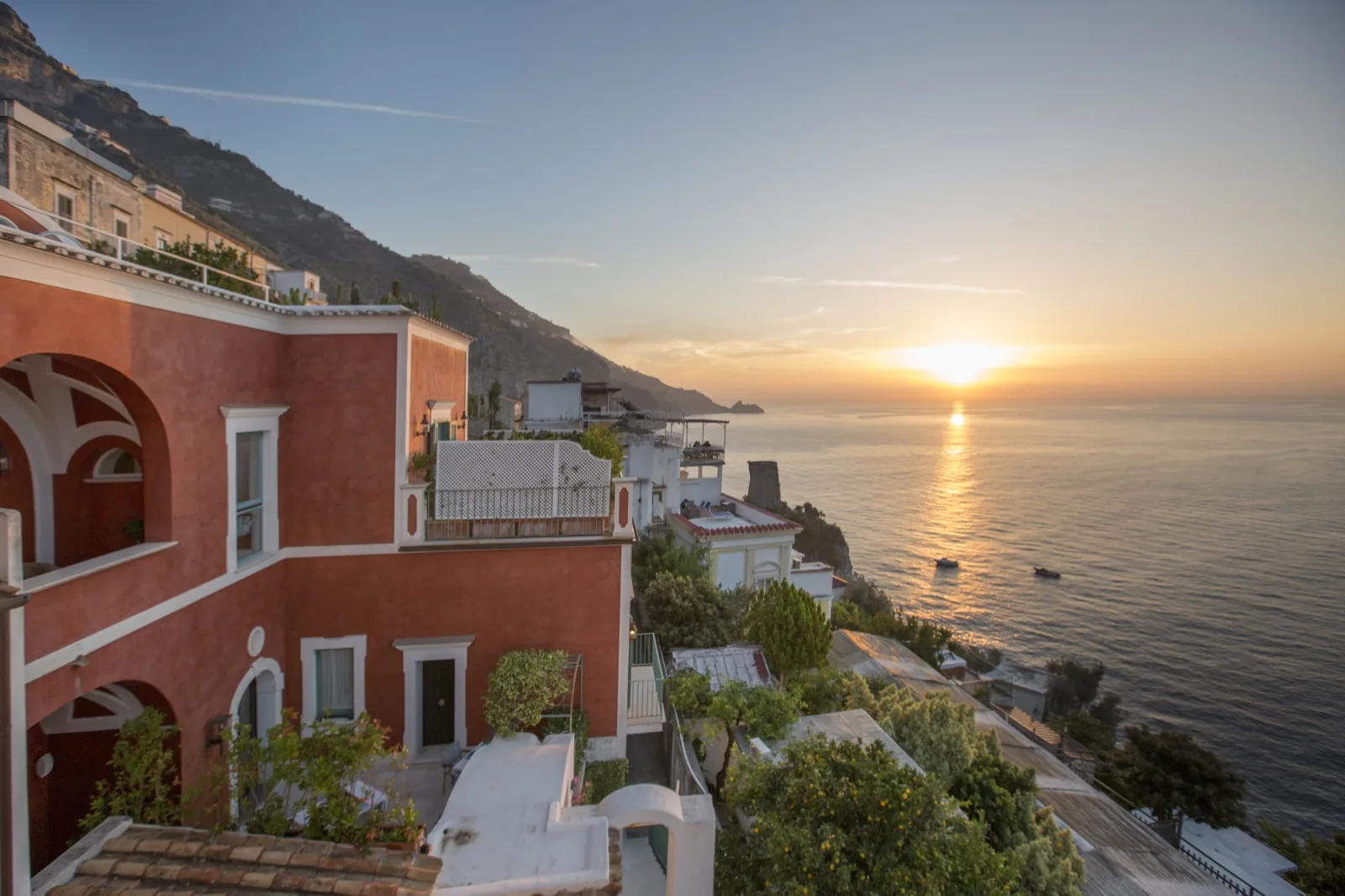
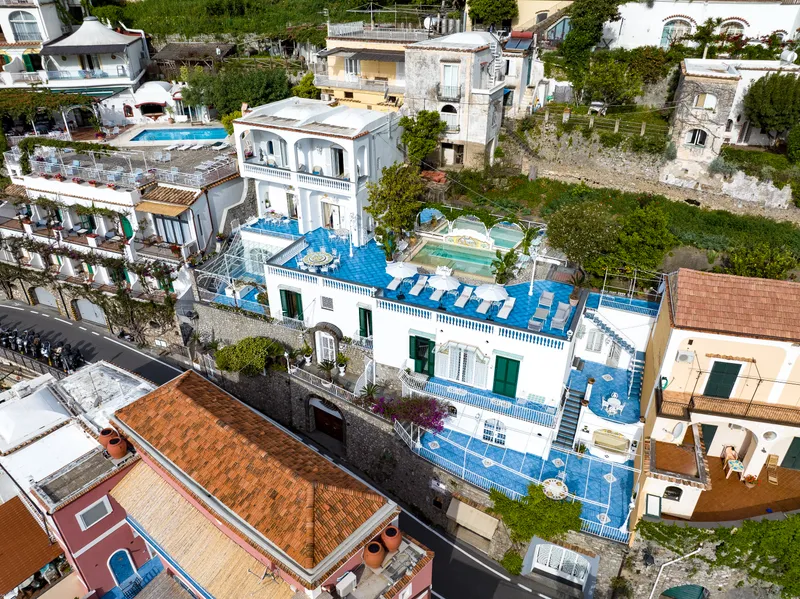
Villa Ferida was a 17th-century noble family home before it was a luxury rental. The owner restored it without losing the original stone or proportion. She lives nearby. She arrives for every check-in personally and stays a few hours. She comes back twice a week through every stay plus the Saturday checkout. She is reachable on the phone twenty-four hours a day in between. She has been doing this for thirteen years. The two house staff arrive at seven every morning and stay four or five hours. Daily breakfast included. Bath linen changed daily. Bed linen mid-week. The rhythm is a small private hotel that happens to be wholly owned by one woman.
The Welcome Aperitif That Is Almost a Dinner
Lucia greets you with what she calls a welcome aperitif, but it is functionally a full dinner. Caprese. Finger food. The traditional confetti, chocolate on the outside and almond on the inside. Champagne, soft drinks, salami, cheeses, fresh fruit. She is the first to laugh about it. The aperitif is the calibration moment. It tells you the villa is going to over-deliver across the rest of the stay.
The Curation Layer
The textiles on the master bedding are Pucci. Each of the five bedrooms is intentionally different from the others, not coordinated as a hotel set. Contemporary art by a Milan artist hangs on every wall. In the lounge, two Umbrian ceramic pieces sit on display, valued at EUR 18,000 each, gifted by a guest from last summer who sent them down from Umbria after the stay as a thank-you. Lucia tells the story matter-of-factly, the same way she tells you the breakfast time, which is the way you tell stories when this kind of thing has happened in your villa more than once.
Every closet is pre-stocked. Beach bag, umbrella, slippers, in-room safe, eye mask, extra pillow. The kind of detailing most rentals would call concierge-level if they bothered to do it at all.
The Pool Stack
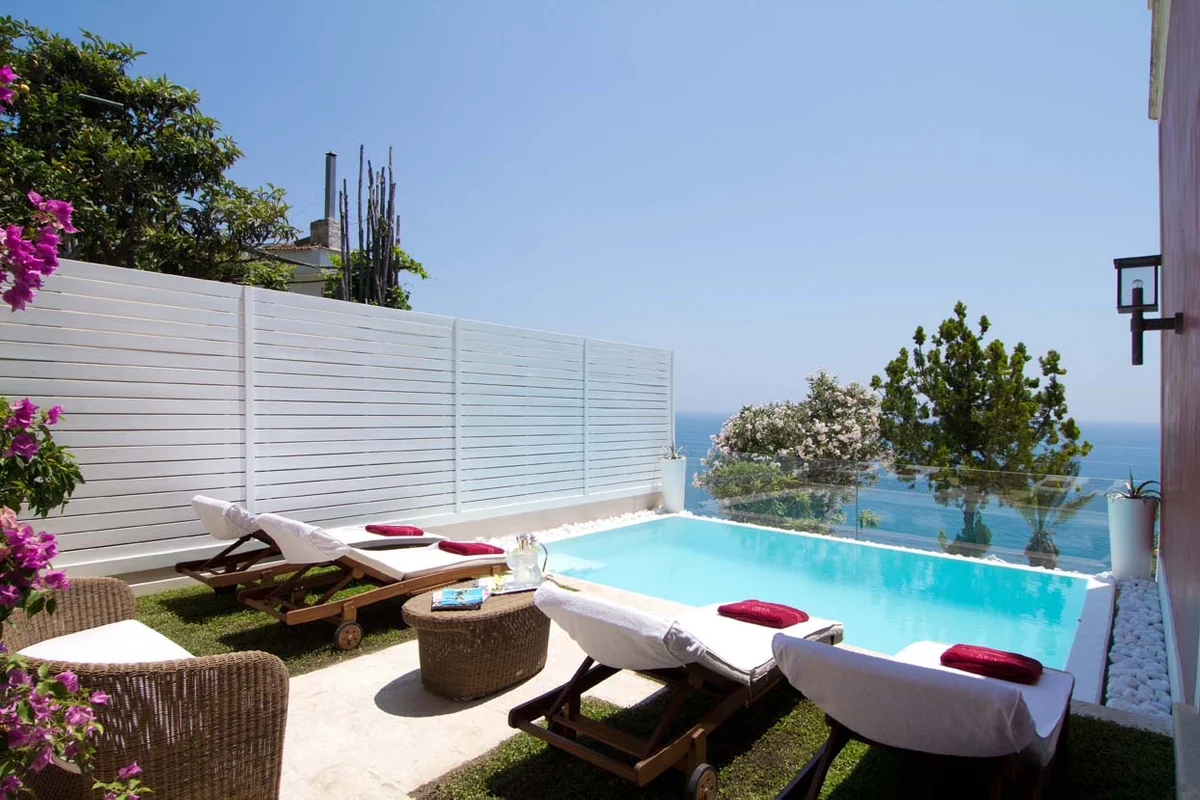
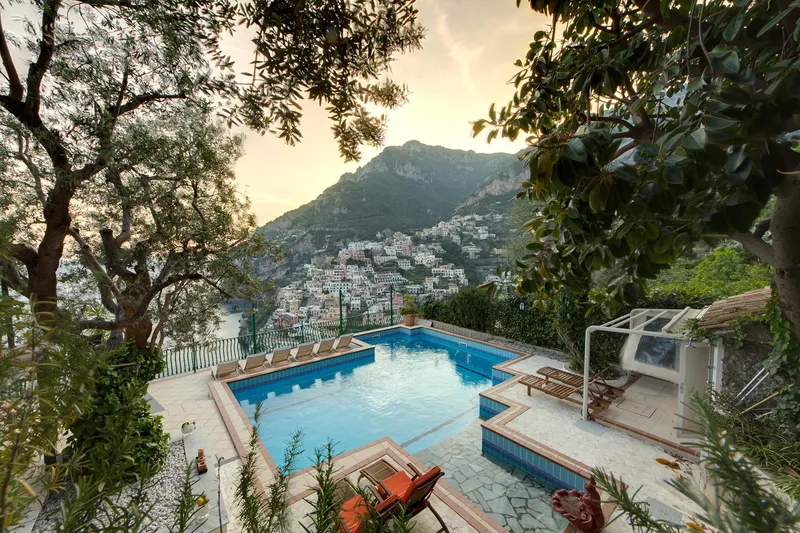
Three water elements, each unusual on its own. An indoor pool under a glazed skylight ceiling painted with frescoes, fitted with hydrojets and chromotherapy, held at 35 degrees year-round. The investment in heating that pool year-round is the kind a yield-maximization rental would never make. A brand-new outdoor pool with a sea-salt system rather than chlorine, gentle on skin and clothes, optionally heatable for shoulder-season use. And the Hammam suite (Emerald) with chromo and aroma therapy. Plus the Pompeii-themed extra bathroom in marble with antique columns and a waterfall shower under a vaulted ceiling. The bath has been built once with real materials rather than dressed up afterward.
The Activity Stack on Call
A yoga teacher comes to the villa for private sessions on the roof terrace, which has a section that opens up to lay a big mattress out with sun towels in the morning before the heat takes over. A private chef who works at a restaurant locally gets booked in for in-villa dinners. A cooking class is held at that same restaurant in Positano, with a free shuttle from the villa. A ceramic class runs in Positano on request. The activity stack is built across thirteen years of relationships, which is why none of it feels stitched together.
Long Stay, Real Math
The season runs May 1 through the end of October. Minimum stay is 7 nights in high season, 3 in low. August is quieter than most people expect on this stretch of coast, which is worth knowing if your dates are flexible. Long stays are common: two-week, four-week, six-week. The math on a long stay favors Ferida specifically because the included service rhythm (owner check-in, breakfast daily, daily towel change, mid-week linen) makes the property genuinely livable rather than vacation-only. The 89-year-old NYC client books her four to six weeks for a reason. She has done the math.
When to Book Ferida vs Mon Repos vs Oliviero
Wedding party that needs a ceremony venue with catering for 30 to 40: Mon Repos in Positano. Wedding party that wants the night-before villa, bridal-prep morning, and honeymoon week: Oliviero in Positano. Repeat traveler, long stay, wellness, heritage, the second-time-or-later visit to the Amalfi Coast: Ferida in Praiano