The Best Restaurants in Miami

An honest guide to eating in Miami, from Calle Ocho counters to Little Haiti kitchens, with the reservation, parking and season rules that matter.

Miami is the hardest city on this list to write about honestly, because the gap between what gets photographed and what is worth eating is wider here than anywhere else we work. There is a real food city underneath, built by Cuban, Haitian, Nicaraguan, Colombian, Venezuelan, Peruvian and Argentine families across sixty years, and it mostly sits outside the postcode that visitors book. There is also a layer of imported restaurant brands with famous names and famous door policies, and some of those are very good while others are charging a great deal for competent food in a loud room. We book groups into Miami constantly. This is the version of the conversation we have on the phone. The Scene Versus Food Problem A lot of Miami dining is not really about dining. It is about being in a specific room at a specific hour on a specific night, and the kitchen is a supporting act. That is a legitimate thing to want and we are not sniffy about it, but it should be a deliberate choice rather than an accident. If you book four nights of the most photographed rooms in the city, you will eat four versions of the same expensive, well executed, faintly anonymous meal, and you will not have eaten in Miami at all. The test we use is simple. If the room would still be full with the music off and the lighting up, it is a restaurant. If it would not, you are paying for the lighting. Calle Ocho and the Cuban Core Little Havana along Southwest Eighth Street is the first correction to make. Versailles is the institution, a large and permanently busy room that has been the unofficial town square of Cuban Miami for decades, and the ventanita coffee window outside is more important to the neighbourhood than most restaurants in the city. For the sandwich in its best form, Sanguich de Miami on the same street presses its own bread and cures its own pork, and the difference against a standard Cuban sandwich is obvious on the first bite. El Palacio de los Jugos is a cafeteria and fruit counter rather than a restaurant, it is loud, it is chaotic at lunch, and the roast pork is better than what you will be served in most dining rooms with tablecloths. Villa Amaya, Miami Haitian Miami, Which Most Visitors Never Reach Miami has the largest Haitian community in the United States and almost no visitor eats in it, which is a genuine loss. Little Haiti and the stretch north through North Miami is where to find griot, the twice cooked pork shoulder, with pikliz, the fiercely hot pickled cabbage that makes the whole plate work, and legume, a long cooked vegetable and beef stew that is one of the great dishes of the Caribbean. Chef Creole has been doing this for a long time across several locations and is the easiest entry point. Naomi's Garden is the sit down version with a garden to eat it in. Neither of these is a scene and neither is trying to be, and both will feed a group for a fraction of a South Beach dinner. The Design District, Buena Vista and Wynwood The middle of the city is w

Miami is the hardest city on this list to write about honestly, because the gap between what gets photographed and what is worth eating is wider here than anywhere else we work. There is a real food city underneath, built by Cuban, Haitian, Nicaraguan, Colombian, Venezuelan, Peruvian and Argentine families across sixty years, and it mostly sits outside the postcode that visitors book. There is also a layer of imported restaurant brands with famous names and famous door policies, and some of those are very good while others are charging a great deal for competent food in a loud room. We book groups into Miami constantly. This is the version of the conversation we have on the phone.

The Scene Versus Food Problem

A lot of Miami dining is not really about dining. It is about being in a specific room at a specific hour on a specific night, and the kitchen is a supporting act. That is a legitimate thing to want and we are not sniffy about it, but it should be a deliberate choice rather than an accident. If you book four nights of the most photographed rooms in the city, you will eat four versions of the same expensive, well executed, faintly anonymous meal, and you will not have eaten in Miami at all. The test we use is simple. If the room would still be full with the music off and the lighting up, it is a restaurant. If it would not, you are paying for the lighting.

Calle Ocho and the Cuban Core

Little Havana along Southwest Eighth Street is the first correction to make. Versailles is the institution, a large and permanently busy room that has been the unofficial town square of Cuban Miami for decades, and the ventanita coffee window outside is more important to the neighbourhood than most restaurants in the city. For the sandwich in its best form, Sanguich de Miami on the same street presses its own bread and cures its own pork, and the difference against a standard Cuban sandwich is obvious on the first bite. El Palacio de los Jugos is a cafeteria and fruit counter rather than a restaurant, it is loud, it is chaotic at lunch, and the roast pork is better than what you will be served in most dining rooms with tablecloths.

Haitian Miami, Which Most Visitors Never Reach

Miami has the largest Haitian community in the United States and almost no visitor eats in it, which is a genuine loss. Little Haiti and the stretch north through North Miami is where to find griot, the twice cooked pork shoulder, with pikliz, the fiercely hot pickled cabbage that makes the whole plate work, and legume, a long cooked vegetable and beef stew that is one of the great dishes of the Caribbean. Chef Creole has been doing this for a long time across several locations and is the easiest entry point. Naomi's Garden is the sit down version with a garden to eat it in. Neither of these is a scene and neither is trying to be, and both will feed a group for a fraction of a South Beach dinner.

The Design District, Buena Vista and Wynwood

The middle of the city is where the serious independent kitchens sit. Mandolin Aegean Bistro in Buena Vista has been doing Greek and Turkish cooking in a blue and white courtyard for years and still gets a table right on a weeknight if you ask early. Michael's Genuine in the Design District was one of the restaurants that started the shift away from the beach and remains dependable. Zak the Baker in Wynwood is a bakery rather than a dinner plan, but it is the best bread in the city and a good reason to be in that neighbourhood before the galleries open. Wynwood at night has become largely a drinking district, so plan food before the crowd arrives rather than after.

Stone Crab, and the Season Nobody Tells You About

Florida stone crab is a real season, not a menu decision, and it runs roughly from the middle of October to the beginning of May. Joe's Stone Crab on South Beach has been doing it since before South Beach was South Beach, it does not take reservations in the dining room, and the wait on a Saturday in February is long enough that the takeaway window next door is a genuinely sensible answer. Outside the season the claws are frozen or simply not there, and any room selling you fresh stone crab in August is selling you something else. For everyday seafood, Garcia's on the Miami River is a working fish house with boats tied up outside and no interest at all in impressing you.

South Beach, Assessed Without Flattery

South Beach has perhaps six restaurants worth crossing a causeway for and several hundred that exist because people walk past them. Ocean Drive in particular is a trap, and the specific mechanism is worth knowing. Menus outside are often not the menus you are charged from, a large service charge is frequently added automatically, and a second gratuity line is then left blank on the receipt. Read the bill. This is not a rumour, it has been the subject of repeated local enforcement, and it still happens. Lincoln Road is better but not by an enormous margin. If you are staying on the beach, walk two or three streets inland before you sit down anywhere.

Steakhouses and the Reservation Theatre

Miami has a steakhouse and imported brand layer that is genuinely difficult to book, and difficulty of booking has become part of the appeal. Prime One Twelve on Washington Avenue is the long running local version and is a good steakhouse. Carbone brought its New York room here and it is well executed, expensive and extremely hard to get into at a reasonable hour. Our honest read is that these rooms are worth one night of a week rather than three, that the food is very good rather than revelatory, and that the energy people describe is largely a function of who else is in the room on the night you happen to go, which is not something anybody can sell you in advance.

Coral Gables, Coconut Grove and the Quieter City

If you are staying with a family group rather than a party group, the mainland neighbourhoods will suit you better on most
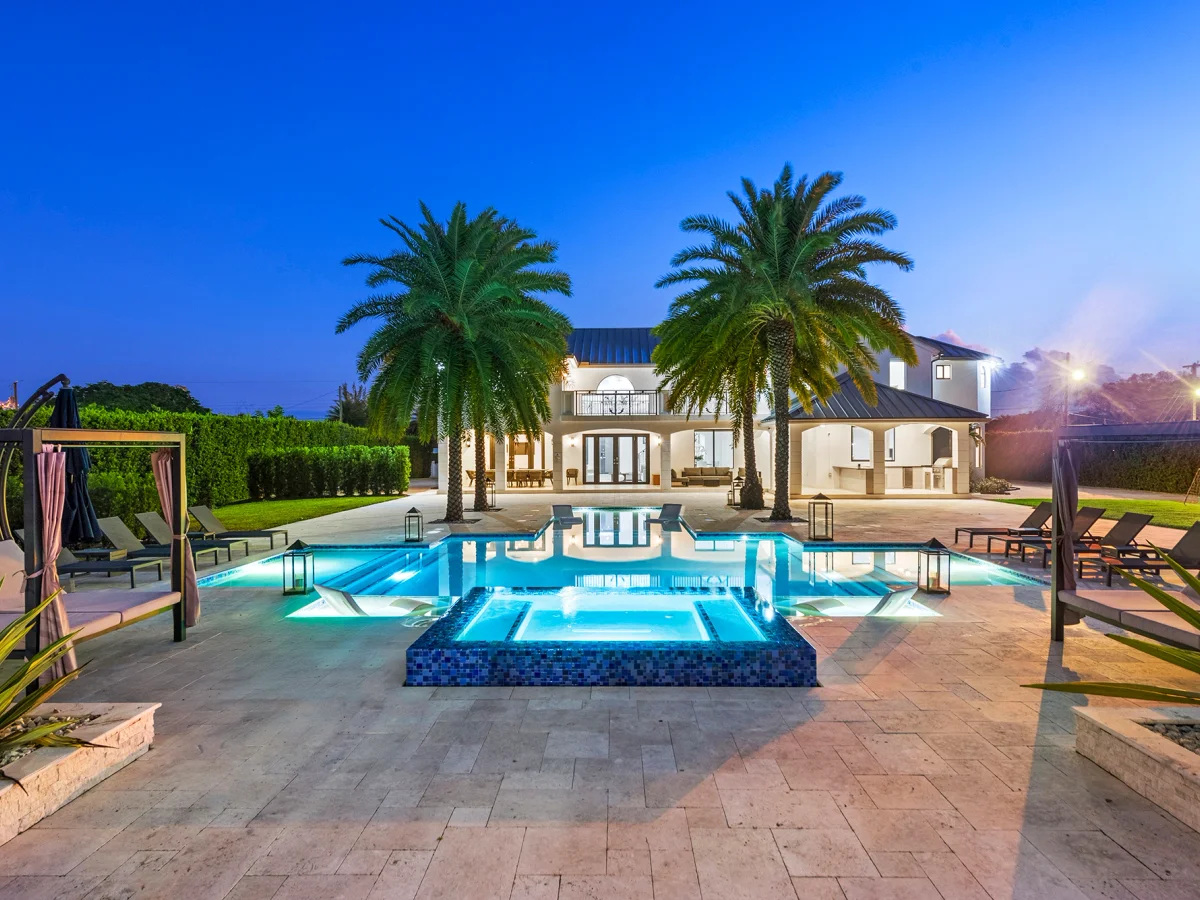

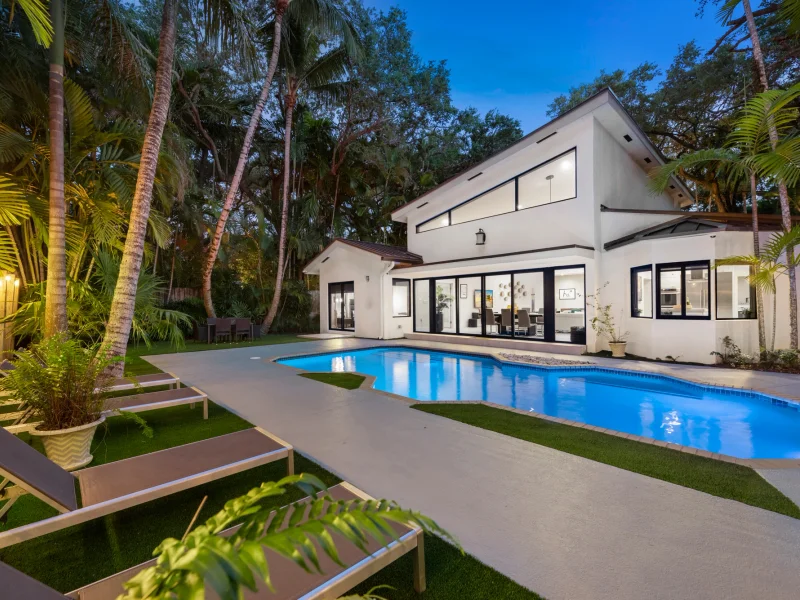
Waterfront terrace and dining area at a Miami villa in the evening
Guides
MIAMI

The Best Restaurants in Miami

Cuban Counters, Haitian Kitchens and the Rooms Selling the Room
Cameron Elder
·
September 25, 2026
·
12 min read
Where to eat in Miami if you care about food rather than photographs, including the neighbourhoods most visitors never leave South Beach to reach.
Miami is the hardest city on this list to write about honestly, because the gap between what gets photographed and what is worth eating is wider here than anywhere else we work. There is a real food city underneath, built by Cuban, Haitian, Nicaraguan, Colombian, Venezuelan, Peruvian and Argentine families across sixty years, and it mostly sits outside the postcode that visitors book. There is also a layer of imported restaurant brands with famous names and famous door policies, and some of those are very good while others are charging a great deal for competent food in a loud room. We book groups into Miami constantly. This is the version of the conversation we have on the phone.

The Scene Versus Food Problem

A lot of Miami dining is not really about dining. It is about being in a specific room at a specific hour on a specific night, and the kitchen is a supporting act. That is a legitimate thing to want and we are not sniffy about it, but it should be a deliberate choice rather than an accident. If you book four nights of the most photographed rooms in the city, you will eat four versions of the same expensive, well executed, faintly anonymous meal, and you will not have eaten in Miami at all. The test we use is simple. If the room would still be full with the music off and the lighting up, it is a restaurant. If it would not, you are paying for the lighting.

Calle Ocho and the Cuban Core

Little Havana along Southwest Eighth Street is the first correction to make. Versailles is the institution, a large and permanently busy room that has been the unofficial town square of Cuban Miami for decades, and the ventanita coffee window outside is more important to the neighbourhood than most restaurants in the city. For the sandwich in its best form, Sanguich de Miami on the same street presses its own bread and cures its own pork, and the difference against a standard Cuban sandwich is obvious on the first bite. El Palacio de los Jugos is a cafeteria and fruit counter rather than a restaurant, it is loud, it is chaotic at lunch, and the roast pork is better than what you will be served in most dining rooms with tablecloths.
Open plan kitchen and dining space at a Miami waterfront villa
Villa Amaya, Miami

Haitian Miami, Which Most Visitors Never Reach

Miami has the largest Haitian community in the United States and almost no visitor eats in it, which is a genuine loss. Little Haiti and the stretch north through North Miami is where to find griot, the twice cooked pork shoulder, with pikliz, the fiercely hot pickled cabbage that makes the whole plate work, and legume, a long cooked vegetable and beef stew that is one of the great dishes of the Caribbean. Chef Creole has been doing this for a long time across several locations and is the easiest entry point. Naomi's Garden is the sit down version with a garden to eat it in. Neither of these is a scene and neither is trying to be, and both will feed a group for a fraction of a South Beach dinner.

The Design District, Buena Vista and Wynwood

The middle of the city is where the serious independent kitchens sit. Mandolin Aegean Bistro in Buena Vista has been doing Greek and Turkish cooking in a blue and white courtyard for years and still gets a table right on a weeknight if you ask early. Michael's Genuine in the Design District was one of the restaurants that started the shift away from the beach and remains dependable. Zak the Baker in Wynwood is a bakery rather than a dinner plan, but it is the best bread in the city and a good reason to be in that neighbourhood before the galleries open. Wynwood at night has become largely a drinking district, so plan food before the crowd arrives rather than after.

Stone Crab, and the Season Nobody Tells You About

Florida stone crab is a real season, not a menu decision, and it runs roughly from the middle of October to the beginning of May. Joe's Stone Crab on South Beach has been doing it since before South Beach was South Beach, it does not take reservations in the dining room, and the wait on a Saturday in February is long enough that the takeaway window next door is a genuinely sensible answer. Outside the season the claws are frozen or simply not there, and any room selling you fresh stone crab in August is selling you something else. For everyday seafood, Garcia's on the Miami River is a working fish house with boats tied up outside and no interest at all in impressing you.

South Beach, Assessed Without Flattery

South Beach has perhaps six restaurants worth crossing a causeway for and several hundred that exist because people walk past them. Ocean Drive in particular is a trap, and the specific mechanism is worth knowing. Menus outside are often not the menus you are charged from, a large service charge is frequently added automatically, and a second gratuity line is then left blank on the receipt. Read the bill. This is not a rumour, it has been the subject of repeated local enforcement, and it still happens. Lincoln Road is better but not by an enormous margin. If you are staying on the beach, walk two or three streets inland before you sit down anywhere.

Steakhouses and the Reservation Theatre

Miami has a steakhouse and imported brand layer that is genuinely difficult to book, and difficulty of booking has become part of the appeal. Prime One Twelve on Washington Avenue is the long running local version and is a good steakhouse. Carbone brought its New York room here and it is well executed, expensive and extremely hard to get into at a reasonable hour. Our honest read is that these rooms are worth one night of a week rather than three, that the food is very good rather than revelatory, and that the energy people describe is largely a function of who else is in the room on the night you happen to go, which is not something anybody can sell you in advance.
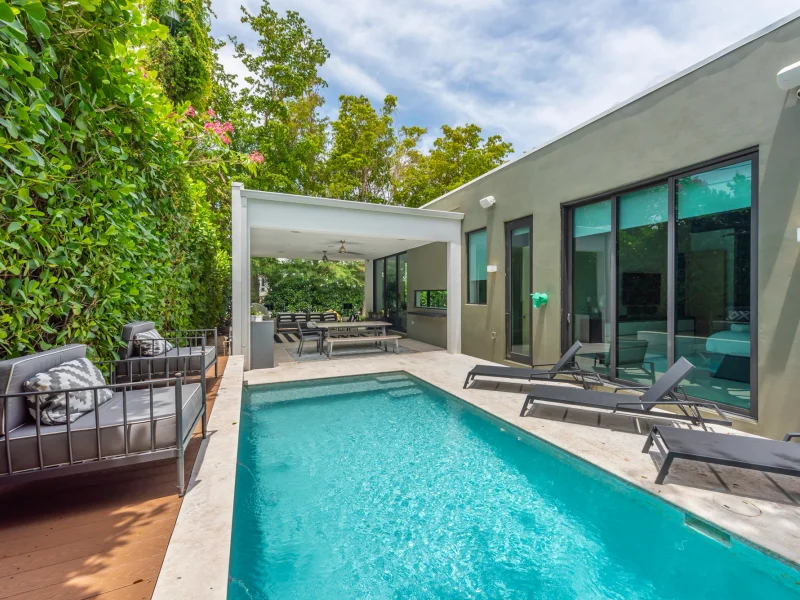
Pool deck and covered lounge at a modern Miami villa
Villa Zen, Miami

Coral Gables, Coconut Grove and the Quieter City

If you are staying with a family group rather than a party group, the mainland neighbourhoods will suit you better on most nights. Coral Gables has old Spanish architecture, proper Spanish and Peruvian cooking, and restaurants that still keep a bar you can sit at without a reservation. Coconut Grove has grown into one of the better eating neighbourhoods in the city, with Ariete doing Cuban influenced cooking at a high level and Chug's Diner next door serving the same family's food in a far cheaper and more fun format. Both areas are quieter, easier to park in, and about twenty five minutes from the beach outside rush hour, which in practice means forty in season.
The Rest of Latin America, in One City

The thing that makes Miami genuinely unusual is that the Venezuelan, Colombian, Nicaraguan, Argentine and Peruvian food here is cooked by people who moved from those countries and cook for people from those countries. Doral is effectively Venezuelan Miami and the arepas and cachapas there are the real article. There are Argentine bakeries and parrillas scattered across Kendall and the northwest of the county that will serve a better steak dinner for a family of six than a famous steakhouse will for two. None of this is in the design magazines and almost all of it takes a car, and this is the single biggest difference between a tourist week and a good week here.

Reservations, Practically

In high season, which is roughly December through April, the well known rooms release tables thirty days out and the good hours are gone within minutes. Set a reminder for the release date rather than trying your luck later. Large groups are harder than people expect, because a table for eight or ten is often held back for the concierge channel rather than put on a public booking site, which is exactly the kind of thing worth asking us to handle. Walk in seating at a bar is usually available even when the dining room is not, and for two people that is frequently the better meal anyway. Cancellation fees are now common and are charged.

Driving, Parking and the Bridges

Miami runs on cars and the map lies to you. A twenty minute drive from a Miami Beach house to the Design District becomes forty five on a Friday in February, and the causeways and the drawbridges over the river add delays that no application predicts. Valet is close to universal at restaurants and is essentially a compulsory cost, not an optional one. Street parking on the beach is metered aggressively and enforced with real enthusiasm. If the group is drinking, use a car service, and accept that surge pricing around South Beach on a Saturday night is severe. Book a driver for a big night out and the whole evening becomes a great deal calmer.

Seasons, Storms and When to Come

High season runs from about December to April and that is when the city is at full volume, at full price and at its most difficult to book. Summer is hot, humid and afternoon thunderstorms are routine, and it is also considerably cheaper and easier, with far more restaurant availability. Hurricane season officially runs from June to November with the real risk concentrated in August, September and October, and when a storm is watched the city closes kitchens with a few hours of notice. Art Basel week in early December and spring break in March are both worth knowing about in advance, because one makes restaurants impossible to book and the other makes the beach a different place entirely.

The Case for Eating at the House

We will argue against our own restaurant list here. Miami is a city where the villa is often better than the restaurant, and the reason is structural. The houses we work with sit on the water with outdoor kitchens and proper dining space, the produce and seafood supply here is excellent, and a cook can shop Calle Ocho and the river fish houses in a morning for far less than the same meal costs in a dining room on the beach. Add the fact that a car service and a valet queue is attached to every night out, and two or three nights in for a group of eight is not a compromise. It is usually the better food and the better evening.
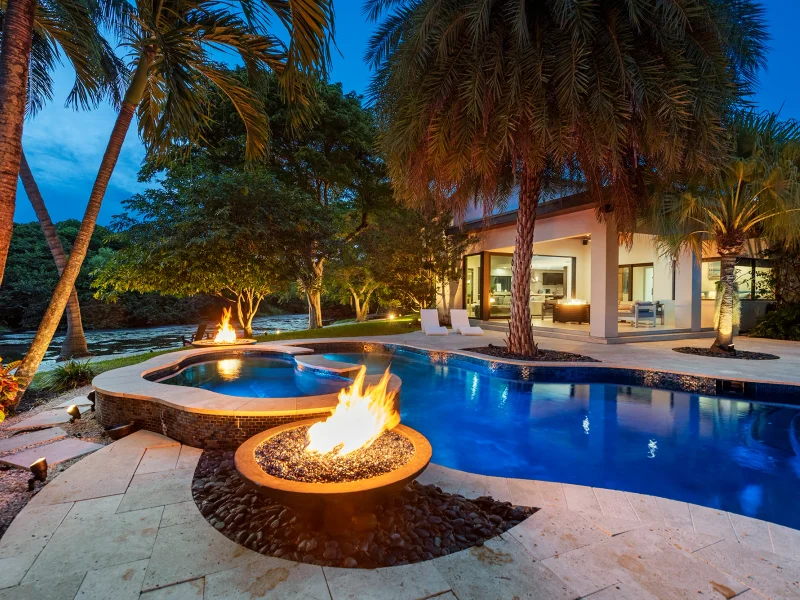
Covered outdoor dining terrace beside a pool at a Miami villa
Villa Saha, Miami

How Much to Trust This List

Miami turns restaurants over faster than almost any city in the United States. Leases end, chefs leave for a hotel group, an imported brand closes its Miami outpost after two seasons, and a room that was the best thing in the city in January can be tired by the following winter. The institutions named here are the ones that have survived decades and are the safest bets, but even those change hands. Treat this as a starting point that we re-check before we book anybody a table, because the fastest way to lose an evening here is to drive forty minutes to a door that no longer opens.
Key Takeaways
Miami has a scene problem and a food problem, and several of the most photographed rooms in the city are selling atmosphere rather than cooking.
The best Cuban and Haitian food in Miami sits well outside South Beach, mostly along Calle Ocho and north of the Design District.
Stone crab is a genuine season rather than a menu item, running roughly from mid October to early May, and the rest of the year it is frozen or absent.
The city runs on cars, valet and bridges, so a twenty minute drive on a map is often forty five minutes in season with a queue at the door.
High season is roughly December to April, summer is hot, wet and much cheaper, and a hurricane watch can close kitchens at a few hours of notice.

Frequently Asked Questions

Where should I eat in Miami if I want real Cuban food?
Along Calle Ocho in Little Havana, and in the neighbourhoods west of it. Versailles is the institution and the coffee window outside is the real draw. Sanguich de Miami makes the sandwich properly with its own bread and cured pork, and El Palacio de los Jugos is a chaotic counter that serves better roast pork than most sit down rooms in the city.
Is South Beach a good place to eat?
Mostly no. There are a handful of genuinely good rooms and a very large number that survive on passing foot traffic. Ocean Drive in particular has a long running problem with menus that do not match the bill, automatic service charges and a second blank gratuity line. Read the receipt carefully, and walk a few streets inland before you sit down.
When is stone crab season in Miami?
Roughly mid October to early May, set by Florida regulation rather than by restaurants. Joe's Stone Crab on South Beach is the long standing address, it does not take reservations in the dining room, and the takeaway counter next door is a sensible way around a long wait. Outside the season the claws are frozen or simply unavailable.
How far ahead do I need to book restaurants in Miami?
In high season from December to April, the well known rooms open bookings thirty days out and the good hours go within minutes, so set a reminder for the release date. Large tables of eight or more are often held back from public booking sites entirely, which is when a concierge channel genuinely helps. Cancellation fees are common and are charged.
Do I need a car to eat well in Miami?
Effectively yes. The best Cuban, Haitian, Venezuelan and Argentine food is spread across the mainland and none of it is walkable from the beach. Valet is close to universal and should be treated as a fixed cost. If the group is drinking, book a car service rather than relying on ride hailing, because surge pricing around South Beach at night is severe.
What is the best time of year to visit Miami for food?
December to April is when everything is open and at full strength, and also when it is busiest and hardest to book. Summer is hot and wet but far easier and cheaper, with much better restaurant availability. Hurricane season peaks in August, September and October, when a storm watch can close kitchens at a few hours of notice.
Where can I find Haitian food in Miami?
Little Haiti and the corridor north through North Miami. Look for griot, the twice cooked pork, served with pikliz, the hot pickled cabbage, and for legume, a slow cooked vegetable and beef stew. Chef Creole is the easiest entry point across several locations, and Naomi's Garden is the sit down version with a garden to eat in.
Are the famous Miami steakhouses worth it?
For one night of a week, yes. They are well run, they are expensive, and they are very hard to book at a good hour. Our honest view is that the food is very good rather than extraordinary, and that the atmosphere people describe depends heavily on who happens to be in the room on the night, which nobody can promise you in advance.
Follow the journey @erentalsexclusive + @aurelseyez
Villa tours, destination guides, and behind-the-scenes content from the team on the ground
Cameron Elder
Founder, ERentals Exclusive
miami
florida
food
restaurants

See it in motion

From the feed

Real stays, real light. Tap any film to watch it full screen.

Stay in the loop
© 2026 ERentals Exclusive