Best Things to Do in Miami

What is worth your time in Miami, what the postcards oversell, and how traffic, heat and the water shape a real week.

Miami has an image problem in both directions. People arrive expecting either a neon strip of Deco hotels and models, or a shallow party town with nothing behind it, and both readings miss what the place actually is. It is a large, hot, sprawling Caribbean and Latin American city that happens to have beaches attached, with a serious art scene, some of the best Cuban and Haitian food outside those countries, and a waterfront culture that visitors mostly watch from the shore. The single most useful thing we can tell you is that the famous postcard is the least interesting part, and that the real week is spent in neighbourhoods and on the water. Here is how we structure it for guests, including the parts we tell them to skip. The Honest Verdict on South Beach and the Deco District The Art Deco district is genuinely important architecturally. It is also considerably smaller than its reputation suggests, and the celebrated stretch of Ocean Drive is now largely a run of open-fronted restaurants with people outside waving menus at you, in front of buildings that look best in photographs taken at seven in the morning. The pastel facades and the neon at dusk are real and worth seeing. The dining along that strip is not, and the pressure selling is relentless. Do it properly and it costs you ninety minutes. Walk Ocean Drive and the parallel blocks early, before the heat and before the touts, look up at the eyebrows and porthole windows and the terrazzo, and then leave. If you want the architecture with context, the local preservation league runs walking tours that are genuinely good and put the buildings in the history of the city rather than on a postcard. Then go and eat somewhere else entirely. Lincoln Road nearby is a pedestrian mall of chain stores with better people watching than shopping, and Espanola Way is charming for exactly one drink. Where the City Actually Is Wynwood is the one that surprises people. What started as a warehouse district with painted walls is now a dense grid of galleries, studios, breweries and restaurants, and the murals genuinely rotate, so it is not a static exhibit. Go on a weekday morning if you want to photograph the walls without other people in them, and stay for lunch. The Design District a few minutes north is the polished, expensive version, and is worth a walk for the architecture and the public art installations whether or not you intend to buy anything, which mostly you will not. Little Havana is the cultural centre of the city and it deserves more than the hour most visitors give it. Calle Ocho, the cigar rollers, the domino park where the games are serious and the commentary is better, the ventanitas selling coffee through a window, a lunch in a proper Cuban dining room. Go on a weekday when it is a working neighbourhood rather than a performance. Little Haiti is further along the same line and gets a fraction of the visitors: the cultural complex, the botanicas, the food, and a music scene that almost nobody

Miami has an image problem in both directions. People arrive expecting either a neon strip of Deco hotels and models, or a shallow party town with nothing behind it, and both readings miss what the place actually is. It is a large, hot, sprawling Caribbean and Latin American city that happens to have beaches attached, with a serious art scene, some of the best Cuban and Haitian food outside those countries, and a waterfront culture that visitors mostly watch from the shore. The single most useful thing we can tell you is that the famous postcard is the least interesting part, and that the real week is spent in neighbourhoods and on the water. Here is how we structure it for guests, including the parts we tell them to skip.

The Honest Verdict on South Beach and the Deco District

The Art Deco district is genuinely important architecturally. It is also considerably smaller than its reputation suggests, and the celebrated stretch of Ocean Drive is now largely a run of open-fronted restaurants with people outside waving menus at you, in front of buildings that look best in photographs taken at seven in the morning. The pastel facades and the neon at dusk are real and worth seeing. The dining along that strip is not, and the pressure selling is relentless.

Do it properly and it costs you ninety minutes. Walk Ocean Drive and the parallel blocks early, before the heat and before the touts, look up at the eyebrows and porthole windows and the terrazzo, and then leave. If you want the architecture with context, the local preservation league runs walking tours that are genuinely good and put the buildings in the history of the city rather than on a postcard. Then go and eat somewhere else entirely. Lincoln Road nearby is a pedestrian mall of chain stores with better people watching than shopping, and Espanola Way is charming for exactly one drink.

Where the City Actually Is

Wynwood is the one that surprises people. What started as a warehouse district with painted walls is now a dense grid of galleries, studios, breweries and restaurants, and the murals genuinely rotate, so it is not a static exhibit. Go on a weekday morning if you want to photograph the walls without other people in them, and stay for lunch. The Design District a few minutes north is the polished, expensive version, and is worth a walk for the architecture and the public art installations whether or not you intend to buy anything, which mostly you will not.

Little Havana is the cultural centre of the city and it deserves more than the hour most visitors give it. Calle Ocho, the cigar rollers, the domino park where the games are serious and the commentary is better, the ventanitas selling coffee through a window, a lunch in a proper Cuban dining room. Go on a weekday when it is a working neighbourhood rather than a performance. Little Haiti is further along the same line and gets a fraction of the visitors: the cultural complex, the botanicas, the food, and a music scene that almost nobody on a short trip finds. If you only have time for one neighbourhood beyond Wynwood, we would send you to one of these two before the beach every time.

The Boat Day Is the Trip

Ask a group a year after a Miami trip what they remember and it is almost always the day on the water. It is the one thing this city does that few others do as well: the skyline from Biscayne Bay, the run past the islands, the sandbar where half of Miami anchors on a weekend, a swim somewhere you cannot reach on foot, and coming back in under a sunset that does a lot of the work for you. If you do one organised thing all week, make it this.

The practical notes matter. Book earlier than you think, particularly for holiday weekends, because the good crews are committed well ahead and the ones with last minute availability in peak season are usually available for a reason. Weekdays are calmer on the water and at the sandbar, which on a Saturday is a floating crowd and not restful. Ask specifically about the captain, the crew ratio and what happens if the weather turns, because summer afternoon storms are routine and a serious operator will move you rather than run into one. And if anyone in the group is a nervous sailor, take the bay rather than going offshore.

The Greener Half of the City

Two places most first-time visitors miss. Vizcaya is an early twentieth century estate on the bay with formal gardens running down to the water, and it is the most beautiful built thing in the city by some distance. Go early, because there is little shade in the gardens and the middle of the day in summer is punishing. Key Biscayne, over the causeway, is where locals go for a beach day: a state park at the southern tip with a lighthouse, calm water, pines, and none of the South Beach circus.

On the Everglades: it is remarkable and the standard airboat tour is not the way to see it. The loud, fast, forty-minute loop through a commercial operation near the highway is a spectacle worth seeing once and rarely the best day of the trip. If the ecosystem genuinely interests you, take a slow guided walk or a kayak in the national park with somebody who can tell you what you are looking at. If it does not, skip the whole thing without guilt and spend the day on the bay instead.

When the Weather Turns, Which It Will

From roughly June into October the pattern is heat, humidity, and a heavy storm most afternoons that clears within an hour or two. This is not a reason to avoid the season, but it is a reason to front-load the day. Do the outdoor thing in the morning, take the middle of the day indoors or in the pool, and let the storm happen while you are eating. Groups who schedule a boat for three in the afternoon in August have made a predictable mistake.

The indoor options here are strong, which is not true of every beach destination. The Perez Art Museum on the bay, the science museum next to it with the aquarium, the Rubell collection in Allapattah,
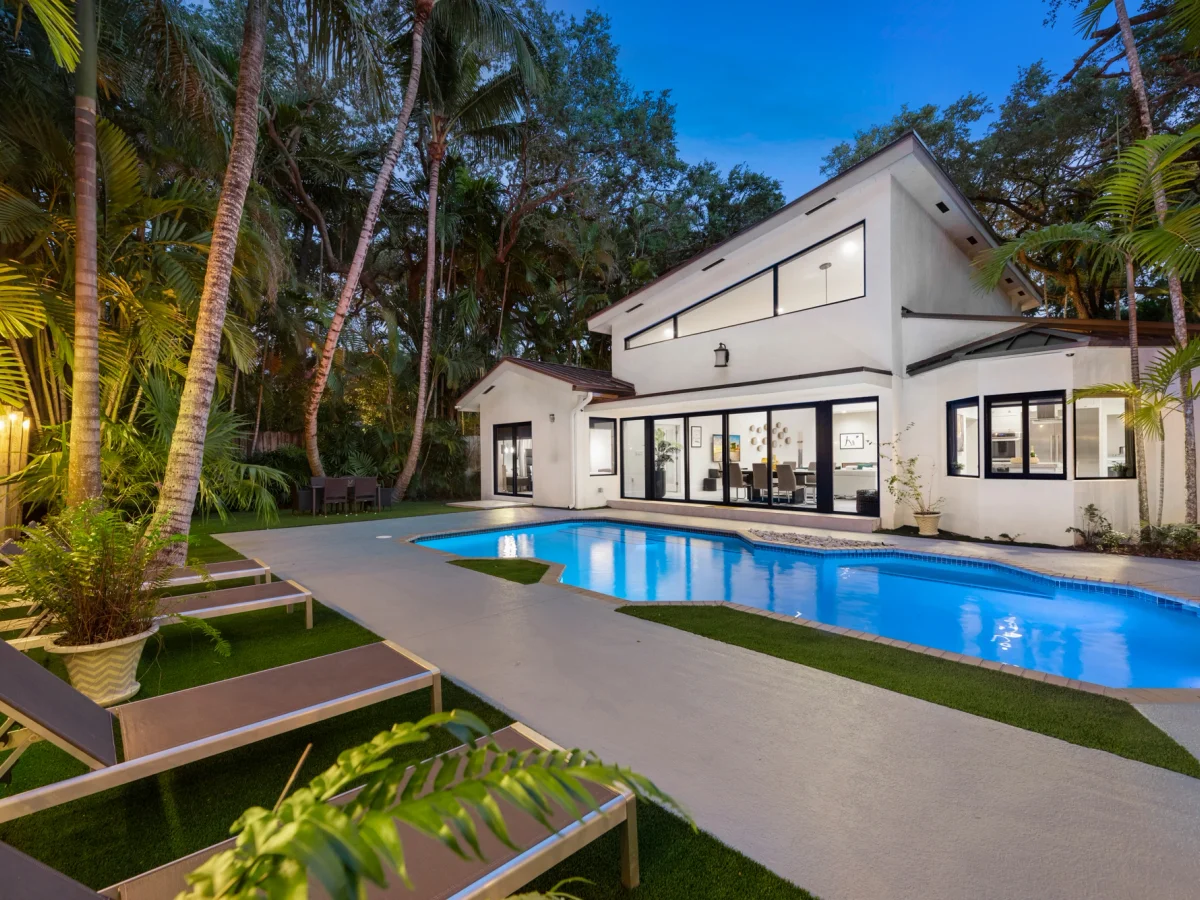
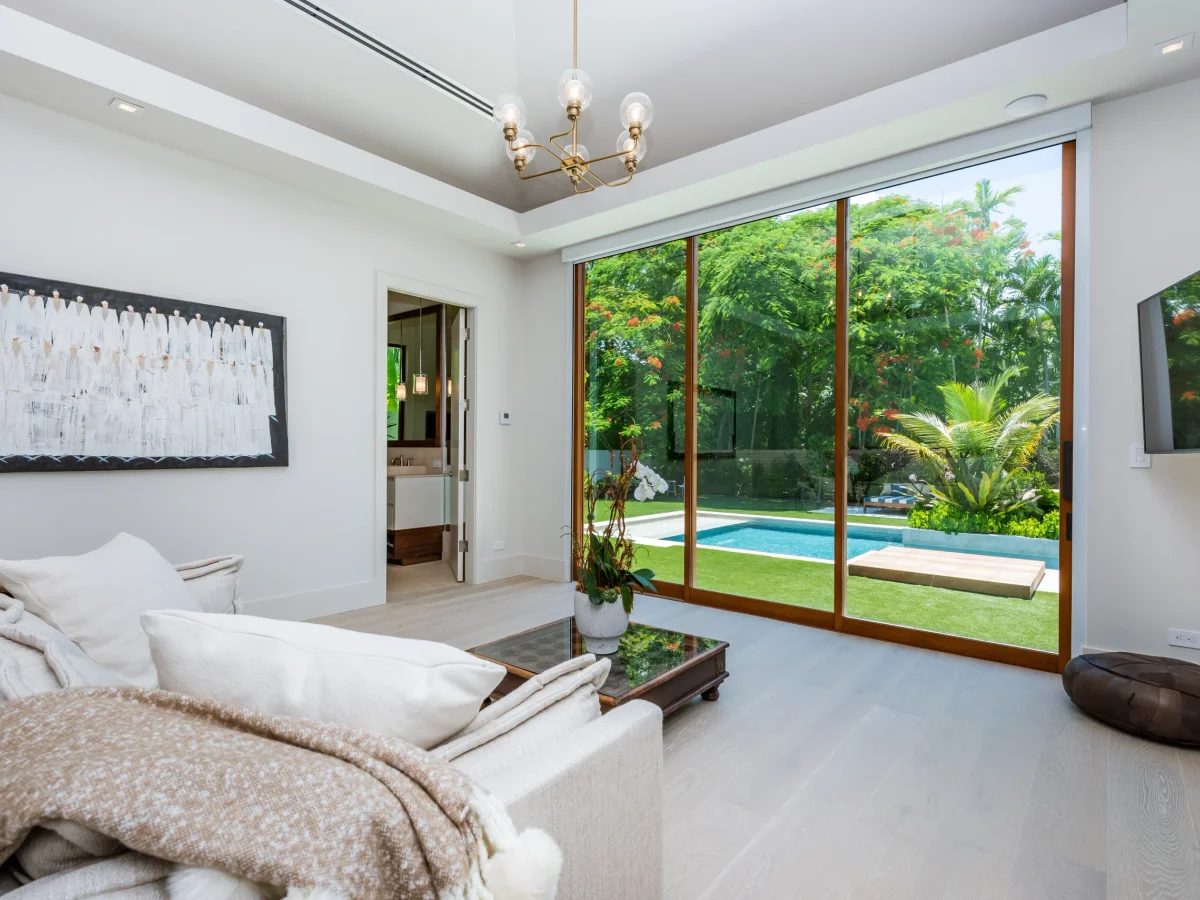
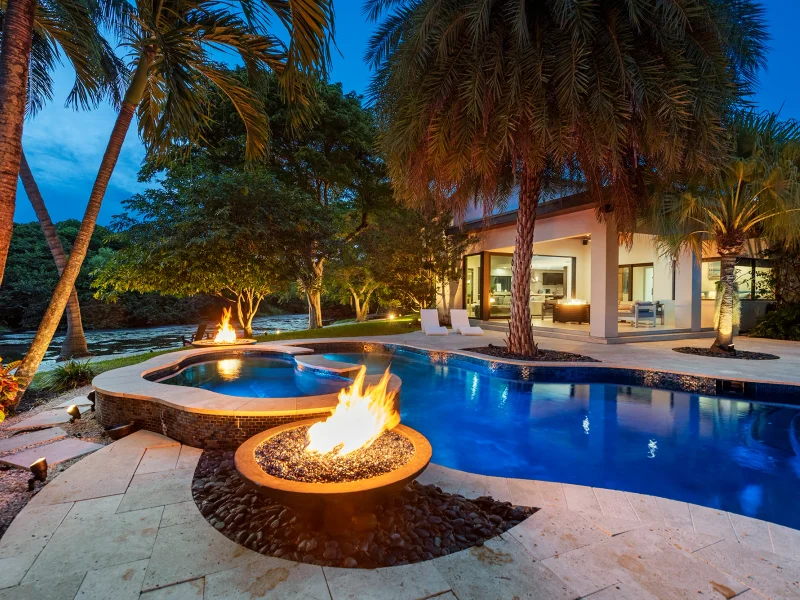
Waterfront villa pool deck at dusk in Miami
Guides
MIAMI

Best Things to Do in Miami

Skip the Deco Strip, Get on the Water
Cameron Elder
·
September 25, 2026
·
11 min read
A working guide to Miami: why South Beach underdelivers, which neighbourhoods carry the city, and why the boat day is the one people remember.
Miami has an image problem in both directions. People arrive expecting either a neon strip of Deco hotels and models, or a shallow party town with nothing behind it, and both readings miss what the place actually is. It is a large, hot, sprawling Caribbean and Latin American city that happens to have beaches attached, with a serious art scene, some of the best Cuban and Haitian food outside those countries, and a waterfront culture that visitors mostly watch from the shore. The single most useful thing we can tell you is that the famous postcard is the least interesting part, and that the real week is spent in neighbourhoods and on the water. Here is how we structure it for guests, including the parts we tell them to skip.

The Honest Verdict on South Beach and the Deco District

The Art Deco district is genuinely important architecturally. It is also considerably smaller than its reputation suggests, and the celebrated stretch of Ocean Drive is now largely a run of open-fronted restaurants with people outside waving menus at you, in front of buildings that look best in photographs taken at seven in the morning. The pastel facades and the neon at dusk are real and worth seeing. The dining along that strip is not, and the pressure selling is relentless.
Do it properly and it costs you ninety minutes. Walk Ocean Drive and the parallel blocks early, before the heat and before the touts, look up at the eyebrows and porthole windows and the terrazzo, and then leave. If you want the architecture with context, the local preservation league runs walking tours that are genuinely good and put the buildings in the history of the city rather than on a postcard. Then go and eat somewhere else entirely. Lincoln Road nearby is a pedestrian mall of chain stores with better people watching than shopping, and Espanola Way is charming for exactly one drink.

Where the City Actually Is

Wynwood is the one that surprises people. What started as a warehouse district with painted walls is now a dense grid of galleries, studios, breweries and restaurants, and the murals genuinely rotate, so it is not a static exhibit. Go on a weekday morning if you want to photograph the walls without other people in them, and stay for lunch. The Design District a few minutes north is the polished, expensive version, and is worth a walk for the architecture and the public art installations whether or not you intend to buy anything, which mostly you will not.
Little Havana is the cultural centre of the city and it deserves more than the hour most visitors give it. Calle Ocho, the cigar rollers, the domino park where the games are serious and the commentary is better, the ventanitas selling coffee through a window, a lunch in a proper Cuban dining room. Go on a weekday when it is a working neighbourhood rather than a performance. Little Haiti is further along the same line and gets a fraction of the visitors: the cultural complex, the botanicas, the food, and a music scene that almost nobody on a short trip finds. If you only have time for one neighbourhood beyond Wynwood, we would send you to one of these two before the beach every time.
Modern Miami waterfront villa with pool and dock
Villa Marya, Miami

The Boat Day Is the Trip

Ask a group a year after a Miami trip what they remember and it is almost always the day on the water. It is the one thing this city does that few others do as well: the skyline from Biscayne Bay, the run past the islands, the sandbar where half of Miami anchors on a weekend, a swim somewhere you cannot reach on foot, and coming back in under a sunset that does a lot of the work for you. If you do one organised thing all week, make it this.
The practical notes matter. Book earlier than you think, particularly for holiday weekends, because the good crews are committed well ahead and the ones with last minute availability in peak season are usually available for a reason. Weekdays are calmer on the water and at the sandbar, which on a Saturday is a floating crowd and not restful. Ask specifically about the captain, the crew ratio and what happens if the weather turns, because summer afternoon storms are routine and a serious operator will move you rather than run into one. And if anyone in the group is a nervous sailor, take the bay rather than going offshore.

The Greener Half of the City

Two places most first-time visitors miss. Vizcaya is an early twentieth century estate on the bay with formal gardens running down to the water, and it is the most beautiful built thing in the city by some distance. Go early, because there is little shade in the gardens and the middle of the day in summer is punishing. Key Biscayne, over the causeway, is where locals go for a beach day: a state park at the southern tip with a lighthouse, calm water, pines, and none of the South Beach circus.
On the Everglades: it is remarkable and the standard airboat tour is not the way to see it. The loud, fast, forty-minute loop through a commercial operation near the highway is a spectacle worth seeing once and rarely the best day of the trip. If the ecosystem genuinely interests you, take a slow guided walk or a kayak in the national park with somebody who can tell you what you are looking at. If it does not, skip the whole thing without guilt and spend the day on the bay instead.

When the Weather Turns, Which It Will

From roughly June into October the pattern is heat, humidity, and a heavy storm most afternoons that clears within an hour or two. This is not a reason to avoid the season, but it is a reason to front-load the day. Do the outdoor thing in the morning, take the middle of the day indoors or in the pool, and let the storm happen while you are eating. Groups who schedule a boat for three in the afternoon in August have made a predictable mistake.
The indoor options here are strong, which is not true of every beach destination. The Perez Art Museum on the bay, the science museum next to it with the aquarium, the Rubell collection in Allapattah, the Institute of Contemporary Art in the Design District. Any of those is a genuinely good three hours. Late summer into autumn is also hurricane season proper, and while a direct storm is unlikely in any given week, it is worth understanding your cancellation terms before you book those months rather than after.
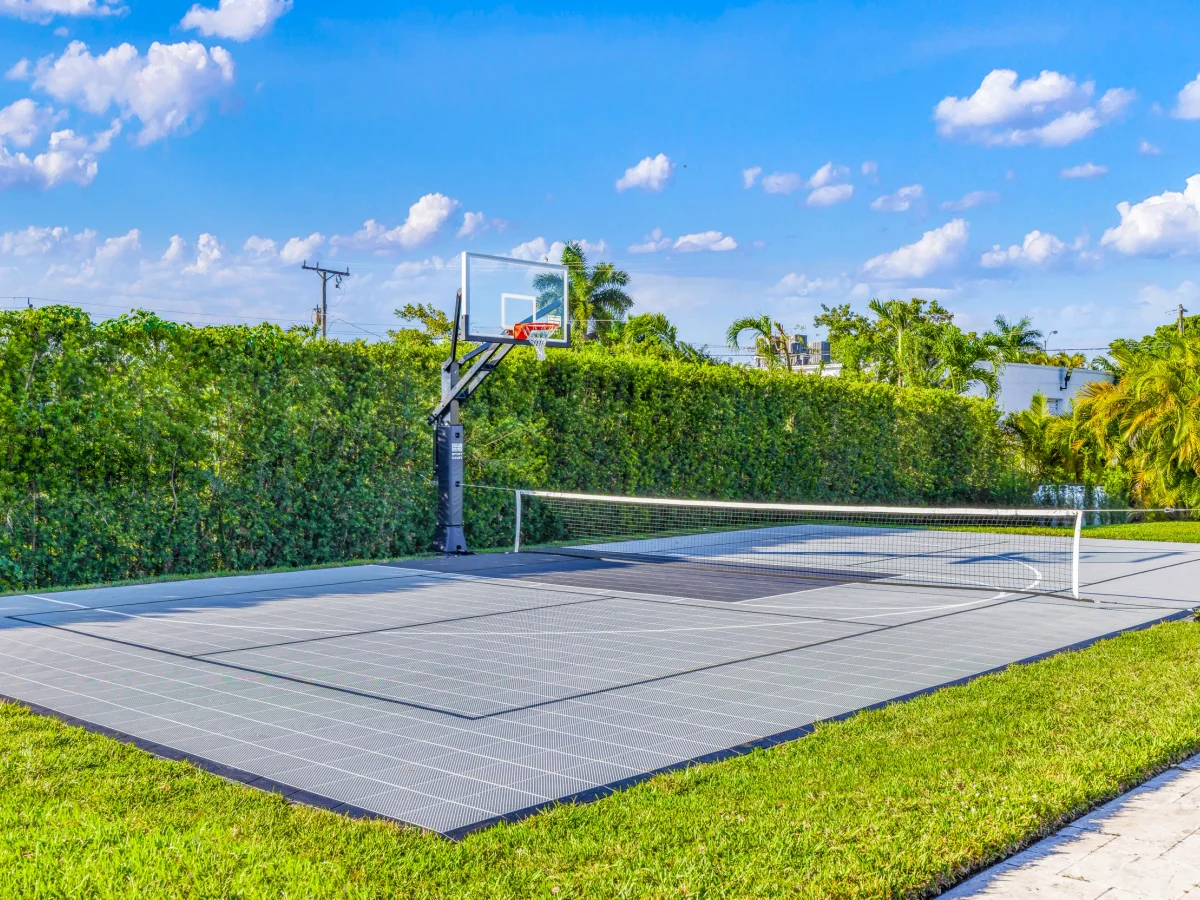
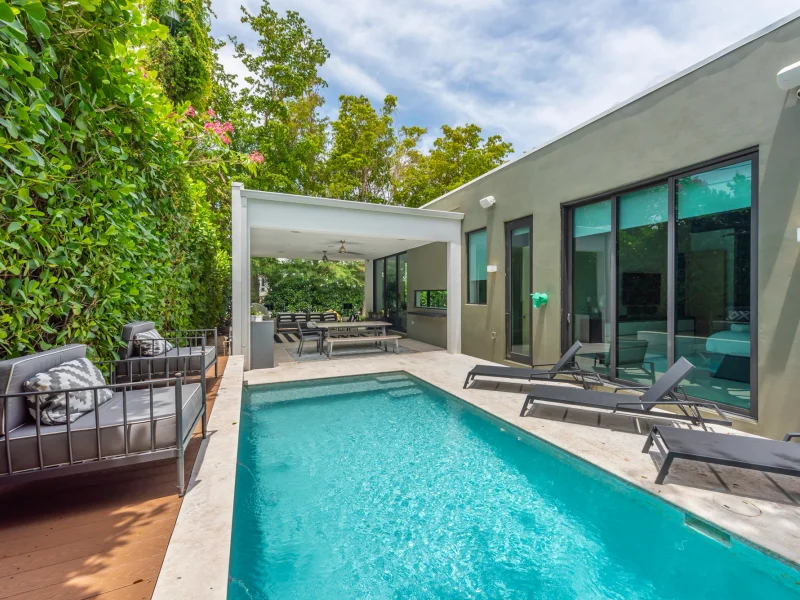
Tropical courtyard and lounge seating at a Miami villa
Villa Castro, Miami

Eating Well Without Paying the View Tax

Miami has become a genuinely serious food city and also collects a large number of imported celebrity rooms where the bill reflects the name and the sound system. Both exist a block apart. Our rule for guests is simple: eat the city, not the brand. Cuban in Little Havana, Haitian in Little Haiti, Colombian and Venezuelan arepas anywhere in the western suburbs, Peruvian, Argentine, and stone crab in season from a place that has been doing it for decades rather than a place that opened last year.
Specific warnings. Ocean Drive restaurants frequently add a service charge automatically and it is not always obvious on the menu, so read the bottom of the bill before you add more on top. The waterfront rooms with the best views are rarely the best kitchens, and you are paying for the lighting. And reserve: the good tables in Wynwood, Coconut Grove and Miami Beach go weeks ahead on weekends, and a group of eight walking in at eight on a Saturday is not getting seated anywhere you would have chosen.

Traffic, Parking and the Causeway Problem

Miami is a driving city and the driving is the constraint. The causeways between the mainland and the beach are chokepoints, and at the wrong hour a short hop takes forty minutes. Downtown and Brickell at rush hour are worse. Anything involving a bridge, a game, a convention or a holiday weekend should have an hour of padding in it. This is the logistics detail that most reliably wrecks a plan here, and the solution is to do one side of the water per day rather than bouncing.
Parking on Miami Beach is genuinely difficult and expensive, valet queues at the popular restaurants run long, and ride shares surge hard when everyone leaves at once. For an evening out with a group, a car and driver frequently works out simpler than three ride shares and a parking search, and it removes the question of who is not drinking. If your house has a dock or a garage, use it as the anchor of the day and plan outward from there.

Seasons, Crowds and Spring Break

Winter through spring is the peak: dry, warm, low humidity, and the city is full. That is also when prices are highest and when the calendar is busiest with art week, boat week, music festivals and race weekends, any of which will double your transfer times and fill every restaurant. Check the event calendar before you set dates, because arriving in the middle of a major event without realising is an expensive accident.
Spring break brings a specific kind of crowd to South Beach for several weeks, with heavier policing, road closures and a very young party crowd, and if that is not your trip then avoid those weeks or stay well away from that stretch. Summer is hot, humid, stormy and by some distance the best value, and the city is noticeably calmer. Autumn, once the heat starts to release, is the underrated window: good weather, small crowds and the season starting up again.
Sun deck and open plan living area at a Miami villa
Villa Pesara, Miami

What Is Better From the House

More of a Miami week should happen at the house than people plan for. The heat makes midday outings unrewarding, the traffic makes evening logistics tedious, and the houses here are built for exactly this: pool, shade, outdoor kitchen, water frontage. A long lunch at home with a cook, a swim, and then out at eight is a better day than three attractions and two hours in a car. Groups who work that out on day two have a much better week than groups who work it out on day six.
A dock changes things more than any other feature. If the boat can collect you from the house, the boat day stops involving a marina, a car park and a meeting point, and the whole thing becomes a twenty minute decision rather than a production. That is the single most useful question to ask when choosing where to stay here, ahead of bedroom count and ahead of how the living room photographs. Water access first, everything else after.
Key Takeaways
The Art Deco and Ocean Drive circuit is a short walk and a thin experience, and one morning covers it completely.
Wynwood, Little Havana and Little Haiti carry the cultural weight of the city and most visitors give them an afternoon between them.
A day on the water is the thing guests remember a year later, and it is the one booking worth protecting in the calendar.
Traffic across the causeways and through downtown will decide your schedule far more than any opening time.
Summer here is heat, humidity and daily storms, and that is also when the city is at its cheapest and least crowded.

Frequently Asked Questions

Is South Beach worth visiting?
Worth a morning, not a week. The Art Deco architecture is real and the early light on those facades is the best time to see it, but the district is small and the Ocean Drive restaurants are a tourist operation with aggressive touting. Walk it early, take a proper architecture tour if the buildings interest you, and eat elsewhere.
What is the one thing I should not skip?
A day on the water. The skyline from the bay, the island run and the sandbar are what groups remember a year later, and nothing else in the city competes. Book well in advance, prefer a weekday for calmer water and fewer boats, and ask the operator what happens if a storm builds.
Do I need a car in Miami?
Effectively yes, or a driver. The city is spread out and the neighbourhoods worth seeing are not walkable from each other. Parking on Miami Beach is expensive and scarce, and ride shares surge when a venue empties, so for group evenings a car with a driver is often the simpler arrangement.
When is the best time to visit?
Winter into spring for dry warm weather, at peak prices and peak crowds. Summer is hot, humid and stormy most afternoons but far better value and much calmer. Autumn, once the worst heat passes, is the underrated window. Check the event calendar first, since a major festival or convention will distort traffic and availability.
Is the Everglades airboat tour worth it?
It is a spectacle worth seeing once and rarely the best day of the trip. The standard commercial loop is loud, brief and not much of an introduction to the ecosystem. If the Everglades genuinely interest you, book a slow guided walk or a kayak in the national park instead. If not, skip it and spend the day on the bay.
Which neighbourhoods should I prioritise?
Wynwood for street art, galleries and food, Little Havana for the cultural heart of the city, and Little Haiti if you have a third slot, since it gets a fraction of the visitors and rewards the effort. The Design District is worth a walk for architecture and public art. All of them beat a second day on Ocean Drive.
What about hurricane season?
The season runs from early summer into autumn, and while a direct storm in any given week is unlikely, it is not impossible. Daily afternoon thunderstorms in summer are near certain and usually clear quickly. Read the cancellation and weather terms on both the house and any charter before you commit to those months.
Should I stay on the beach or on the water?
On the water, if the group intends to use a boat. A house with a dock turns the boat day from a logistical exercise into a short decision, and that single feature changes the shape of the week more than bedroom count does. If the group wants to walk to bars and restaurants every night, the beach side makes more sense.
Follow the journey @erentalsexclusive + @aurelseyez
Villa tours, destination guides, and behind-the-scenes content from the team on the ground
Cameron Elder
Founder, ERentals Exclusive
usa
miami
things-to-do

See it in motion

From the feed

Real stays, real light. Tap any film to watch it full screen.

Stay in the loop
© 2026 ERentals Exclusive