Best Things to Do in Tulum

What is actually worth doing in Tulum, what is overrated, and the logistics that quietly ruin most itineraries.

Tulum is two towns wearing one name. There is the beach strip, a single long road threaded between the jungle and the sand, lined with hotels, clubs and restaurants built out of driftwood and lighting design. And there is the actual town inland, plus the network of cenotes, ruins and lagoons that surround it, which is the part most visitors see least of. The gap between the marketing and the experience here is wider than almost anywhere we place guests, so this guide leans hard on the practical. What is genuinely worth your time, what is worth an hour rather than a day, what the road will do to your plans, and where the sustainability language stops describing anything you can point at. If you want a list of twenty beach clubs ranked by aesthetic, this is not it. The Beach Road Is the Whole Problem Everything on the beach strip sits on one two-lane road with no meaningful alternative. In high season that road moves at walking pace for long stretches, taxis queue, and a trip that looks like ten minutes on a map takes forty five. The knock-on effect is that a day with three scheduled things in it quietly becomes a day with two, and the third one gets cancelled in a hot car. This is the most common way we see itineraries fail here, and it is entirely predictable. The people who have a good week are the ones who treat that road as a fixed cost rather than a surprise. The fix is structural rather than clever. Cluster your day geographically and accept one direction of travel per day. If you are going to a cenote in the morning, do not book a lunch back on the strip and a sunset the other way. Leave early, because the road before eight is a different road. And rent bicycles for anything local: on the beach strip a bike frequently beats a car, it removes the parking problem entirely, and most houses along the strip either have them or can get them within the hour. Cenotes, and Why the Hour Matters More Than the Choice The cenotes are the genuinely unmissable thing in this region. Collapsed limestone sinkholes opening into freshwater caves and caverns, some open to the sky and full of light shafts, some closed and lit only by whatever your guide is carrying. The water is clear to an uncomfortable degree. There are hundreds of them across the peninsula, and arguing about which is best is mostly noise, because the variable that changes the experience is not which one you pick. It is what time you arrive. At opening, a cenote is silent, the light comes in at a low angle, the water is undisturbed and there may be four other people in it. By midday, the same cenote is a queue for a ladder with a tour bus in the car park and forty people treading water in sunscreen. Go at opening or go in the last hour. Take reef safe products or nothing at all, because most sites will rinse you before entry and they are right to. Bring cash, because a good number of the smaller sites are family run and card machines are not reliable this far off the highway. Casa Arka, Tulum

Tulum is two towns wearing one name. There is the beach strip, a single long road threaded between the jungle and the sand, lined with hotels, clubs and restaurants built out of driftwood and lighting design. And there is the actual town inland, plus the network of cenotes, ruins and lagoons that surround it, which is the part most visitors see least of. The gap between the marketing and the experience here is wider than almost anywhere we place guests, so this guide leans hard on the practical. What is genuinely worth your time, what is worth an hour rather than a day, what the road will do to your plans, and where the sustainability language stops describing anything you can point at. If you want a list of twenty beach clubs ranked by aesthetic, this is not it.

The Beach Road Is the Whole Problem

Everything on the beach strip sits on one two-lane road with no meaningful alternative. In high season that road moves at walking pace for long stretches, taxis queue, and a trip that looks like ten minutes on a map takes forty five. The knock-on effect is that a day with three scheduled things in it quietly becomes a day with two, and the third one gets cancelled in a hot car. This is the most common way we see itineraries fail here, and it is entirely predictable. The people who have a good week are the ones who treat that road as a fixed cost rather than a surprise.

The fix is structural rather than clever. Cluster your day geographically and accept one direction of travel per day. If you are going to a cenote in the morning, do not book a lunch back on the strip and a sunset the other way. Leave early, because the road before eight is a different road. And rent bicycles for anything local: on the beach strip a bike frequently beats a car, it removes the parking problem entirely, and most houses along the strip either have them or can get them within the hour.

Cenotes, and Why the Hour Matters More Than the Choice

The cenotes are the genuinely unmissable thing in this region. Collapsed limestone sinkholes opening into freshwater caves and caverns, some open to the sky and full of light shafts, some closed and lit only by whatever your guide is carrying. The water is clear to an uncomfortable degree. There are hundreds of them across the peninsula, and arguing about which is best is mostly noise, because the variable that changes the experience is not which one you pick. It is what time you arrive.

At opening, a cenote is silent, the light comes in at a low angle, the water is undisturbed and there may be four other people in it. By midday, the same cenote is a queue for a ladder with a tour bus in the car park and forty people treading water in sunscreen. Go at opening or go in the last hour. Take reef safe products or nothing at all, because most sites will rinse you before entry and they are right to. Bring cash, because a good number of the smaller sites are family run and card machines are not reliable this far off the highway.

The Ruins: Small, Spectacular, and Over Quickly

The Tulum ruins are a walled clifftop settlement above a beach, and their appeal is the setting rather than the scale. This is important to say plainly, because visitors arriving from Chichen Itza or expecting a large complex are frequently underwhelmed. The site is compact, you cannot enter the buildings, and in ninety minutes you will have seen it properly. What it has that nothing else has is that particular view: grey stone, green grass, the drop, and the Caribbean behind it.

Take it at opening. This is not a preference, it is the entire difference between a good visit and a bad one. The site is exposed with almost no shade, the coaches arrive from mid morning, and by eleven the main paths are shoulder to shoulder in full sun. Arrive when the gates open and you get it close to empty in soft light. If you want depth as well as spectacle, add Coba or Muyil inland on another day. They are larger, greener, quieter and considerably more interesting to walk, and Muyil in particular gets a fraction of the traffic.

The Part We Get Asked Not to Write

A lot of the eco branding along the beach strip is aesthetic rather than structural. Reclaimed wood, no plastic straws, candlelight, a name with a Mayan root. Meanwhile a stretch of that road has no mains sewerage or grid connection, which means diesel generators and trucked water. The candlelight is often not a design choice. Some operators here genuinely do the work on water treatment, waste and jungle protection, and it costs them real money. Many do not, and the two are indistinguishable from the photographs.

We are not telling you to avoid the strip. We are telling you that if the sustainability of your stay actually matters to you, the question to ask is specific and boring: where does the wastewater go, where does the power come from, and is there a generator, because if there is, you will hear it at night. Places that are doing it properly answer that question immediately and in detail. Places that are not will tell you about their commitment to nature and change the subject.

The Sargassum Conversation

Sargassum is a brown seaweed that drifts onto this coast in variable quantities, most commonly from around spring into late summer, and in a bad year it arrives in volume and smells strongly as it decomposes. Hotels and houses rake it, crews work the sand from dawn, and on many days you would barely know. On other days the water line is a dense mat and swimming from the beach is not appealing. No operator on this coast can promise you a clear beach, and anyone who does is guessing on your behalf.

How to handle it honestly: if a clear swimmable Caribbean beach is the non-negotiable centre of your trip, weight your dates towards late autumn through early spring, when the risk is historically lower. Book a house with a serious pool, which is where most people end up swimming anyway. And keep the cenote days flexible,
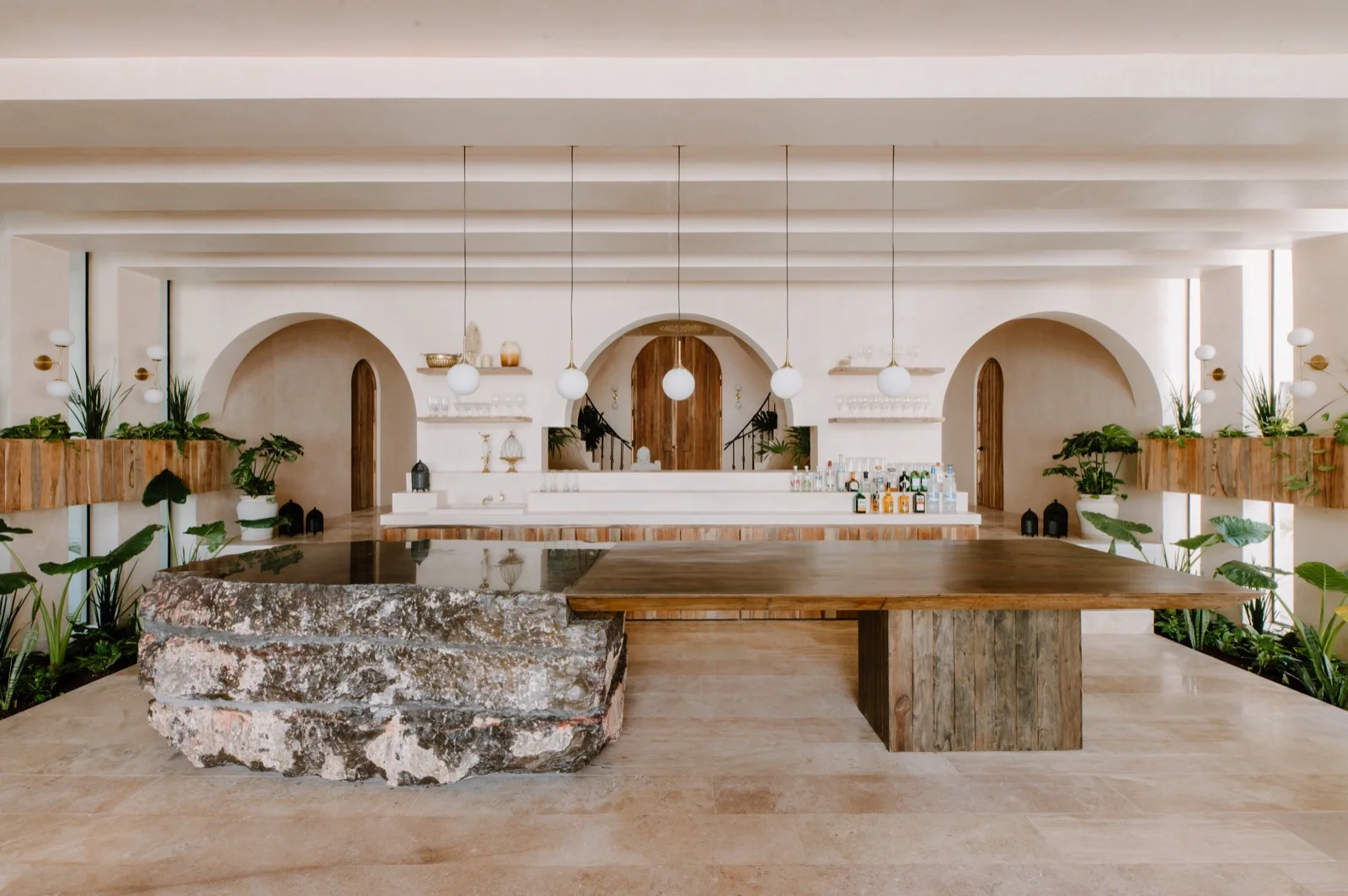
Jungle canopy and pool deck at a Tulum villa in early morning light
Guides
TULUM

Best Things to Do in Tulum

Cenotes at Dawn, Ruins at Opening, and the Road That Eats Your Day
Cameron Elder
·
September 25, 2026
·
11 min read
An honest operator guide to Tulum: what is worth waking up for, what the beach road does to your plans, and where the eco label stops meaning much.
Tulum is two towns wearing one name. There is the beach strip, a single long road threaded between the jungle and the sand, lined with hotels, clubs and restaurants built out of driftwood and lighting design. And there is the actual town inland, plus the network of cenotes, ruins and lagoons that surround it, which is the part most visitors see least of. The gap between the marketing and the experience here is wider than almost anywhere we place guests, so this guide leans hard on the practical. What is genuinely worth your time, what is worth an hour rather than a day, what the road will do to your plans, and where the sustainability language stops describing anything you can point at. If you want a list of twenty beach clubs ranked by aesthetic, this is not it.

The Beach Road Is the Whole Problem

Everything on the beach strip sits on one two-lane road with no meaningful alternative. In high season that road moves at walking pace for long stretches, taxis queue, and a trip that looks like ten minutes on a map takes forty five. The knock-on effect is that a day with three scheduled things in it quietly becomes a day with two, and the third one gets cancelled in a hot car. This is the most common way we see itineraries fail here, and it is entirely predictable. The people who have a good week are the ones who treat that road as a fixed cost rather than a surprise.
The fix is structural rather than clever. Cluster your day geographically and accept one direction of travel per day. If you are going to a cenote in the morning, do not book a lunch back on the strip and a sunset the other way. Leave early, because the road before eight is a different road. And rent bicycles for anything local: on the beach strip a bike frequently beats a car, it removes the parking problem entirely, and most houses along the strip either have them or can get them within the hour.

Cenotes, and Why the Hour Matters More Than the Choice

The cenotes are the genuinely unmissable thing in this region. Collapsed limestone sinkholes opening into freshwater caves and caverns, some open to the sky and full of light shafts, some closed and lit only by whatever your guide is carrying. The water is clear to an uncomfortable degree. There are hundreds of them across the peninsula, and arguing about which is best is mostly noise, because the variable that changes the experience is not which one you pick. It is what time you arrive.
At opening, a cenote is silent, the light comes in at a low angle, the water is undisturbed and there may be four other people in it. By midday, the same cenote is a queue for a ladder with a tour bus in the car park and forty people treading water in sunscreen. Go at opening or go in the last hour. Take reef safe products or nothing at all, because most sites will rinse you before entry and they are right to. Bring cash, because a good number of the smaller sites are family run and card machines are not reliable this far off the highway.
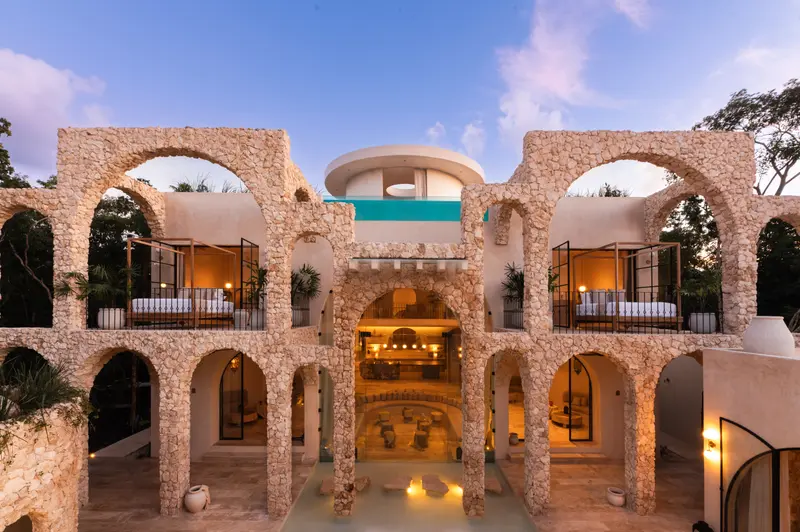
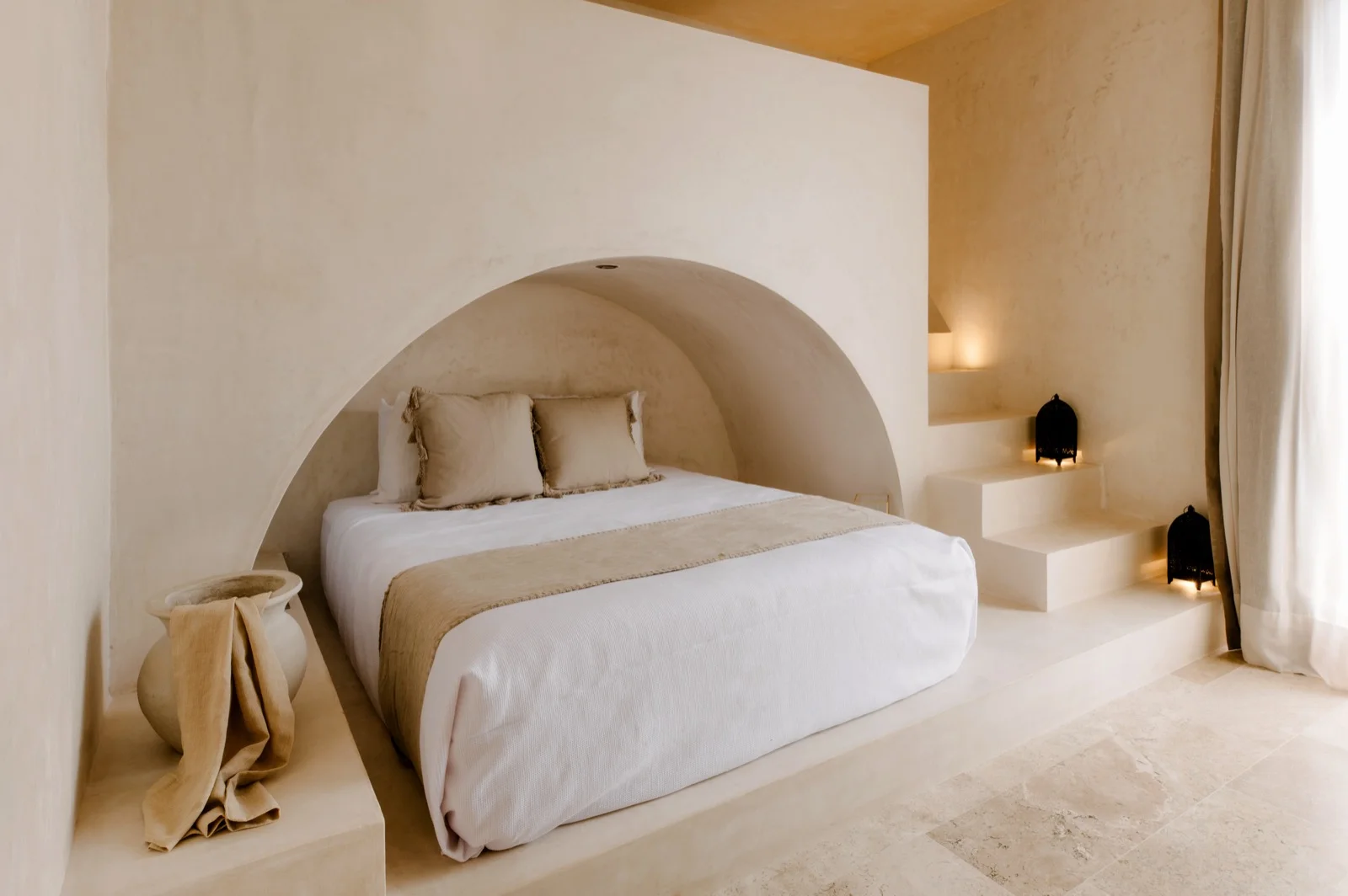
Open air living space with jungle planting at a Tulum villa
Casa Arka, Tulum

The Ruins: Small, Spectacular, and Over Quickly

The Tulum ruins are a walled clifftop settlement above a beach, and their appeal is the setting rather than the scale. This is important to say plainly, because visitors arriving from Chichen Itza or expecting a large complex are frequently underwhelmed. The site is compact, you cannot enter the buildings, and in ninety minutes you will have seen it properly. What it has that nothing else has is that particular view: grey stone, green grass, the drop, and the Caribbean behind it.
Take it at opening. This is not a preference, it is the entire difference between a good visit and a bad one. The site is exposed with almost no shade, the coaches arrive from mid morning, and by eleven the main paths are shoulder to shoulder in full sun. Arrive when the gates open and you get it close to empty in soft light. If you want depth as well as spectacle, add Coba or Muyil inland on another day. They are larger, greener, quieter and considerably more interesting to walk, and Muyil in particular gets a fraction of the traffic.

The Part We Get Asked Not to Write

A lot of the eco branding along the beach strip is aesthetic rather than structural. Reclaimed wood, no plastic straws, candlelight, a name with a Mayan root. Meanwhile a stretch of that road has no mains sewerage or grid connection, which means diesel generators and trucked water. The candlelight is often not a design choice. Some operators here genuinely do the work on water treatment, waste and jungle protection, and it costs them real money. Many do not, and the two are indistinguishable from the photographs.
We are not telling you to avoid the strip. We are telling you that if the sustainability of your stay actually matters to you, the question to ask is specific and boring: where does the wastewater go, where does the power come from, and is there a generator, because if there is, you will hear it at night. Places that are doing it properly answer that question immediately and in detail. Places that are not will tell you about their commitment to nature and change the subject.

The Sargassum Conversation

Sargassum is a brown seaweed that drifts onto this coast in variable quantities, most commonly from around spring into late summer, and in a bad year it arrives in volume and smells strongly as it decomposes. Hotels and houses rake it, crews work the sand from dawn, and on many days you would barely know. On other days the water line is a dense mat and swimming from the beach is not appealing. No operator on this coast can promise you a clear beach, and anyone who does is guessing on your behalf.
How to handle it honestly: if a clear swimmable Caribbean beach is the non-negotiable centre of your trip, weight your dates towards late autumn through early spring, when the risk is historically lower. Book a house with a serious pool, which is where most people end up swimming anyway. And keep the cenote days flexible, because a heavy seaweed week is exactly the week to be in fresh water inland instead. This is the single item we most often talk guests through before they commit to dates, and it occasionally costs us the booking.
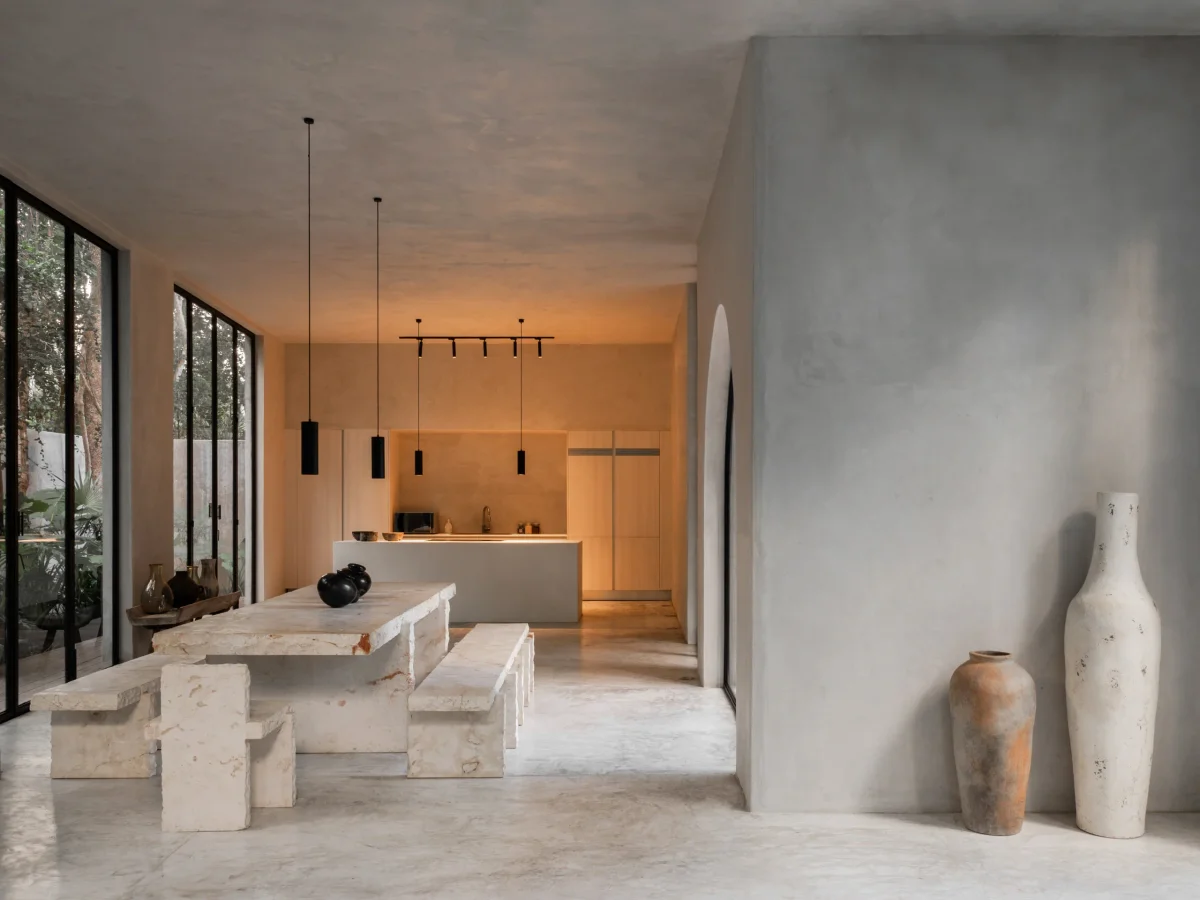
Plunge pool and shaded terrace surrounded by jungle in Tulum
Casa Shalva, Tulum

The Day the Weather Turns

Rain here arrives fast, falls hard and often clears within the hour, so the first rule of a wet day is do not cancel anything before lunch. The second is that cenotes are a genuinely good rain activity: you are getting wet regardless, the crowds thin out, and the enclosed cave systems are entirely unaffected by what is happening above ground. A guided cavern swim in light rain is one of the better days available to you and almost nobody plans it that way.
If the rain is properly set in, go inland. The town has good markets, small galleries and considerably better everyday food than the strip. Valladolid is a manageable drive and is a real colonial town rather than a resort, with a cathedral, a cenote in the middle of it and cooking that is worth the trip on its own. Failing all of that, a house with a covered terrace, a hammock and a stack of books is not a wasted afternoon in this climate. The humidity makes doing very little unusually easy.

Eating Without Paying for the Lighting

The beach strip has some genuinely excellent restaurants and a larger number of places where the design budget clearly exceeded the kitchen budget. The tell is consistent: very long menus, a live set, a house photographer, and a dining room that looks better than it tastes. You will eat well enough and you will pay for the atmosphere, and if the atmosphere is what you came for then that is a fair trade, made knowingly.
The better food, most nights, is in town. Small kitchens, short menus, regional cooking, and the kind of room where the family running it eats at the end of service. The taqueria that looks like nothing is very often the best meal of the week. For a villa group, a private chef is the strongest option on this coast by a wide margin: the produce and seafood are excellent, the cook shops the same morning, and you avoid the road entirely in both directions. Book the famous restaurant once, for the spectacle. Eat everywhere else for the food.

Logistics That Quietly Break Itineraries

Transfers first. There is now an airport close to Tulum as well as the larger one up the coast at Cancun, and the drive from the northern airport is well over an hour and a half before traffic. Arrange the transfer in advance rather than arriving and negotiating on the kerb, and expect the return leg on a departure day to need more buffer than feels reasonable. Cash matters more than people expect: cenotes, small restaurants, beach parking and tips are frequently cash only, and the freestanding machines in the tourist zone are not the ones to use.
Two more that cost people days. Mosquitoes in the jungle zone are serious at dawn and dusk, particularly after rain, and repellent is not optional if your house sits back from the beach. And book anything with limited capacity well ahead: the better guided cavern dives, the small-group boat trips into the Sian Kaan biosphere lagoons, the restaurants with ten tables. Tulum looks spontaneous and is not. The good version of this place runs on reservations made two weeks earlier.
Outdoor dining area lit by lanterns at a Tulum jungle villa
Casa Don Rey, Tulum

Beach Zone or Jungle Side

This is the decision that shapes the week more than any other. A house on the beach strip puts you on the sand and inside the restaurant scene, and it also puts you on the road, in the noise, and in the price bracket that the strip commands. A house on the jungle side, a few minutes inland, is quieter, greener, usually larger for the same outlay, and genuinely better value, at the cost of driving or cycling to the water. Neither is the right answer for everyone.
What we tell guests is this: if the group will spend most of the day at the house, around a pool, with a cook, and will go out in the evening, the jungle side wins comfortably. If the group wants to walk out of the door onto the beach every morning and treat the house as a base rather than a destination, pay for the strip and accept the road. The mistake we see most is paying strip prices for a house the group then never leaves, and the second most is booking inland and being surprised that the sea is not outside.
Key Takeaways
The beach road is the single biggest constraint on a Tulum itinerary and almost nobody plans around it.
Cenotes are a different experience before ten in the morning than they are at midday, and the difference is enormous.
The ruins are small and dramatic rather than large and detailed, and they are best taken at opening in under two hours.
Much of the eco positioning along the beach strip is aesthetic rather than infrastructural, and the generators are not quiet.
Sargassum seaweed is a real seasonal risk on this coast and no operator can promise you a clear beach.

Frequently Asked Questions

How many days do I need in Tulum?
Six or seven nights suits most groups. That covers a ruins morning, two or three cenote outings, one inland day to Valladolid or Coba, a biosphere boat trip and several days doing nothing at the house. Shorter trips work but the transfer time from the airport starts to take a disproportionate share of the stay.
What time should I go to the cenotes?
At opening, or in the final hour before closing. Mid morning through mid afternoon is when the tour groups arrive and the difference is not marginal, it is the difference between a silent cave and a queue for the ladder. Bring cash and skip the sunscreen, since most sites require a rinse before entry.
Are the Tulum ruins worth visiting?
Yes, but for the setting rather than the scale. It is a compact clifftop site you will cover in about ninety minutes and you cannot enter the structures. Go at opening before the coaches and the heat arrive. If you want a larger and more rewarding archaeological day, add Coba or Muyil inland instead.
Is the seaweed really a problem?
It can be. Sargassum arrives on this coast in variable amounts, most often from spring through late summer, and in a heavy week the beach is unpleasant and swimming from the sand is unappealing. Crews clear it daily and many days are fine. Nobody can guarantee a clear beach, so book a house with a good pool and keep cenote days flexible.
Do I need a car in Tulum?
For inland days, yes, or a driver. For everything on the beach strip, a bicycle is frequently faster than a car and removes the parking problem. The strip is one congested two-lane road in high season, so plan one direction of travel per day rather than crossing back and forth across town.
Is the eco branding on the beach road genuine?
Sometimes. Parts of the strip have no mains sewerage or grid power, so the candlelight can be a generator story rather than a design story. Some operators do serious work on water treatment and waste, and they will answer specific questions about it immediately. Ask where the power and wastewater go and judge by the quality of the answer.
Beach zone or jungle side for a villa?
Jungle side gives you more house, more quiet and better value, at the cost of a short ride to the sand. Beach zone puts you on the water and in the restaurant scene, and also in the traffic and the noise. Groups who plan to spend most of the day at the house with a cook are usually happier inland.
Is it safe to drink the water and use ATMs?
Drink bottled or filtered water, which every house will supply. Use machines inside banks rather than freestanding ones in the tourist zone, and carry cash for cenotes, small restaurants and tips since card acceptance drops off quickly once you leave the main strip.
Follow the journey @erentalsexclusive + @aurelseyez
Villa tours, destination guides, and behind-the-scenes content from the team on the ground
Cameron Elder
Founder, ERentals Exclusive
mexico
tulum
things-to-do

See it in motion

From the feed

Real stays, real light. Tap any film to watch it full screen.

Stay in the loop
© 2026 ERentals Exclusive