Mexico City's Best Kept Secrets
Discover Mexico City through private villas and residences. Expert guide to Roma Norte, Condesa, Coyoacán, and beyond.
Mexico City rewards those who stay long enough to know it. The boutique hotel circuit serves its purpose, but there is a deeper experience available, one that unfolds when you have your own address, your own neighborhood cafe, your own rooftop watching the sun set behind the volcanoes. Neighborhood Intelligence Roma Norte remains the epicenter of Mexico City creative life, and the neighborhood's Art Deco and Porfirian architecture provides the stage. Condesa offers tree-lined streets and parks. Coyoacán delivers a village atmosphere within the metropolis. The practical difference between them is what you do with an ordinary Tuesday. In Roma Norte you walk out of the door and Avenida Alvaro Obregon is already happening: booksellers under the trees, the galleries around Colima, and a restaurant density that means you stop making reservations and start walking until something looks right. Condesa trades some of that energy for Parque Mexico and Parque Espana, and the streets curve rather than grid, which is why people who stay there tend to come back to it. Coyoacan is the longest commute and the reason to accept it is that the city stops feeling like a capital for a few hours. What a Residence Gives You That a Hotel Cannot Mexico City is a late city. Dinner starts when a hotel restaurant is winding down, and the best of it happens in rooms that seat twenty people. A private residence changes the shape of the day rather than just the accommodation: you eat breakfast at the hour the city actually wakes, you keep the afternoon free because there is somewhere to return to, and you go out again at ten without it feeling like a second effort. Groups feel this most. Four people in two hotel rooms are four people in two hotel rooms. Four people in a Condesa penthouse with a roof terrace are a group with a base. The altitude is the other argument, and it is the one nobody makes until their second day. Mexico City sits at 2,240 metres. The first forty-eight hours cost most visitors more energy than they expect, and the trip tends to get judged on whether there was somewhere decent to lose an afternoon in. A residence with a terrace and a kitchen is a materially better answer to that than a room with a minibar. How Long to Stay Five nights is the floor, and it is not an arbitrary number. One day goes to the altitude. One goes to the Centro Historico and Chapultepec, which cannot be sensibly combined. One goes to Teotihuacan or Xochimilco if either is on the list. That leaves two days to live in a neighbourhood rather than visit it, and those two days are the ones people describe when they get home. Under five nights the trip is a checklist. Over seven and the city starts handing you the smaller things: a market, a mezcaleria with no sign, the particular corner you end up walking past every day. Seasonally, the dry months from November to April are the straightforward choice, and March and April bring the jacarandas, which are worth planning around. The summer
Mexico City rewards those who stay long enough to know it. The boutique hotel circuit serves its purpose, but there is a deeper experience available, one that unfolds when you have your own address, your own neighborhood cafe, your own rooftop watching the sun set behind the volcanoes.
Neighborhood Intelligence
Roma Norte remains the epicenter of Mexico City creative life, and the neighborhood's Art Deco and Porfirian architecture provides the stage. Condesa offers tree-lined streets and parks. Coyoacán delivers a village atmosphere within the metropolis.
The practical difference between them is what you do with an ordinary Tuesday. In Roma Norte you walk out of the door and Avenida Alvaro Obregon is already happening: booksellers under the trees, the galleries around Colima, and a restaurant density that means you stop making reservations and start walking until something looks right. Condesa trades some of that energy for Parque Mexico and Parque Espana, and the streets curve rather than grid, which is why people who stay there tend to come back to it. Coyoacan is the longest commute and the reason to accept it is that the city stops feeling like a capital for a few hours.
What a Residence Gives You That a Hotel Cannot
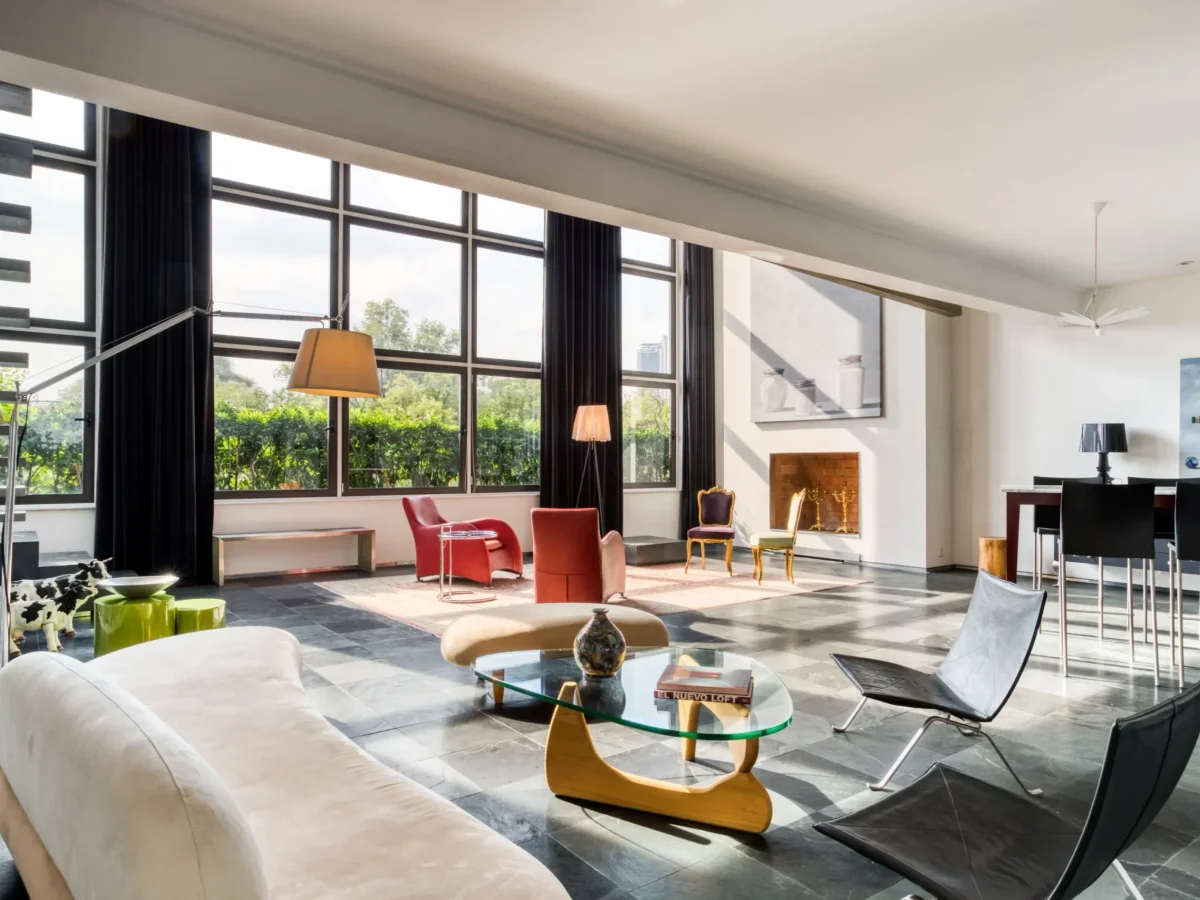
Mexico City is a late city. Dinner starts when a hotel restaurant is winding down, and the best of it happens in rooms that seat twenty people. A private residence changes the shape of the day rather than just the accommodation: you eat breakfast at the hour the city actually wakes, you keep the afternoon free because there is somewhere to return to, and you go out again at ten without it feeling like a second effort. Groups feel this most. Four people in two hotel rooms are four people in two hotel rooms. Four people in a Condesa penthouse with a roof terrace are a group with a base.
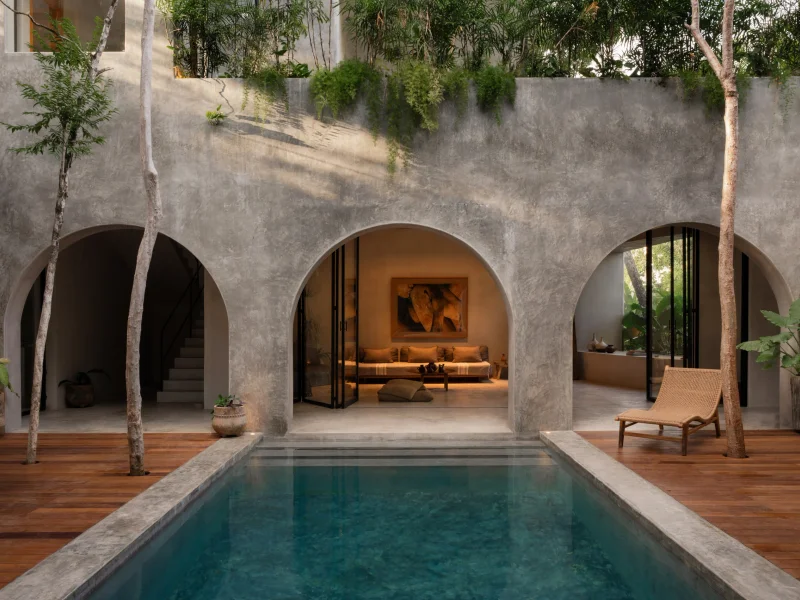
The altitude is the other argument, and it is the one nobody makes until their second day. Mexico City sits at 2,240 metres. The first forty-eight hours cost most visitors more energy than they expect, and the trip tends to get judged on whether there was somewhere decent to lose an afternoon in. A residence with a terrace and a kitchen is a materially better answer to that than a room with a minibar.
How Long to Stay
Five nights is the floor, and it is not an arbitrary number. One day goes to the altitude. One goes to the Centro Historico and Chapultepec, which cannot be sensibly combined. One goes to Teotihuacan or Xochimilco if either is on the list. That leaves two days to live in a neighbourhood rather than visit it, and those two days are the ones people describe when they get home. Under five nights the trip is a checklist. Over seven and the city starts handing you the smaller things: a market, a mezcaleria with no sign, the particular corner you end up walking past every day.
Seasonally, the dry months from November to April are the straightforward choice, and March and April bring the jacarandas, which are worth planning around. The summer rains arrive in the late afternoon, hard and brief, and are far less disruptive than the forecast suggests. What actually moves prices is Day of the Dead at the start of November and the weeks around Christmas, both of which need booking several months out.
Which CDMX neighborhood is best for first-time visitors?
Roma Norte provides the ideal introduction, walkable, restaurant-rich, architecturally stunning, and central to the city's cultural offerings.