The Best Food in Marrakech, Street Food to Fine Dining

From dawn bessara counters and Mechoui Alley to the top dining rooms, an honest guide to the full range of eating in Marrakech.

Marrakech is a city where the food gets better as you move towards either end of the scale and worse in the middle. At one end there are soup counters that open before dawn, lamb pits that have been burning under the same alley for generations, and bread baked in a communal oven by a man who knows which house each loaf belongs to. At the other there are a handful of dining rooms cooking Moroccan food with real ambition. In between sits a very large layer of identical set menus aimed at people who will only be here for three nights. This guide is about the two ends. We have written separately about the sit down restaurants, and this is the wider picture. The City Eats Before You Wake Up The first thing that surprises people is that the real street food day starts at about six in the morning and is largely over by nine. Bessara, a thick broad bean soup finished with olive oil, cumin and a lot of paprika, is sold from small counters and carts around the medina to men on their way to work, eaten with bread and nothing else. Harira, the tomato, lentil and chickpea soup, appears at both ends of the day. Sfenj, which are rough yeasted doughnuts fried in front of you and threaded onto a loop of palm frond, and msemen, the flaky folded flatbread cooked on a griddle, are both breakfast. If you only eat in Marrakech after seven in the evening, you have missed half of it. Mechoui Alley, and the Lamb Pits Just off the northern edge of Djemaa el Fna, near the entrance to the spice souk, there is a short row of shopfronts that has come to be called Mechoui Alley. Whole lambs are lowered into clay pits under the floor at night and roasted slowly in the residual heat, and from late morning the men pull them out, hack off what you point at, weigh it and hand it over with bread, cumin and salt. That is the whole operation and it is one of the great things to eat in Morocco. The practical rules are simple. Go at lunchtime, because when the lamb is gone it is gone. Bring cash. And ask for a shoulder rather than a leg, because it is fattier and far better. Palais Eliah, Marrakech Tanjia, the Dish Almost No Visitor Eats Tanjia is the Marrakech dish in the way that tagine is the Moroccan dish, and it is different in an important way. Meat, preserved lemon, garlic, smen which is aged butter, cumin and saffron go into a tall clay urn, the urn is sealed and carried to the furnatchi, the man who tends the furnace that heats the neighbourhood hammam, and it sits in the ashes for hours. It is traditionally a bachelor's dish, made by men rather than in the family kitchen. Very few tourist restaurants make it properly because it cannot be made to order, so the ones that do have to commit in the morning. Ask in advance, at a riad or a serious restaurant, and it is the single most interesting thing you can eat here. The Night Stalls, Honestly Every guide sends you to the food stalls that set up on Djemaa el Fna at dusk, with the smoke, the numbered awnings and the men calling you

Marrakech is a city where the food gets better as you move towards either end of the scale and worse in the middle. At one end there are soup counters that open before dawn, lamb pits that have been burning under the same alley for generations, and bread baked in a communal oven by a man who knows which house each loaf belongs to. At the other there are a handful of dining rooms cooking Moroccan food with real ambition. In between sits a very large layer of identical set menus aimed at people who will only be here for three nights. This guide is about the two ends. We have written separately about the sit down restaurants, and this is the wider picture.

The City Eats Before You Wake Up

The first thing that surprises people is that the real street food day starts at about six in the morning and is largely over by nine. Bessara, a thick broad bean soup finished with olive oil, cumin and a lot of paprika, is sold from small counters and carts around the medina to men on their way to work, eaten with bread and nothing else. Harira, the tomato, lentil and chickpea soup, appears at both ends of the day. Sfenj, which are rough yeasted doughnuts fried in front of you and threaded onto a loop of palm frond, and msemen, the flaky folded flatbread cooked on a griddle, are both breakfast. If you only eat in Marrakech after seven in the evening, you have missed half of it.

Mechoui Alley, and the Lamb Pits

Just off the northern edge of Djemaa el Fna, near the entrance to the spice souk, there is a short row of shopfronts that has come to be called Mechoui Alley. Whole lambs are lowered into clay pits under the floor at night and roasted slowly in the residual heat, and from late morning the men pull them out, hack off what you point at, weigh it and hand it over with bread, cumin and salt. That is the whole operation and it is one of the great things to eat in Morocco. The practical rules are simple. Go at lunchtime, because when the lamb is gone it is gone. Bring cash. And ask for a shoulder rather than a leg, because it is fattier and far better.

Tanjia, the Dish Almost No Visitor Eats

Tanjia is the Marrakech dish in the way that tagine is the Moroccan dish, and it is different in an important way. Meat, preserved lemon, garlic, smen which is aged butter, cumin and saffron go into a tall clay urn, the urn is sealed and carried to the furnatchi, the man who tends the furnace that heats the neighbourhood hammam, and it sits in the ashes for hours. It is traditionally a bachelor's dish, made by men rather than in the family kitchen. Very few tourist restaurants make it properly because it cannot be made to order, so the ones that do have to commit in the morning. Ask in advance, at a riad or a serious restaurant, and it is the single most interesting thing you can eat here.

The Night Stalls, Honestly

Every guide sends you to the food stalls that set up on Djemaa el Fna at dusk, with the smoke, the numbered awnings and the men calling you in. It is a genuine spectacle and it is worth seeing once. It is also, in our experience across many trips, rarely the best meal of anybody's trip. The stalls are competing on volume and on getting passing visitors to sit down, the turnover of the food varies a great deal between them, the touting is relentless and getting more so, and the standard is uneven from one awning to the next. Go, walk it, eat something small, watch the square fill up, and then eat properly somewhere else.

What the Stalls Genuinely Do Well

There are things in the square that are excellent and they are the specialists rather than the general stalls. The snail broth, babbouche, sold from a few carts with the shells piled in a mound and the broth ladled over them, is a real Marrakech thing and the broth is worth drinking even if the snails are not for you. The stalls selling only grilled merguez and lamb skewers over charcoal do a better job than the ones offering forty items. So do the ones doing only sheep's head or only fried fish. The rule is the same everywhere in the world. A stall that sells one thing has been making that one thing all day and has got good at it.

What They Do Badly

The weak spots are worth naming plainly. Anything sitting in a warm tray rather than being cooked in front of you is a risk, and that applies at midnight far more than at eight. Salads and raw garnishes are the usual source of trouble for visitors rather than the grilled meat. Prices on the square are frequently not quoted until after you have eaten, and bread, olives and extras appear on the bill whether you touched them or not, so ask first and agree the number. The fresh orange juice carts are a Marrakech institution and mostly fine, though ice and pre-squeezed jugs in high summer heat are the part to be careful about.

The Neighbourhood Infrastructure

The thing that makes the medina work as a place to live rather than to visit is a set of small institutions that most visitors walk past. The ferran is the communal wood fired oven where families send their own bread and their own dishes to be baked, and where you can buy the results. The mahlaba is the dairy counter selling yoghurt, raib which is a set fermented milk, and orange juice. The hanout is the tiny general shop that sells everything. Walk any residential derb in the morning and you can eat extremely well for very little without ever entering a restaurant, and that hour is more interesting than most dinners in the city.

The Middle of the Scale Is the Problem

Here is the unflattering part. A large number of riad and medina restaurants serve the same three course set menu of harira, a chicken with preserved lemon tagine or a lamb with prunes tagine, and an orange with cinnamon. It is not bad food and it is not what Moroccan home cooking is. It exists because it can be produced at scale for people staying two nights, and it has flattened the middle of this city's restaurant scene considerably. The
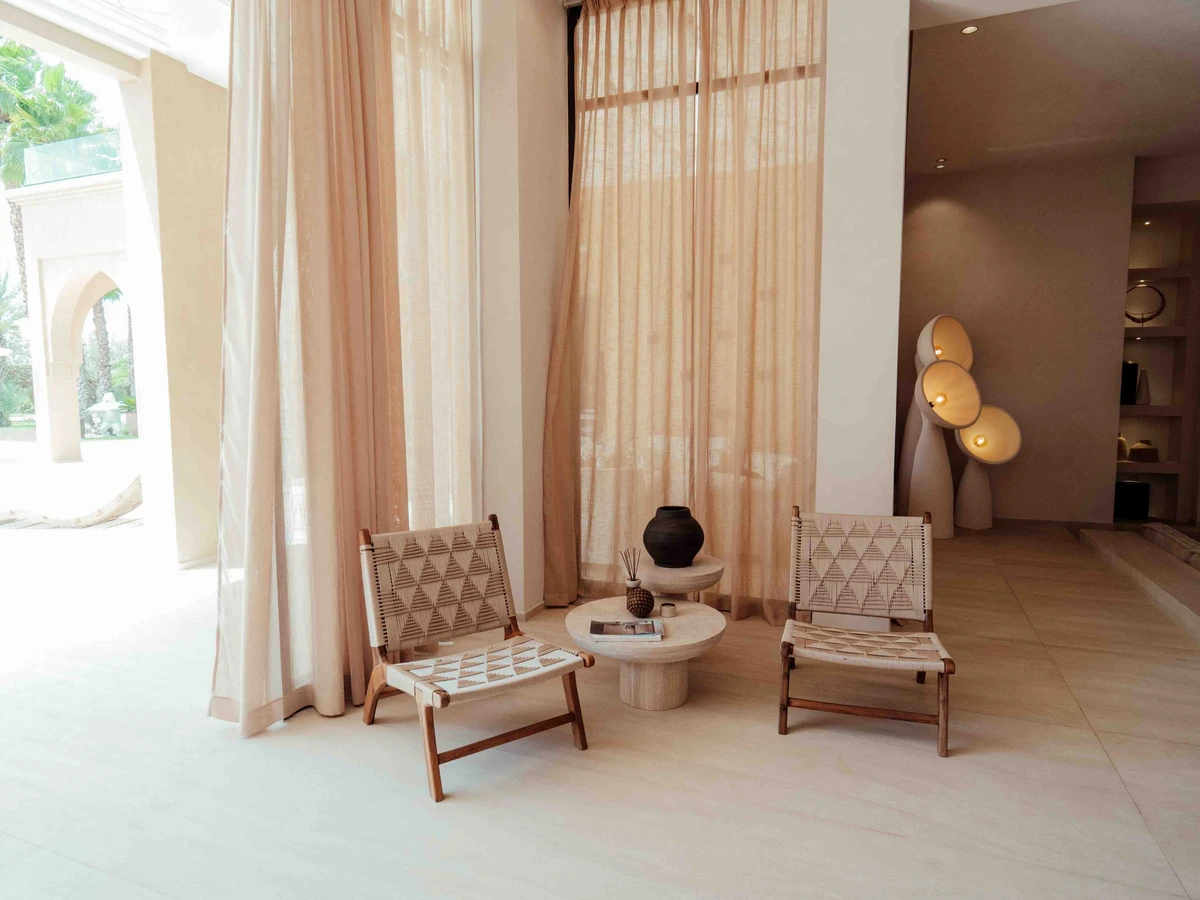
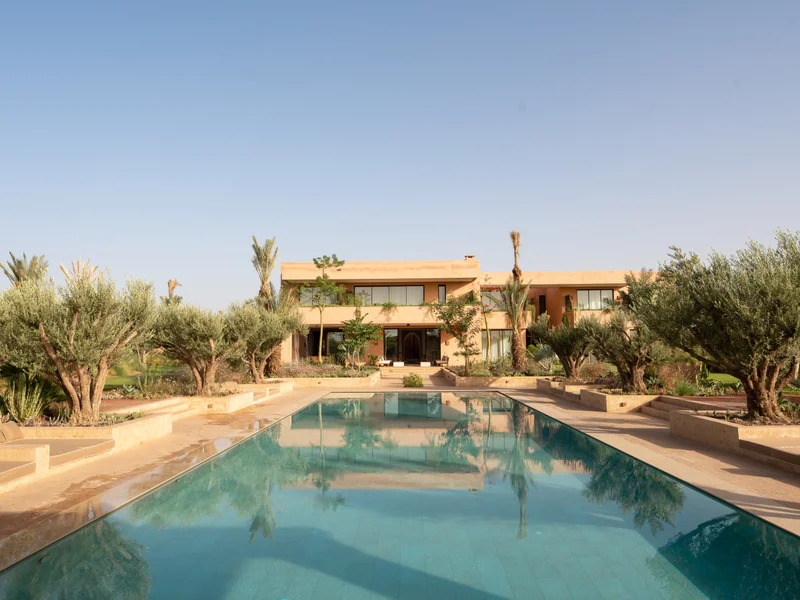
Courtyard and pool at a Marrakech riad in the late afternoon
Guides
MARRAKECH

The Best Food in Marrakech, Street Food to Fine Dining

Mechoui Alley, the Morning Soups, and What the Top End Is Really Selling
Cameron Elder
·
September 25, 2026
·
12 min read
A working guide to the full range of eating in Marrakech, from dawn soup counters and the lamb pits to the dining rooms at the other end of the scale.
Morocco, on film
The whole spectrum, filmed
Mechoui pulled from an underground oven at eleven in the morning, and a palais table the same night. Both are Marrakech and neither explains the other.
You cannot write honestly about the street-food end of this city from a week of restaurant reservations. This was filmed across a month, which is long enough to eat at both ends of the spectrum repeatedly and to learn which end actually delivers. On the market side, which is the half no food guide covers: Marrakech is the strongest destination in our search footprint, interest peaks in April with March just behind, and in those weeks the fine-dining rooms are booked days ahead while the stalls never need a reservation at all.
Marrakech is a city where the food gets better as you move towards either end of the scale and worse in the middle. At one end there are soup counters that open before dawn, lamb pits that have been burning under the same alley for generations, and bread baked in a communal oven by a man who knows which house each loaf belongs to. At the other there are a handful of dining rooms cooking Moroccan food with real ambition. In between sits a very large layer of identical set menus aimed at people who will only be here for three nights. This guide is about the two ends. We have written separately about the sit down restaurants, and this is the wider picture.

The City Eats Before You Wake Up

The first thing that surprises people is that the real street food day starts at about six in the morning and is largely over by nine. Bessara, a thick broad bean soup finished with olive oil, cumin and a lot of paprika, is sold from small counters and carts around the medina to men on their way to work, eaten with bread and nothing else. Harira, the tomato, lentil and chickpea soup, appears at both ends of the day. Sfenj, which are rough yeasted doughnuts fried in front of you and threaded onto a loop of palm frond, and msemen, the flaky folded flatbread cooked on a griddle, are both breakfast. If you only eat in Marrakech after seven in the evening, you have missed half of it.

Mechoui Alley, and the Lamb Pits

Just off the northern edge of Djemaa el Fna, near the entrance to the spice souk, there is a short row of shopfronts that has come to be called Mechoui Alley. Whole lambs are lowered into clay pits under the floor at night and roasted slowly in the residual heat, and from late morning the men pull them out, hack off what you point at, weigh it and hand it over with bread, cumin and salt. That is the whole operation and it is one of the great things to eat in Morocco. The practical rules are simple. Go at lunchtime, because when the lamb is gone it is gone. Bring cash. And ask for a shoulder rather than a leg, because it is fattier and far better.
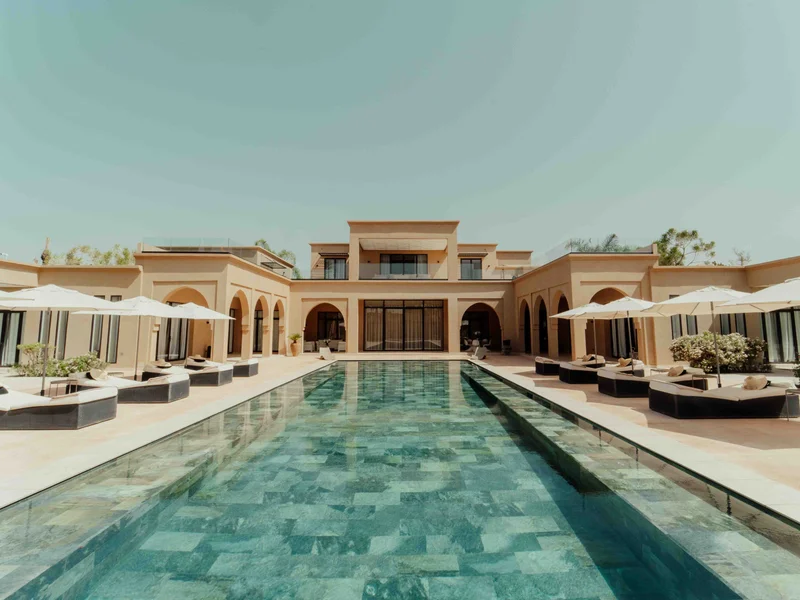
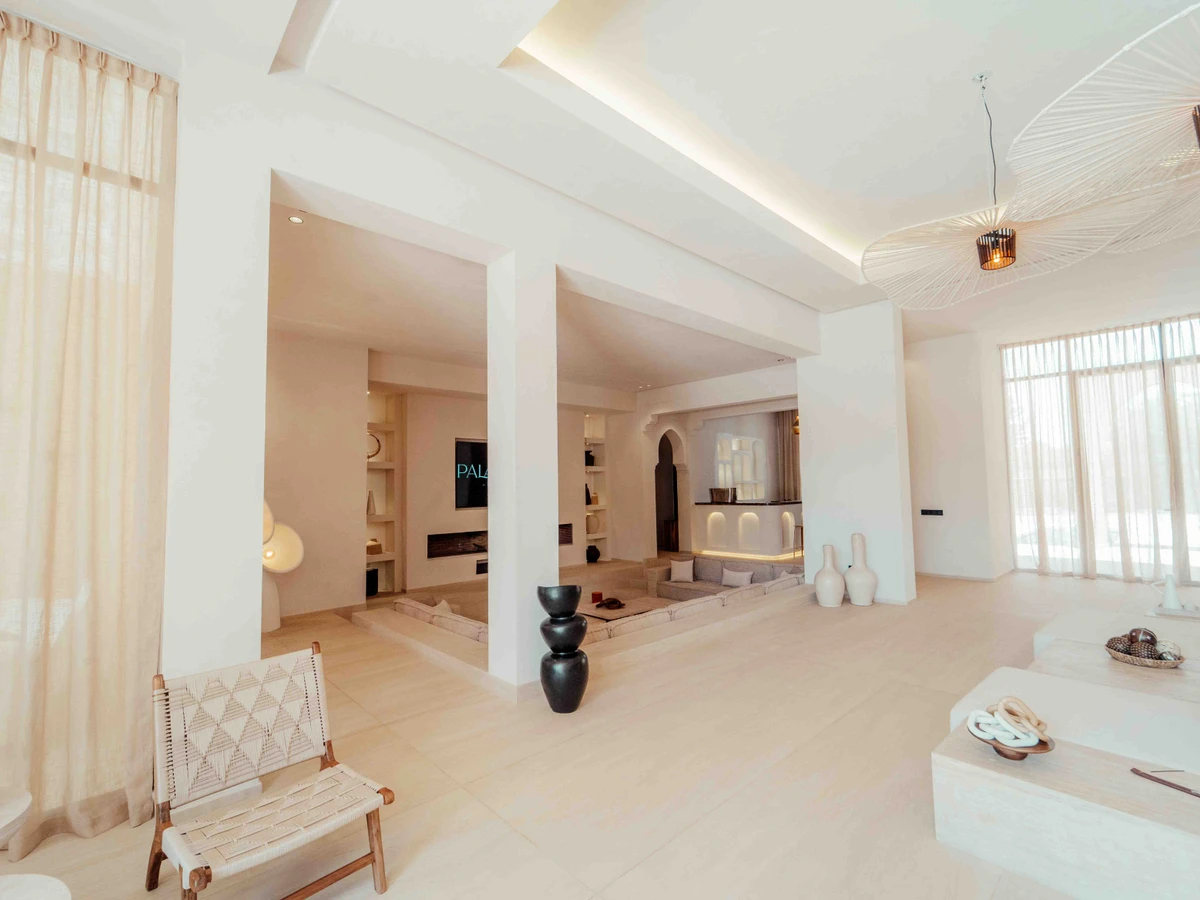
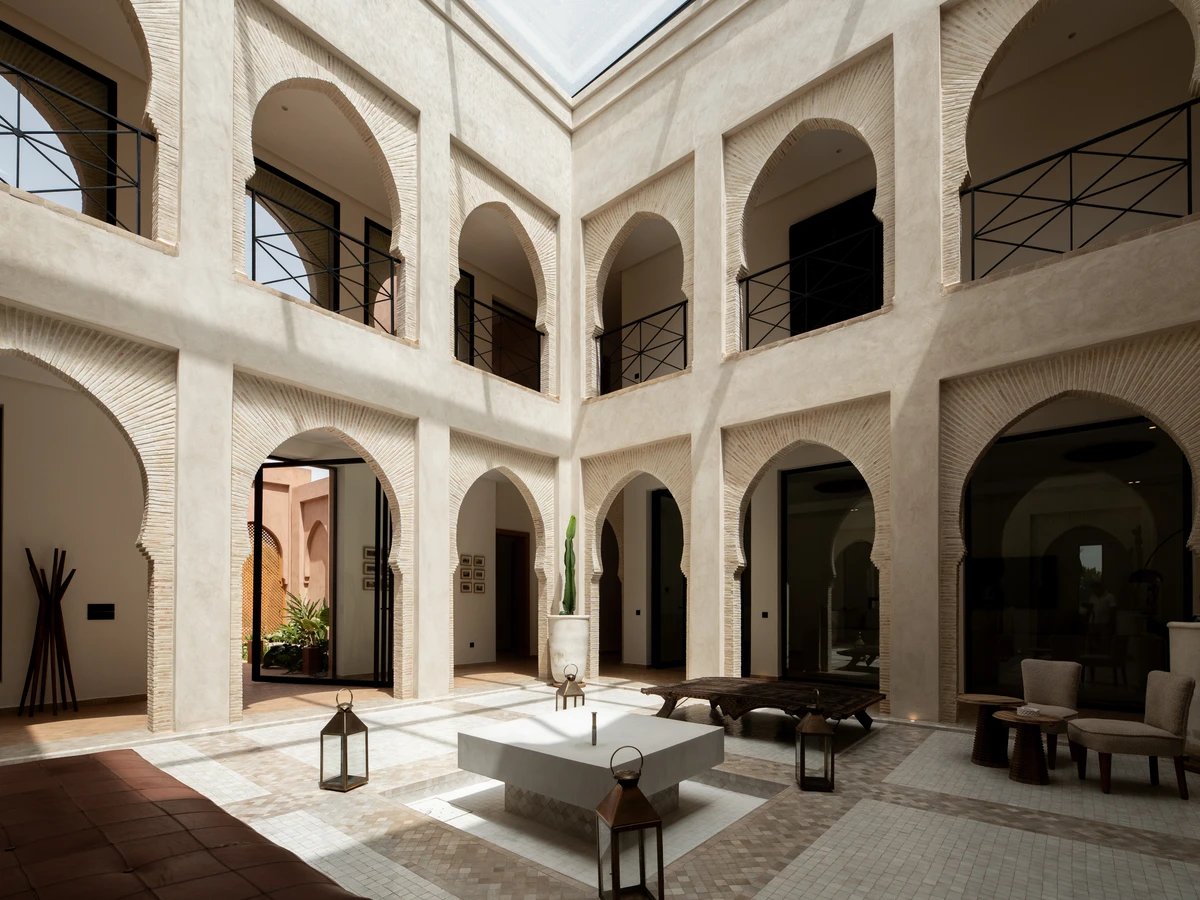
Carved courtyard arcade and dining area in a Marrakech palace riad
Palais Eliah, Marrakech

Tanjia, the Dish Almost No Visitor Eats

Tanjia is the Marrakech dish in the way that tagine is the Moroccan dish, and it is different in an important way. Meat, preserved lemon, garlic, smen which is aged butter, cumin and saffron go into a tall clay urn, the urn is sealed and carried to the furnatchi, the man who tends the furnace that heats the neighbourhood hammam, and it sits in the ashes for hours. It is traditionally a bachelor's dish, made by men rather than in the family kitchen. Very few tourist restaurants make it properly because it cannot be made to order, so the ones that do have to commit in the morning. Ask in advance, at a riad or a serious restaurant, and it is the single most interesting thing you can eat here.

The Night Stalls, Honestly

Every guide sends you to the food stalls that set up on Djemaa el Fna at dusk, with the smoke, the numbered awnings and the men calling you in. It is a genuine spectacle and it is worth seeing once. It is also, in our experience across many trips, rarely the best meal of anybody's trip. The stalls are competing on volume and on getting passing visitors to sit down, the turnover of the food varies a great deal between them, the touting is relentless and getting more so, and the standard is uneven from one awning to the next. Go, walk it, eat something small, watch the square fill up, and then eat properly somewhere else.

What the Stalls Genuinely Do Well

There are things in the square that are excellent and they are the specialists rather than the general stalls. The snail broth, babbouche, sold from a few carts with the shells piled in a mound and the broth ladled over them, is a real Marrakech thing and the broth is worth drinking even if the snails are not for you. The stalls selling only grilled merguez and lamb skewers over charcoal do a better job than the ones offering forty items. So do the ones doing only sheep's head or only fried fish. The rule is the same everywhere in the world. A stall that sells one thing has been making that one thing all day and has got good at it.

What They Do Badly

The weak spots are worth naming plainly. Anything sitting in a warm tray rather than being cooked in front of you is a risk, and that applies at midnight far more than at eight. Salads and raw garnishes are the usual source of trouble for visitors rather than the grilled meat. Prices on the square are frequently not quoted until after you have eaten, and bread, olives and extras appear on the bill whether you touched them or not, so ask first and agree the number. The fresh orange juice carts are a Marrakech institution and mostly fine, though ice and pre-squeezed jugs in high summer heat are the part to be careful about.
Rooftop terrace with low seating and lanterns in Marrakech
Dar Manou, Marrakech

The Neighbourhood Infrastructure

The thing that makes the medina work as a place to live rather than to visit is a set of small institutions that most visitors walk past. The ferran is the communal wood fired oven where families send their own bread and their own dishes to be baked, and where you can buy the results. The mahlaba is the dairy counter selling yoghurt, raib which is a set fermented milk, and orange juice. The hanout is the tiny general shop that sells everything. Walk any residential derb in the morning and you can eat extremely well for very little without ever entering a restaurant, and that hour is more interesting than most dinners in the city.

The Middle of the Scale Is the Problem

Here is the unflattering part. A large number of riad and medina restaurants serve the same three course set menu of harira, a chicken with preserved lemon tagine or a lamb with prunes tagine, and an orange with cinnamon. It is not bad food and it is not what Moroccan home cooking is. It exists because it can be produced at scale for people staying two nights, and it has flattened the middle of this city's restaurant scene considerably. The signals to look for are a menu in four languages, a tout on the door, and a courtyard that seats eighty. None of those is fatal on its own and all three together is a reliable warning.
The Serious End

At the top, Marrakech has real cooking. Al Fassia in Gueliz has been run and staffed entirely by women for decades and serves Fassi cooking that is closer to what a good family kitchen produces than almost anything in the medina. Dar Yacout and Le Foundouk are the grand medina rooms, where the building and the roof terrace are a large part of the experience. Nomad and Le Jardin brought a lighter, modern approach to the souk. The palace hotels run kitchens at a level that would stand up anywhere. These are not cheap and they are not trying to be, and one or two nights in that band is a reasonable shape for a week.

How the Top End Actually Compares

Our honest assessment, having eaten across this range repeatedly, is that the gap between the two ends of the scale in Marrakech is smaller than the price difference suggests. A shoulder of lamb from the pits with bread and cumin, eaten standing up at midday, is as good as almost anything served on a roof terrace with a courtyard fountain and a lute player. What the top end buys you is the room, the service, the wine list and a chair, and those are real things worth paying for on a couple of evenings. What it does not reliably buy you is better cooking. Anybody who tells you otherwise is selling the terrace.

Alcohol, Ramadan and Fridays

Three practical rules that catch people out. Most restaurants inside the medina do not serve alcohol, and licensed rooms are concentrated in the riads, the hotel restaurants and the newer city in Gueliz. Assume no alcohol unless you have checked. During Ramadan the whole rhythm of eating changes, many places close during daylight, and the hour around sunset is the busiest and best moment in the city if you plan for it rather than around it. And Friday is couscous day, when families eat couscous after midday prayers, so the city is slow at lunchtime on a Friday and couscous is the thing to order.

Cash, Touts and Small Practicalities

The street food end is entirely cash and small notes are worth having, because nobody at a stall wants to break a large one. Tipping a few dirhams at a counter and around ten percent at a restaurant is normal. Anybody who offers to guide you to a good restaurant is almost certainly paid a commission by that restaurant, which is not sinister but does mean the recommendation is not about the food. The medina is a maze and pins on a map are often wrong by a lane or two, so allow extra time. Agree a price before a taxi moves, because the meter is frequently described as broken.

The Dada Argument

We will finish by arguing against this entire guide. The best Moroccan food most of our guests eat all week is cooked at the house by their own dada, the traditional cook who runs a Moroccan kitchen, and it is not close. She shops the market that morning, she has been making the same tagine for thirty years, and nothing about it is built to impress a visitor. No restaurant in the city is going to give you a better chicken with preserved lemon than that. Eat out for the things a house cannot do, which are the lamb pits, the dawn soup counters, the square and a couple of serious rooms, and eat the rest of the week in the courtyard.
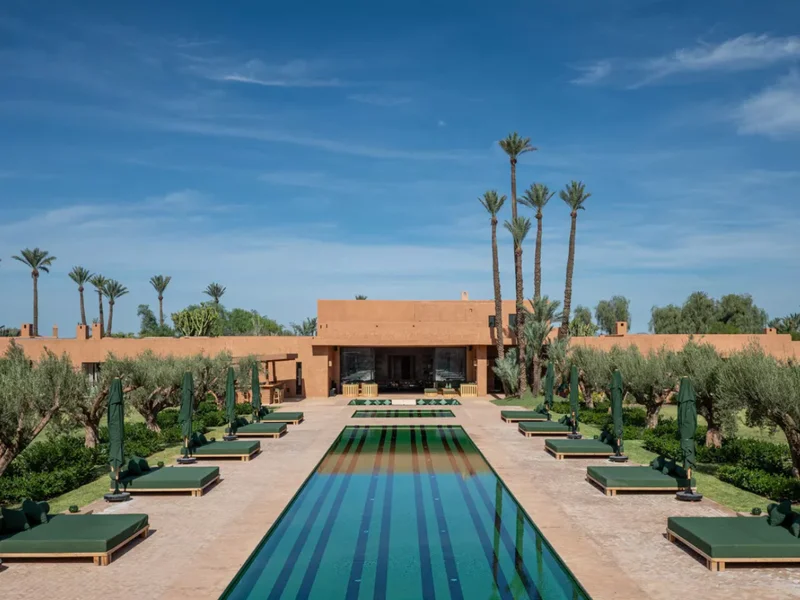
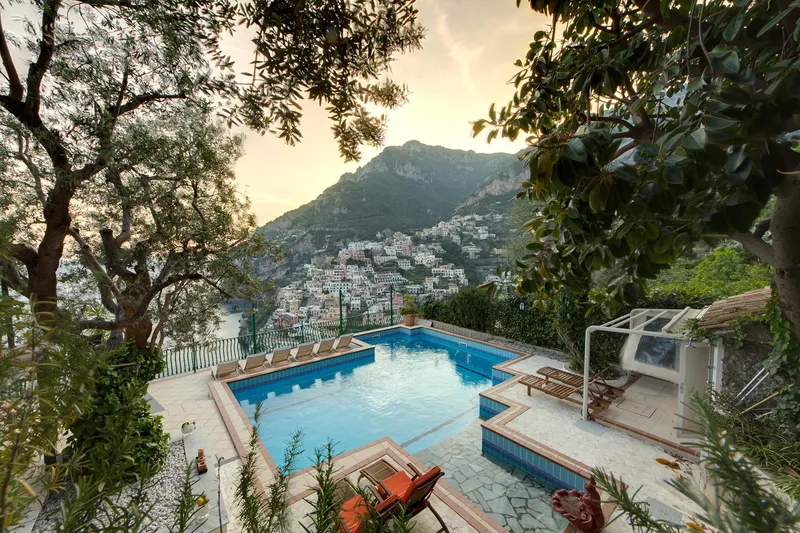
Garden dining table under olive trees at a Marrakech villa
Villa Kemgia, Marrakech

A Word on Reliability

Street food is the most stable part of this picture and restaurants are the least. The lamb pits and the soup counters have been in the same lanes for generations and will still be there. Restaurants in the medina change hands constantly, a chef leaving can gut a room in a season, and a well known name can reopen under new owners with nothing but the name left. Summer closures are common too, because August in Marrakech is punishing and some kitchens simply shut. We re-check what is open, who is cooking and whether a place is licensed before we put a guest anywhere, and we would treat any list, this one included, as a starting point.
Key Takeaways
Marrakech rewards eating at the extremes of the scale, at the dawn soup counters and at the serious dining rooms, and punishes the middle.
Mechoui Alley sells slow roasted lamb from underground pits at lunchtime only, it is cash only, and it sells out well before evening.
The night stalls on Djemaa el Fna are worth seeing once and are rarely the best meal of anybody's trip.
Most medina restaurants do not serve alcohol, and the licensed rooms are concentrated in the riads, the hotels and Gueliz.
The best Moroccan food most guests eat all week is cooked at the house by their own dada, which argues against every restaurant list including this one.

Frequently Asked Questions

What is Mechoui Alley and when should I go?
It is a short row of shopfronts off the northern edge of Djemaa el Fna where whole lambs are roasted overnight in clay pits under the floor. Go at lunchtime, because once the lamb is gone the day is over. It is cash only, you point at what you want and it is weighed, and the shoulder is better than the leg.
Are the food stalls on Djemaa el Fna worth eating at?
They are worth seeing once and they are rarely the best meal of a trip. The general stalls compete on volume and touting, and quality varies a lot between awnings. The specialists are the exception, particularly the snail broth carts and the stalls grilling only merguez and lamb skewers. Walk it, eat something small, then eat properly elsewhere.
What is tanjia and where can I try it?
Tanjia is the Marrakech speciality, meat with preserved lemon, garlic, aged butter and saffron sealed in a clay urn and cooked slowly in the ashes of the hammam furnace. It cannot be made to order, so a kitchen has to commit in the morning. Ask your riad or a serious restaurant a day ahead rather than expecting it on a menu.
Is street food in Marrakech safe to eat?
Mostly, with the usual care. Eat what is cooked in front of you rather than what is sitting in a warm tray, be more careful late at night than at lunchtime, and be more careful with raw salads and garnishes than with grilled meat. The dawn soup counters and the lamb pits both have very high turnover, which is the best protection there is.
Do Marrakech restaurants serve alcohol?
Many do not, particularly inside the medina. Licensed dining is concentrated in riads, hotel restaurants and the newer Gueliz district. Assume there is no alcohol unless you have checked in advance, and say so when you book if it matters to the group, because it changes which rooms are worth considering.
What should I eat for breakfast in Marrakech?
Bessara, a thick broad bean soup with olive oil, cumin and paprika, sold from counters and carts around the medina early in the morning. Add sfenj, the rough fried doughnuts threaded onto palm frond, and msemen, the folded flatbread cooked on a griddle. The street food day here starts around six and is largely finished by nine.
Why do so many Marrakech restaurants serve the same menu?
Because a set menu of harira, a chicken or lamb tagine and an orange with cinnamon can be produced at scale for visitors staying two or three nights. It is not bad food and it is not home cooking either. A menu in four languages, a tout on the door and a courtyard seating eighty together are a reliable warning.
Is fine dining in Marrakech better than the street food?
Not reliably. The top rooms are genuinely good and what you are mainly buying is the building, the service, the wine list and a chair. A shoulder of lamb from the pits eaten standing up at midday holds its own against most of it. One or two serious evenings in a week is a sensible balance.
Follow the journey @erentalsexclusive + @aurelseyez
Villa tours, destination guides, and behind-the-scenes content from the team on the ground
Cameron Elder
Founder, ERentals Exclusive
morocco
marrakech
food
street-food

See it in motion

From the feed

Real stays, real light. Tap any film to watch it full screen.

Stay in the loop
© 2026 ERentals Exclusive