Things to Do in Marrakech

Best things to do in Marrakech for luxury travelers. Private hammams, Atlas Mountain excursions, food experiences, and the honest guide to shopping the souks.

Marrakech runs on sensory overload and the standard mistake is to treat that as a checklist problem. People arrive with nine things written down, do all nine badly, and leave describing the city as exhausting. The city is not exhausting. An itinerary with no slack in it is exhausting. What follows is what actually earns its place in a week here, what it costs you in time rather than money, and the two or three things most lists recommend that we would quietly drop. The underlying rhythm matters more than any single booking. Mornings are for anything outdoors or anything involving walking, because by one in the afternoon in anything but deep winter the heat has taken the pleasure out of both. Afternoons are for the hammam, for the riad courtyard, for the pool at the house. Evenings are when the city becomes itself. Build the week that way and you will do fewer things and remember more of them. The Hammam Is the One Thing to Book First A traditional hammam is steam, black soap, a gommage scrub that removes a layer of you, and a massage, in a heated room, over sixty to ninety minutes. It is the single most Moroccan thing available and there is no real equivalent anywhere else. It is also the experience most often booked badly, because the version sold inside international hotels is a spa treatment wearing a hammam's name. Two routes are worth your time. A private booking in a historic bath house in the medina, which is the more atmospheric and the more variable, or the hammam room in the house you have rented, with a therapist who comes to you. The second is the one most of our guests prefer after the first day of walking, because there is no taxi at either end of it and no getting dressed to go home. If the property has a hammam, use it on the day you have overdone the souks. That is what it is for. The Souks, and the Hour That Decides How They Go The medina souks are the main event and the main source of frustration, and the difference between those two outcomes is usually the hour you go in. Mid morning, before the coach groups arrive and before the heat, the lanes are working rather than performing. Late afternoon they are at their densest. Going in at noon in July is how people end up with the version of the story where they got lost, got hassled, bought nothing, and went back to the pool. Take a guide the first time. Not for safety, which is not the issue, but because a good guide takes you to the people who actually make things rather than the people who buy things and resell them, and because the first pricing conversation goes better with someone who knows the range. Then go back alone on a later day, which is when the buying usually happens. Worth carrying home: leather, zellige, hand beaten metal lanterns, Berber rugs if you have had the weave explained to you, argan oil from a cooperative. Worth walking past: anything described as antique with no story attached to it, and anything you have now seen in four stalls. A hammam in the house r

Marrakech runs on sensory overload and the standard mistake is to treat that as a checklist problem. People arrive with nine things written down, do all nine badly, and leave describing the city as exhausting. The city is not exhausting. An itinerary with no slack in it is exhausting. What follows is what actually earns its place in a week here, what it costs you in time rather than money, and the two or three things most lists recommend that we would quietly drop.

The underlying rhythm matters more than any single booking. Mornings are for anything outdoors or anything involving walking, because by one in the afternoon in anything but deep winter the heat has taken the pleasure out of both. Afternoons are for the hammam, for the riad courtyard, for the pool at the house. Evenings are when the city becomes itself. Build the week that way and you will do fewer things and remember more of them.

The Hammam Is the One Thing to Book First

A traditional hammam is steam, black soap, a gommage scrub that removes a layer of you, and a massage, in a heated room, over sixty to ninety minutes. It is the single most Moroccan thing available and there is no real equivalent anywhere else. It is also the experience most often booked badly, because the version sold inside international hotels is a spa treatment wearing a hammam's name.

Two routes are worth your time. A private booking in a historic bath house in the medina, which is the more atmospheric and the more variable, or the hammam room in the house you have rented, with a therapist who comes to you. The second is the one most of our guests prefer after the first day of walking, because there is no taxi at either end of it and no getting dressed to go home. If the property has a hammam, use it on the day you have overdone the souks. That is what it is for.

The Souks, and the Hour That Decides How They Go

The medina souks are the main event and the main source of frustration, and the difference between those two outcomes is usually the hour you go in. Mid morning, before the coach groups arrive and before the heat, the lanes are working rather than performing. Late afternoon they are at their densest. Going in at noon in July is how people end up with the version of the story where they got lost, got hassled, bought nothing, and went back to the pool.

Take a guide the first time. Not for safety, which is not the issue, but because a good guide takes you to the people who actually make things rather than the people who buy things and resell them, and because the first pricing conversation goes better with someone who knows the range. Then go back alone on a later day, which is when the buying usually happens. Worth carrying home: leather, zellige, hand beaten metal lanterns, Berber rugs if you have had the weave explained to you, argan oil from a cooperative. Worth walking past: anything described as antique with no story attached to it, and anything you have now seen in four stalls.

Jemaa el-Fnaa Is Better Watched Twice

The main square is genuinely one of the great sights, and it is also the place where visitors most often feel they are being processed. The way through that is to see it twice in one evening. Go up first, to a rooftop cafe on the edge of the square, an hour before sunset. From above you watch the thing assemble: the food stalls wheeling in, the smoke starting, the musicians claiming ground, the call to prayer coming off the minarets around you. That is the view that explains the place.

Then go down into it, once it is fully dark and fully loud. At street level it is a different experience and a shorter one. Forty minutes is plenty. Keep your phone in a front pocket, agree a price before anyone photographs you with anything alive, and accept that the orange juice is good and the grilled food is a gamble that most people win. It is crowded rather than dangerous, and the crowding is the point.

The Atlas Is Half a Day, Not a Day

The Atlas Mountains start about thirty minutes south of the city, which is the fact that surprises people, and the Ourika Valley is the accessible version: Berber villages, a river, waterfalls, and a temperature ten degrees kinder than the medina. Imlil, further in, is the trailhead for Toubkal and a more serious proposition. A private car and a guide is the right way to do either, and a four wheel drive genuinely matters on the upper tracks rather than being an upsell.

The honest note is that the standard full day Atlas trip contains about half a day of value and a lot of driving either side of it. Leave early, be back for a late lunch, and you have kept the best of it and reclaimed an afternoon. The exception is spring, roughly March into May, when the valley is green and there is snow still visible above it, and the day is worth giving properly.

The Coast, Which Most Marrakech Lists Skip

Nearly every Marrakech itinerary treats Essaouira as the only coastal option. It is the easy one and it is good. The two places worth knowing about instead are Imsouane and Taghazout, both further south on the Atlantic. Imsouane is tiny, the sort of surf town where all of it sits inside a ten minute walk, and it holds a week comfortably if the group genuinely wants to slow down. Taghazout is the larger of the two, with real restaurants and bars, and the surfers are not on the main town beach, so ask locally before carrying boards down to the obvious stretch of sand.

This is a two centre trip rather than a day trip. The drive is long enough that bolting it onto a Marrakech week as an out and back wastes the best part of it. Where it works is a split stay: the villa outside Marrakech first, then the coast, in that order, because arriving at the sea at the end of a week reads as a reward and arriving at the medina at the end of one reads as a chore.

Gardens, Museums and the Quiet Half of the City

Marrakech has a second register that gets less attention because it
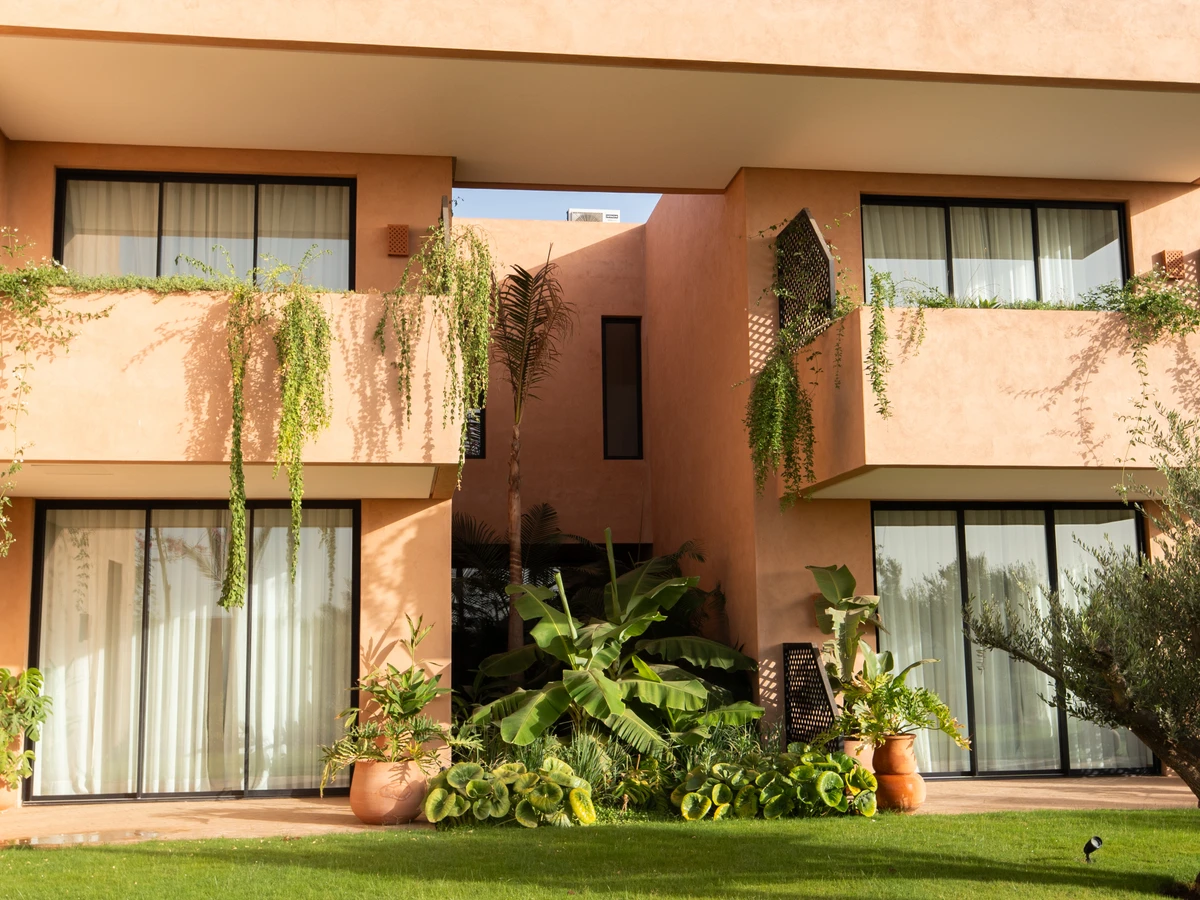
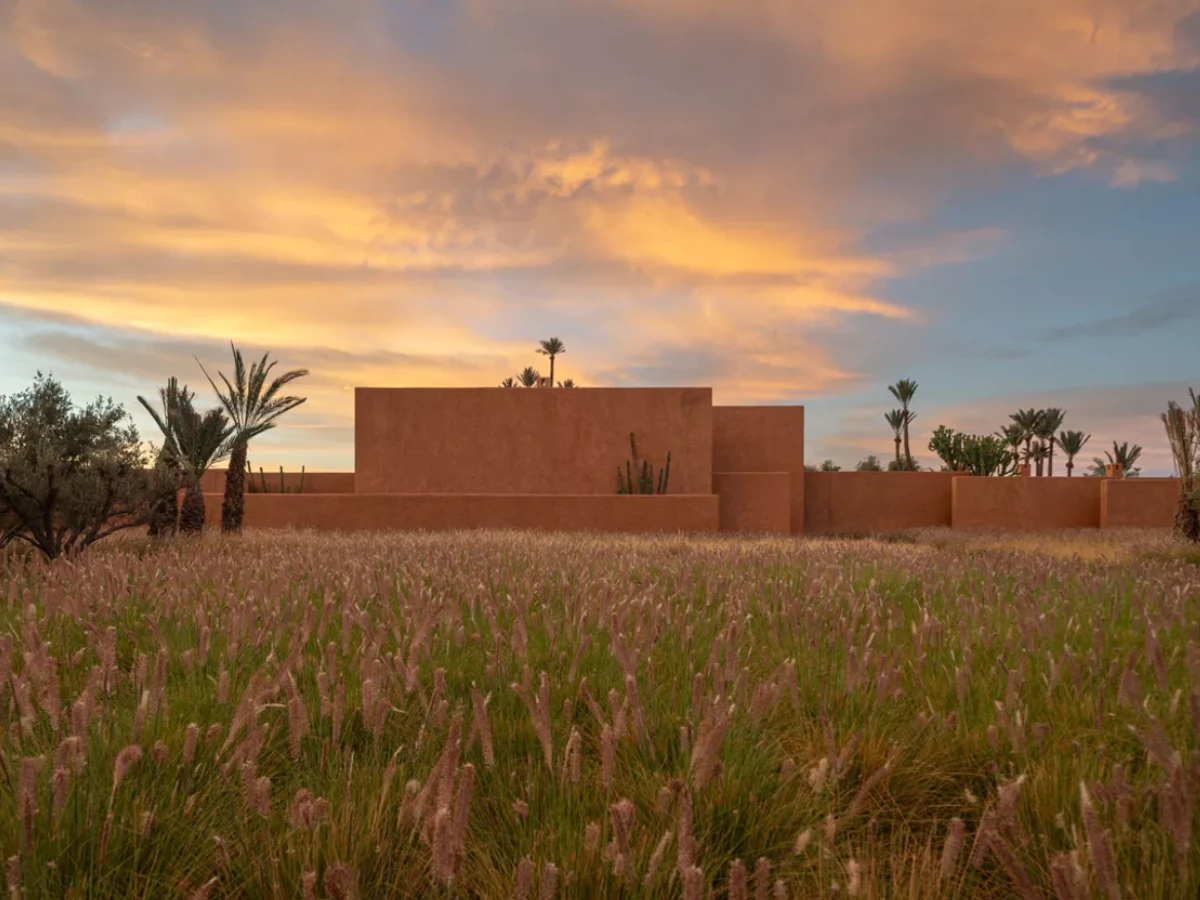
Terracotta-rendered villa facade at Dar Manou in Marrakech, with dark lattice screens, planted terraces spilling greenery over the parapets, and a palm and olive tree on the lawn in late afternoon sun
Guides
MARRAKECH

Things to Do in Marrakech

What Earns Its Place in a Week, and What Most Lists Get Wrong
Cameron Elder
·
February 9, 2026
·
11 min read
Beyond the souks. Private hammams, Atlas Mountain excursions, the best food experiences, and what to actually buy in the medina.
Morocco, on film
A month of this, filmed
The city chapter opens at 4:40 and the Atlas at 3:54. The souks, the mountains and the coast on this list are all in there, filmed as we found them.
We shot this in spring, which is also when interest in Marrakech peaks for the year. That is not a guess: Marrakech is the strongest destination in our search footprint, and the demand we track peaks in April with March close behind. So if you want a specific hammam slot, a particular Agafay camp or a good guide in those weeks, book them alongside the villa rather than on arrival. The villa is the easy part.
Marrakech runs on sensory overload and the standard mistake is to treat that as a checklist problem. People arrive with nine things written down, do all nine badly, and leave describing the city as exhausting. The city is not exhausting. An itinerary with no slack in it is exhausting. What follows is what actually earns its place in a week here, what it costs you in time rather than money, and the two or three things most lists recommend that we would quietly drop.
The underlying rhythm matters more than any single booking. Mornings are for anything outdoors or anything involving walking, because by one in the afternoon in anything but deep winter the heat has taken the pleasure out of both. Afternoons are for the hammam, for the riad courtyard, for the pool at the house. Evenings are when the city becomes itself. Build the week that way and you will do fewer things and remember more of them.

The Hammam Is the One Thing to Book First

A traditional hammam is steam, black soap, a gommage scrub that removes a layer of you, and a massage, in a heated room, over sixty to ninety minutes. It is the single most Moroccan thing available and there is no real equivalent anywhere else. It is also the experience most often booked badly, because the version sold inside international hotels is a spa treatment wearing a hammam's name.
Two routes are worth your time. A private booking in a historic bath house in the medina, which is the more atmospheric and the more variable, or the hammam room in the house you have rented, with a therapist who comes to you. The second is the one most of our guests prefer after the first day of walking, because there is no taxi at either end of it and no getting dressed to go home. If the property has a hammam, use it on the day you have overdone the souks. That is what it is for.

The Souks, and the Hour That Decides How They Go

The medina souks are the main event and the main source of frustration, and the difference between those two outcomes is usually the hour you go in. Mid morning, before the coach groups arrive and before the heat, the lanes are working rather than performing. Late afternoon they are at their densest. Going in at noon in July is how people end up with the version of the story where they got lost, got hassled, bought nothing, and went back to the pool.
Take a guide the first time. Not for safety, which is not the issue, but because a good guide takes you to the people who actually make things rather than the people who buy things and resell them, and because the first pricing conversation goes better with someone who knows the range. Then go back alone on a later day, which is when the buying usually happens. Worth carrying home: leather, zellige, hand beaten metal lanterns, Berber rugs if you have had the weave explained to you, argan oil from a cooperative. Worth walking past: anything described as antique with no story attached to it, and anything you have now seen in four stalls.
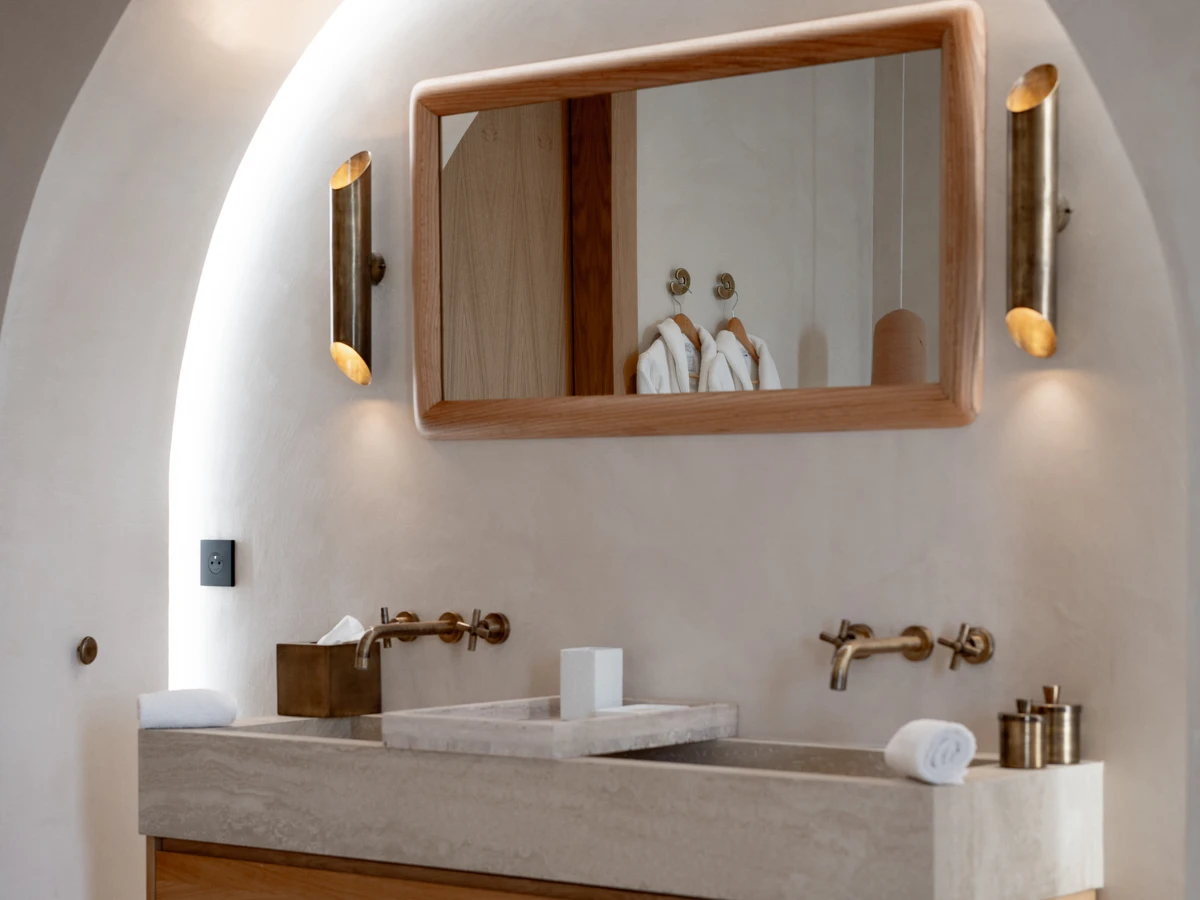
Twin stone basins set in an arched plaster alcove in a Marrakech villa hammam
A hammam in the house removes the two worst parts of the experience, the taxi at each end.

Jemaa el-Fnaa Is Better Watched Twice

The main square is genuinely one of the great sights, and it is also the place where visitors most often feel they are being processed. The way through that is to see it twice in one evening. Go up first, to a rooftop cafe on the edge of the square, an hour before sunset. From above you watch the thing assemble: the food stalls wheeling in, the smoke starting, the musicians claiming ground, the call to prayer coming off the minarets around you. That is the view that explains the place.
Then go down into it, once it is fully dark and fully loud. At street level it is a different experience and a shorter one. Forty minutes is plenty. Keep your phone in a front pocket, agree a price before anyone photographs you with anything alive, and accept that the orange juice is good and the grilled food is a gamble that most people win. It is crowded rather than dangerous, and the crowding is the point.

The Atlas Is Half a Day, Not a Day

The Atlas Mountains start about thirty minutes south of the city, which is the fact that surprises people, and the Ourika Valley is the accessible version: Berber villages, a river, waterfalls, and a temperature ten degrees kinder than the medina. Imlil, further in, is the trailhead for Toubkal and a more serious proposition. A private car and a guide is the right way to do either, and a four wheel drive genuinely matters on the upper tracks rather than being an upsell.
The honest note is that the standard full day Atlas trip contains about half a day of value and a lot of driving either side of it. Leave early, be back for a late lunch, and you have kept the best of it and reclaimed an afternoon. The exception is spring, roughly March into May, when the valley is green and there is snow still visible above it, and the day is worth giving properly.
Villa Kemgia at dusk outside Marrakech, low terrace lit against the Atlas foothills
Out of the medina, the temperature drops and the evening becomes usable.

The Coast, Which Most Marrakech Lists Skip

Nearly every Marrakech itinerary treats Essaouira as the only coastal option. It is the easy one and it is good. The two places worth knowing about instead are Imsouane and Taghazout, both further south on the Atlantic. Imsouane is tiny, the sort of surf town where all of it sits inside a ten minute walk, and it holds a week comfortably if the group genuinely wants to slow down. Taghazout is the larger of the two, with real restaurants and bars, and the surfers are not on the main town beach, so ask locally before carrying boards down to the obvious stretch of sand.
This is a two centre trip rather than a day trip. The drive is long enough that bolting it onto a Marrakech week as an out and back wastes the best part of it. Where it works is a split stay: the villa outside Marrakech first, then the coast, in that order, because arriving at the sea at the end of a week reads as a reward and arriving at the medina at the end of one reads as a chore.

Gardens, Museums and the Quiet Half of the City

Marrakech has a second register that gets less attention because it photographs less dramatically. The Jardin Majorelle and the Yves Saint Laurent museum next to it are the famous version and they are worth it if you go at opening and not otherwise, because the garden is small and the queue is not. Le Jardin Secret, inside the medina, is the one we send people to when Majorelle is full, and it is quieter for the same reason it is less known.
The Bahia Palace, the Saadian Tombs and the Ben Youssef Madrasa are the three historic interiors worth the entry, and the madrasa is the one that tends to stay with people. Pace these. Two in a morning is a good morning. Four in a day is a museum march, and Marrakech punishes that particular ambition more than most cities because of the walking and the heat between them.

Eating, and Where the Money Actually Goes

The food splits three ways here and each layer is worth one or two visits rather than all of them. Street level, which is the Jemaa stalls and the counters around the medina, is cheap, immediate, and the best value in the city. The middle layer is the riad dining rooms and the rooftop restaurants, which is where most visitors eat most nights, and where the gap between the excellent and the merely pretty is widest. The top end is a small number of serious kitchens, mostly in Gueliz and the Palmeraie, and it is genuinely good rather than simply expensive.
A cooking class is the one food activity we consistently recommend, and specifically one that starts with the market rather than the kitchen, because the market half is the part you could not have done alone. Tagine, couscous and pastilla are the standard three. The other thing worth arranging, if you have the house for it, is a chef cooking for the group at home one evening. It costs less than the equivalent restaurant night for eight people, and it is the meal the group tends to talk about afterwards.
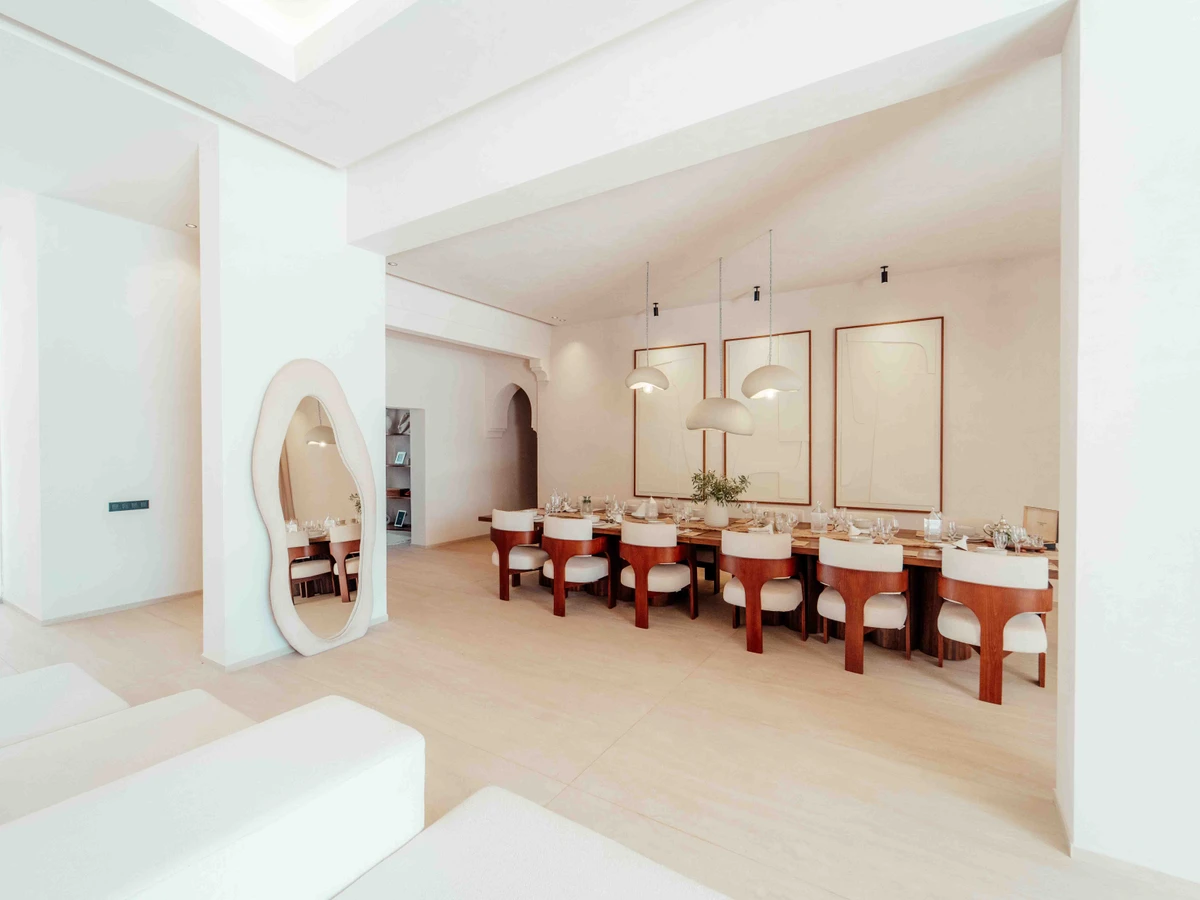
The long dining table at Palais Eliah in Marrakech set under lanterns for an evening meal
A chef at the house for one night usually beats the restaurant it replaced.

When to Come, and the Month That Catches People Out

March to May and late September into November are the two windows where the city is doing what it does best, warm in the day and cool enough at night to sit outside. December through February is genuinely cold after dark, which surprises people who packed for Africa, and a house without working heating is a real problem rather than a small one. Ask about heating specifically, not about whether the property is winterised.
The month that catches people out is July and August. Daytime temperatures make the medina close to unusable between late morning and early evening, and the standard itinerary collapses. It is not that the city is closed. It is that the shape of the day inverts, and everything moves to early morning and after dark, with the middle spent somewhere with water. If those are your dates, the pool stops being a nice feature and becomes the main structural requirement of the trip.

Where to Base Yourself, and What the House Buys You

Three options, and they are genuinely different trips. A riad inside the medina puts you inside the noise and the history, thirty seconds from the souks, with no car and no pool worth the name. The Palmeraie, fifteen to twenty minutes out, is where the space and the gardens are, and where the group that wants to spread out should be. The road to the Atlas, further again, trades convenience for quiet and views, and works best when the week is more about the house than the city.
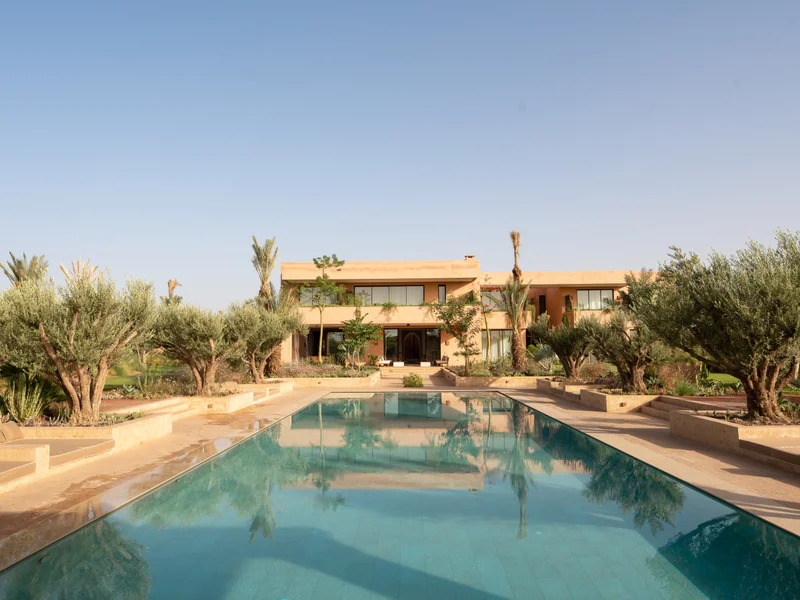
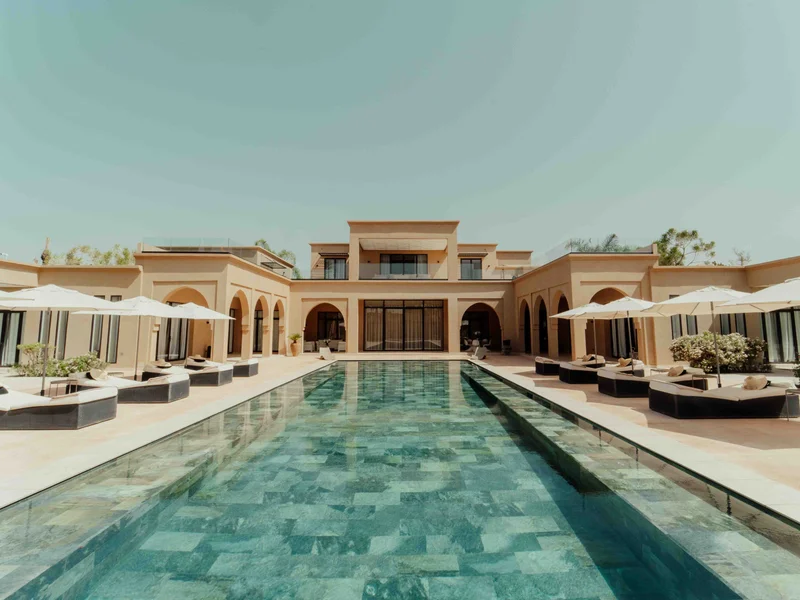
What the house buys you here is specific and it is not luxury for its own sake. It is a pool you will use every single afternoon between June and September. It is a hammam you can walk to in a robe. It is a kitchen and a cook, which changes what the evenings cost and how the group behaves in them. And it is the ability to come back from the medina at two in the afternoon, when the medina has stopped being fun, and have somewhere worth returning to. Below are the three we know best and send people to most often.
Key Takeaways
A private hammam is the single most memorable thing you can book, and it lands best in the middle of the trip rather than on day one.
The souks reward going with a guide first and returning alone later, and they reward mid morning over the middle of the day.
The Atlas starts thirty minutes away and gives up most of its value in half a day, so the full day tour is mostly driving.
Most lists stop at Essaouira, but Imsouane and Taghazout are the better coast and they need a split stay rather than a day trip.
July and August invert the shape of the day, and a pool stops being a feature and becomes the structural requirement of the trip.

Frequently Asked Questions

What is the number one thing to do in Marrakech?
A private hammam. It is uniquely Moroccan, it is available nowhere else in quite the same form, and it is the one booking almost nobody regrets. Book it into the middle of the trip rather than the first day, because it works best as the recovery from a heavy day in the medina rather than as an opening act.
Do I need a guide for the souks?
For the first visit, yes, and not for safety. A guide takes you to the people who actually make things rather than the people who resell them, and the first pricing conversation is easier with someone who knows the real range. Go back on your own a day or two later, which is usually when the actual buying happens.
Is Jemaa el-Fnaa safe at night?
Yes. It is crowded rather than dangerous, and it is busiest and best after dark. Pickpocketing in dense crowds is the realistic risk, so keep your phone in a front pocket. Agree a price before anyone photographs you with a snake or a monkey, because that is where the arguments happen.
How many days do I need in Marrakech?
Three is the working minimum: one for the medina and souks, one for the Atlas or the coast, and one that is deliberately unscheduled for the hammam, eating and the pool. Four or five is the comfortable version. A week works well if you split it, with the second half either out in the Palmeraie or on the Atlantic coast.
What is the best time of year to visit Marrakech?
March to May and late September into November. Warm in the day, cool enough at night to eat outside, and the Atlas is at its best in spring. December to February is colder after dark than people expect, so ask specifically about heating. July and August are workable only if the trip is built around a pool.
Is it worth leaving Marrakech for a day trip?
The Ourika Valley in the Atlas is thirty minutes out and repays a half day comfortably. The full day version is mostly driving. The coast is a different decision: Essaouira is the easy day trip, but Imsouane and Taghazout are better and are a two centre trip rather than an out and back.
Should we stay in a riad in the medina or a villa outside the city?
It depends on which trip you want. A riad puts you inside the medina with the souks at the door and no usable pool. A villa in the Palmeraie or toward the Atlas gives you space, a pool you will use every afternoon in summer, and a quiet evening, at the cost of fifteen to twenty minutes in a car each way. Larger groups are almost always happier outside the walls.
How much should we budget for things to do, separately from the house?
The activities themselves are not where the money goes. A hammam, a guided souk morning, a cooking class and a private Atlas day with a driver are all modest next to the cost of the accommodation. The two things worth paying properly for are a good guide and a chef at the house, because both change the quality of a whole day rather than an hour of one.
Follow the journey @erentalsexclusive + @aurelseyez
Villa tours, destination guides, and behind-the-scenes content from the team on the ground
Cameron Elder
Founder, ERentals Exclusive
morocco
marrakech
activities
food
souks

See it in motion

From the feed

Real stays, real light. Tap any film to watch it full screen.

Stay in the loop
© 2026 ERentals Exclusive