Best Mezcal Experiences in Tulum
Mezcal in Tulum explained: agave varieties, the roasting pit, how to drink it neat, sustainability, and why town beats the beach road.
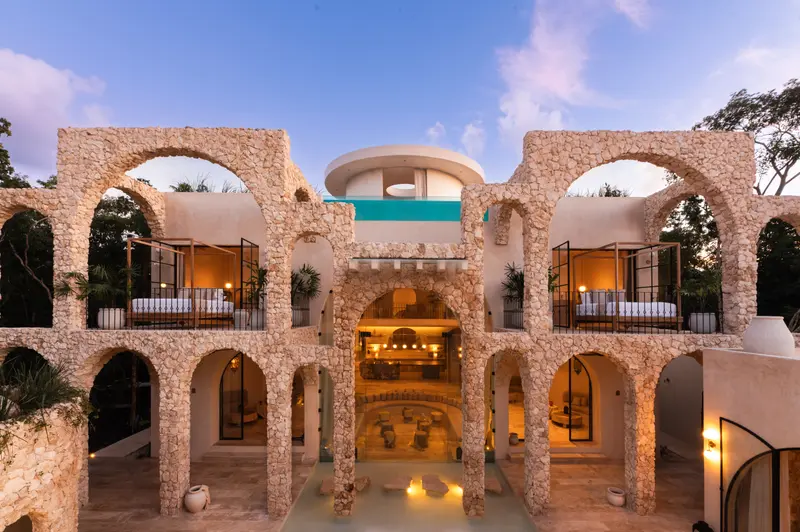
Tulum sells a great deal of mezcal and understands relatively little of it. That is not a slight on the town, it is a function of demand: a spirit with a story attached became the drink people wanted to order, and the supply responded faster than the knowledge did. The result is that you can have one of the best mezcal experiences of your life in Tulum, and you can also pay a lot for a smoky cocktail served in a copper mug by someone who cannot tell you what is in it. This guide is about telling those apart. For where to eat, we have a separate piece on the restaurants, and this one deliberately stays off that ground. The short version, if you read nothing else: go into town rather than staying on the beach road, sit at a bar rather than a table, ask what they are excited about, and drink it neat. That sequence will get you further than any list of venue names, because the venues change and the method does not. What Mezcal Actually Is Every tequila is a mezcal in the old sense of the word, but not every mezcal is a tequila. Both are distilled from agave. Tequila is made from a single species, blue weber agave, within a defined region centred on Jalisco, and it is industrially mature with large producers and consistent processes. Mezcal is the broader category, produced across several Mexican states with Oaxaca dominating, from a long list of maguey varieties, much of it at small scale by families who have been doing it for generations. That variety is the entire point. Espadin is the workhorse, cultivated, reliable, and the base of most of what you will be poured. Tobala is small, grows in shade at altitude, and takes many years to mature, which is why it costs what it costs and why it tastes floral and concentrated. Tepeztate can take well over a decade and produces something herbaceous and strange. Arroqueno, madrecuixe, barril, cuishe, each one different. Drinking mezcal is drinking a specific plant from a specific hillside made by a specific person, and that is a genuinely different proposition from drinking a brand. The person matters as much as the plant. The maker is called a maestro mezcalero or maestra mezcalera, and on a good bottle their name is on the label along with the village and often the batch. If a bar can tell you the maker, the village, the maguey and the distillation, you are in the right place. If the label says nothing beyond a brand name and a marketing adjective, you are drinking something blended for export and there is nothing wrong with that, but it is not the thing you came for. Casa Arka, Tulum Where the Smoke Comes From The smoke is not a flavouring and it is not added. Agave hearts, called pinas, are roasted before fermentation, and in traditional production that roasting happens in a conical pit dug into the ground, lined with hot volcanic stones, packed with agave, covered with fibre and earth, and left to cook for several days. The spirit picks up smoke from that pit. Tequila producers generally steam their aga
Tulum sells a great deal of mezcal and understands relatively little of it. That is not a slight on the town, it is a function of demand: a spirit with a story attached became the drink people wanted to order, and the supply responded faster than the knowledge did. The result is that you can have one of the best mezcal experiences of your life in Tulum, and you can also pay a lot for a smoky cocktail served in a copper mug by someone who cannot tell you what is in it. This guide is about telling those apart. For where to eat, we have a separate piece on the restaurants, and this one deliberately stays off that ground.
The short version, if you read nothing else: go into town rather than staying on the beach road, sit at a bar rather than a table, ask what they are excited about, and drink it neat. That sequence will get you further than any list of venue names, because the venues change and the method does not.
What Mezcal Actually Is
Every tequila is a mezcal in the old sense of the word, but not every mezcal is a tequila. Both are distilled from agave. Tequila is made from a single species, blue weber agave, within a defined region centred on Jalisco, and it is industrially mature with large producers and consistent processes. Mezcal is the broader category, produced across several Mexican states with Oaxaca dominating, from a long list of maguey varieties, much of it at small scale by families who have been doing it for generations.
That variety is the entire point. Espadin is the workhorse, cultivated, reliable, and the base of most of what you will be poured. Tobala is small, grows in shade at altitude, and takes many years to mature, which is why it costs what it costs and why it tastes floral and concentrated. Tepeztate can take well over a decade and produces something herbaceous and strange. Arroqueno, madrecuixe, barril, cuishe, each one different. Drinking mezcal is drinking a specific plant from a specific hillside made by a specific person, and that is a genuinely different proposition from drinking a brand.
The person matters as much as the plant. The maker is called a maestro mezcalero or maestra mezcalera, and on a good bottle their name is on the label along with the village and often the batch. If a bar can tell you the maker, the village, the maguey and the distillation, you are in the right place. If the label says nothing beyond a brand name and a marketing adjective, you are drinking something blended for export and there is nothing wrong with that, but it is not the thing you came for.
Where the Smoke Comes From
The smoke is not a flavouring and it is not added. Agave hearts, called pinas, are roasted before fermentation, and in traditional production that roasting happens in a conical pit dug into the ground, lined with hot volcanic stones, packed with agave, covered with fibre and earth, and left to cook for several days. The spirit picks up smoke from that pit. Tequila producers generally steam their agave in ovens or autoclaves instead, which is why tequila tastes cleaner and mezcal does not.
What follows from this is the most useful piece of tasting knowledge for a visitor. The intensity of the smoke tells you about the production method, the wood used, and the length of the roast. It does not tell you the mezcal is good. A great deal of what gets sold to tourists is heavily smoky because smoky is what tourists identify as authentic, and it is easy to push smoke forward in a way that covers a multitude of flaws. The best mezcals we have been poured in Mexico were restrained, with the smoke sitting behind fruit, mineral and green notes rather than in front of them. If your glass tastes like a bonfire and nothing else, that is a choice someone made for your benefit.
How to Tell a Serious Bar From a Selling One
There are reliable tells. A serious bar will offer you tastes before you commit to a pour, without being asked, because they would rather you liked the third one than paid for the first. They will ask what you normally drink and steer accordingly. They will name the village, the maguey and the maker without hesitation. They will have bottles you have not seen advertised anywhere. And they will pour into a small clay copita or a straight glass rather than a shot glass with a lime wedge on it.
The opposite signals are just as clear. A menu that lists mezcal only as an ingredient in cocktails. A back bar with three bottles, all of them heavily marketed brands. Staff who answer what is this one with the brand name and nothing else. Salt, lime and a shot ritual presented as tradition. And the strongest tell of all, a place that describes mezcal as a ceremony or an experience in its marketing while being unable to tell you where the bottle came from. Ceremony is what gets sold when knowledge is not available.
You are allowed to ask questions and you should. Which of these would you drink tonight. What is the difference between these two espadins. Where is this one from. Good bartenders in this field are enthusiasts and will light up at the question. The ones who resent it are telling you something useful about the bar.
How to Drink It
Neat, at room temperature, in small sips. Do not shoot it, do not chill it, and do not add ice, because cold suppresses exactly the aromatics you are paying for. A small clay copita is traditional and a straight sided glass works fine. Sip a little, hold it in your mouth for a moment, breathe out through your nose afterwards, and wait before the next one. Mezcal opens up over several minutes in the glass the way a good wine does, and the pour you dislike at the first sip is frequently the one you like most ten minutes later.
Keep water beside it and drink plenty. These are strong spirits, frequently bottled at higher strength than commercial tequila, and the traditional serve is slow for a reason. Orange slices with sal de gusano, a salt made with toasted agave worm and chilli, are