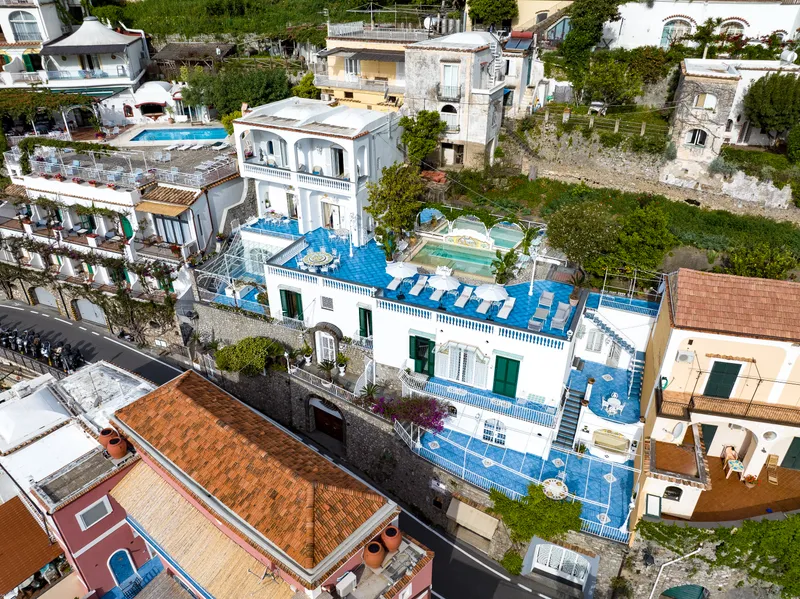
Best Villas for Large Groups of 16+
The real constraints on a sixteen plus villa booking: bathrooms, bedroom parity, escape space, staff, transport and neighbours.
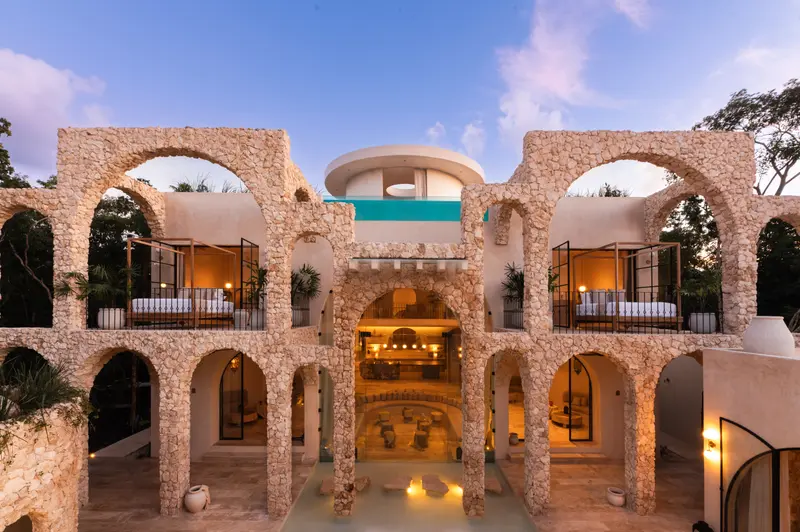
A group of eight and a group of twenty are not the same holiday scaled up. They are different problems. Below about ten people a villa behaves like a large home and most things sort themselves out. Above sixteen the house starts behaving like a small hotel, and every weakness in its design gets multiplied by the number of people experiencing it simultaneously. A single awkward staircase is a quirk with eight guests and a genuine nuisance with twenty four. One slightly cold bedroom is a footnote with eight and an ongoing grievance with twenty. We place a lot of large groups, and the debriefs are remarkably consistent. Nobody comes back and says the house was too small. They say there was always a queue for the shower, or that the group never managed to be in the same place at the same time, or that two of the couples ended up in rooms that were obviously worse and it was awkward for the whole week. Those are design and planning problems, not budget problems, and every one of them is knowable before you book. Bathrooms Are the Real Constraint This is the single most useful number in large group villa selection and almost nobody asks for it. Count bathrooms, not bedrooms. A house advertised as sleeping twenty with six bathrooms means more than three people per bathroom, and if you are all trying to get out to dinner at eight, that is a bottleneck that recurs every day of the stay. What you want above sixteen guests is close to one bathroom per two guests, and ideally every bedroom en suite. When you drop below that, the morning becomes a scheduling exercise and the mood of the house follows. Ask specifically what counts as a bathroom in the listing, because a ground floor cloakroom with a toilet and a basin is frequently included in the total. It is not a bathroom for the purposes of twenty people getting ready. Ask how many have showers, how many have baths, and how many bedrooms share. A shared bathroom between two bedrooms is completely workable for a family and awkward between two unrelated couples, so the answer changes depending on who is in your group. Water pressure and hot water capacity are the hidden version of this problem. A house with plenty of bathrooms can still have a tank that will not serve twenty showers in a two hour window, particularly in older properties in Morocco and southern Italy. Ask whether the hot water system has been sized for full occupancy. Houses that regularly take large groups will know the answer immediately. Houses that mostly take families of six will not, and that is a useful signal in itself. Casa Don Rey, Tulum Bedroom Parity and the Bad Room Almost every large villa has a hierarchy of bedrooms. There is a master with the view and the terrace, there are three or four very good rooms, and then there are the rooms that exist because the house needed to reach a headline number. The annexe, the room off the kitchen, the one with a skylight instead of a window, the two singles pushed together. Somebody in your
A group of eight and a group of twenty are not the same holiday scaled up. They are different problems. Below about ten people a villa behaves like a large home and most things sort themselves out. Above sixteen the house starts behaving like a small hotel, and every weakness in its design gets multiplied by the number of people experiencing it simultaneously. A single awkward staircase is a quirk with eight guests and a genuine nuisance with twenty four. One slightly cold bedroom is a footnote with eight and an ongoing grievance with twenty.
We place a lot of large groups, and the debriefs are remarkably consistent. Nobody comes back and says the house was too small. They say there was always a queue for the shower, or that the group never managed to be in the same place at the same time, or that two of the couples ended up in rooms that were obviously worse and it was awkward for the whole week. Those are design and planning problems, not budget problems, and every one of them is knowable before you book.
Bathrooms Are the Real Constraint
This is the single most useful number in large group villa selection and almost nobody asks for it. Count bathrooms, not bedrooms. A house advertised as sleeping twenty with six bathrooms means more than three people per bathroom, and if you are all trying to get out to dinner at eight, that is a bottleneck that recurs every day of the stay. What you want above sixteen guests is close to one bathroom per two guests, and ideally every bedroom en suite. When you drop below that, the morning becomes a scheduling exercise and the mood of the house follows.
Ask specifically what counts as a bathroom in the listing, because a ground floor cloakroom with a toilet and a basin is frequently included in the total. It is not a bathroom for the purposes of twenty people getting ready. Ask how many have showers, how many have baths, and how many bedrooms share. A shared bathroom between two bedrooms is completely workable for a family and awkward between two unrelated couples, so the answer changes depending on who is in your group.
Water pressure and hot water capacity are the hidden version of this problem. A house with plenty of bathrooms can still have a tank that will not serve twenty showers in a two hour window, particularly in older properties in Morocco and southern Italy. Ask whether the hot water system has been sized for full occupancy. Houses that regularly take large groups will know the answer immediately. Houses that mostly take families of six will not, and that is a useful signal in itself.
Bedroom Parity and the Bad Room
Almost every large villa has a hierarchy of bedrooms. There is a master with the view and the terrace, there are three or four very good rooms, and then there are the rooms that exist because the house needed to reach a headline number. The annexe, the room off the kitchen, the one with a skylight instead of a window, the two singles pushed together. Somebody in your group is going to sleep in those, and how that gets decided determines a surprising amount of the emotional weather of the week.
Deal with it openly before you go. Ask the property for a room by room breakdown with photographs of every bedroom, not the four best, and share it with the group. Then either allocate it yourselves or rotate midweek. What does not work is arriving and sorting it out in the driveway, because the people who get the worse rooms will feel it and will not say anything, which is worse. We send full room inventories on every large booking specifically so this conversation happens in a group chat weeks earlier, when it is easy.
Bed configuration is the related trap. A house that sleeps twenty four may only do so by counting sofa beds, bunk rooms, or twin rooms that cannot be made into doubles. Eight couples need eight actual double beds. Ask for the bed list. It is a thirty second question that prevents the most avoidable problem in group travel, which is a couple discovering on arrival that they are in two singles.
Somewhere to Escape Each Other
This is the variable that most distinguishes a house that works at scale from one that does not, and it appears in no search filter anywhere. Twenty people need more than one sitting area. Not a bigger one, more than one. Somebody wants to read, somebody wants to watch football, four people want to play cards, three want to nap after lunch and two want to have a private conversation about something. In a house with one enormous open plan living space, all of those activities compete, the loudest wins, and by day four people start going to their rooms, which is when a group trip quietly stops being fun.
What you are looking for is at least two indoor sitting rooms and at least three distinct outdoor areas, and the more separated the better. A snug, a terrace at the far end of the garden, a shaded courtyard, a roof. Riads in Marrakech are naturally good at this because they are built around courtyards with multiple levels. Single storey modern villas are often bad at it despite being larger, because everything opens onto one space. When we walk a property for large group suitability, counting the separate places to sit is the first thing we do.
The same applies to eating. A single long table for twenty is a wonderful thing once or twice in a week. Every night it is exhausting, and it forces the whole group onto the same schedule. Houses that also offer somewhere to eat breakfast in twos and threes, and somewhere to have a light lunch without setting the formal table, run much more easily across a full week.
Staff Do Not Scale by Themselves
A house with two housekeepers and one cook serving eight guests is generously staffed. The same team serving twenty four is stretched, and you will feel it in slow breakfast service, in rooms being done late, and in a kitchen that cannot do anything ambitious because it is doing volume. Ask how many staff are on site at