When You Need All the Bedrooms: Marrakech's Estates for 14, 20, and 24 Guests
Three Marrakech estates for 14 to 24 guests: Dar Manou (7BR riad-style), Dar Tafza (10BR Studio KO house with farmhouse), and Palais Eliah.
There is a class of trip that hotels cannot solve. Not because of bedrooms, hotels have plenty of those, but because of geometry. Twenty people sleeping in twenty different rooms across three floors of a Marrakech hotel are not on the same trip anymore. They are eighteen people in twenty rooms wondering which of the eight in-house restaurants the rest of the group went to. The whole point of the trip, gathering a family or a wedding party or a leadership team into one space, gets dissolved by the architecture of the hotel. Private estates solve this with one move: one front door, one pool, one dinner table. The group lands in the same building, has breakfast in the same room, and leaves together at the end of the week. Marrakech has the rare advantage of having grown its luxury inventory through estate-scale architecture rather than vertical hotels, so the supply is real. We work with three of them. Each is a different answer to the same question. Dar Manou: The Riad at Estate Scale A riad, properly defined, is a Moroccan house built around an interior courtyard, usually two or three stories, usually inside the Medina walls. The architecture exists because the city grew dense and inward-facing. Privacy was the design driver. Dar Manou takes that grammar (interior courtyards, Moorish arches, wrought-iron balconies overlooking a central well of light) and scales it up to 10,000 m2 of walled estate outside Marrakech. The first thing that hits you when you walk in is the courtyard. Double-height. Carved plasterwork. Tadelakt walls. A long dark-wood dining table for 14 sits underneath woven pendant lights, framed by arched passages. The seven en-suite bedrooms wrap the courtyard on the upper floors, each entered through its own doorway off a balcony, so privacy stays intact even with the group in residence. There is a swimming pool in the gardens and, unusually, a padel court inside the walls. Padel is the Spanish racquet sport that has overtaken Marrakech in the last three years; having a court on-site removes the need to book a club. Dar Manou's central courtyard. Where every dinner ends up. Dar Manou's pool wraps around lush gardens. Dar Tafza: The Studio KO House Dar Tafza is the property that solves a specific problem: groups of up to 20 that need a line of separation between sub-groups. It sits on the road to Ouarzazate, 15 km southeast of the Medina, on six hectares of olive grove, juniper and desert garden. Seven bedrooms are in the main villa: four along a corridor, two pavilion rooms with their own bathrooms, and a master suite on the upper floor panelled in patinated metal. Three more are in a separate farmhouse with its own front door. Ten bedrooms, sleeping 20. Not every room is en-suite: the four corridor bedrooms share one large bathroom with two showers and two toilets, which suits a family more than a team of colleagues. It was the first Moroccan project by Studio KO, the practice behind the Musée Yves Saint Laurent, and the walls are
There is a class of trip that hotels cannot solve. Not because of bedrooms, hotels have plenty of those, but because of geometry. Twenty people sleeping in twenty different rooms across three floors of a Marrakech hotel are not on the same trip anymore. They are eighteen people in twenty rooms wondering which of the eight in-house restaurants the rest of the group went to. The whole point of the trip, gathering a family or a wedding party or a leadership team into one space, gets dissolved by the architecture of the hotel.
Private estates solve this with one move: one front door, one pool, one dinner table. The group lands in the same building, has breakfast in the same room, and leaves together at the end of the week. Marrakech has the rare advantage of having grown its luxury inventory through estate-scale architecture rather than vertical hotels, so the supply is real. We work with three of them. Each is a different answer to the same question.
Dar Manou: The Riad at Estate Scale
A riad, properly defined, is a Moroccan house built around an interior courtyard, usually two or three stories, usually inside the Medina walls. The architecture exists because the city grew dense and inward-facing. Privacy was the design driver. Dar Manou takes that grammar (interior courtyards, Moorish arches, wrought-iron balconies overlooking a central well of light) and scales it up to 10,000 m2 of walled estate outside Marrakech.
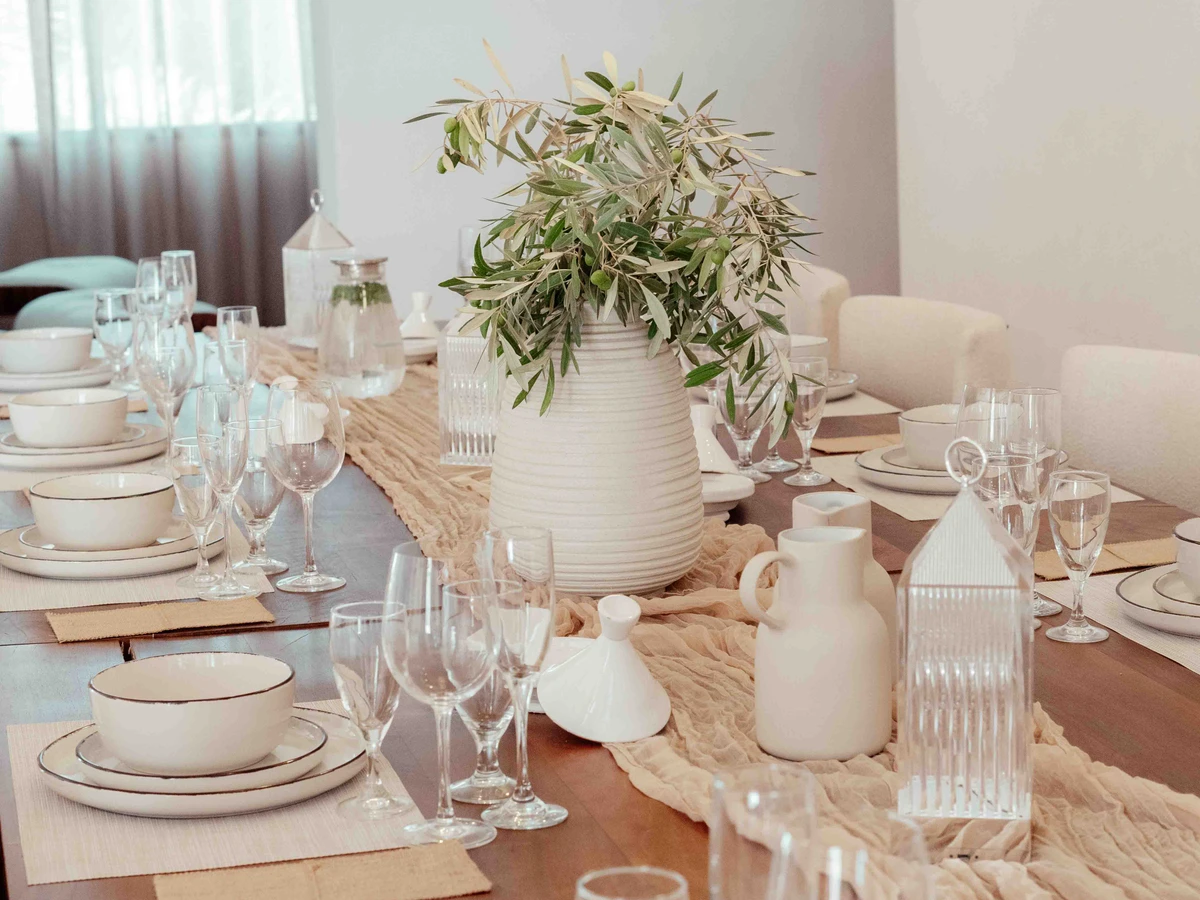
The first thing that hits you when you walk in is the courtyard. Double-height. Carved plasterwork. Tadelakt walls. A long dark-wood dining table for 14 sits underneath woven pendant lights, framed by arched passages. The seven en-suite bedrooms wrap the courtyard on the upper floors, each entered through its own doorway off a balcony, so privacy stays intact even with the group in residence. There is a swimming pool in the gardens and, unusually, a padel court inside the walls. Padel is the Spanish racquet sport that has overtaken Marrakech in the last three years; having a court on-site removes the need to book a club.
Dar Tafza: The Studio KO House
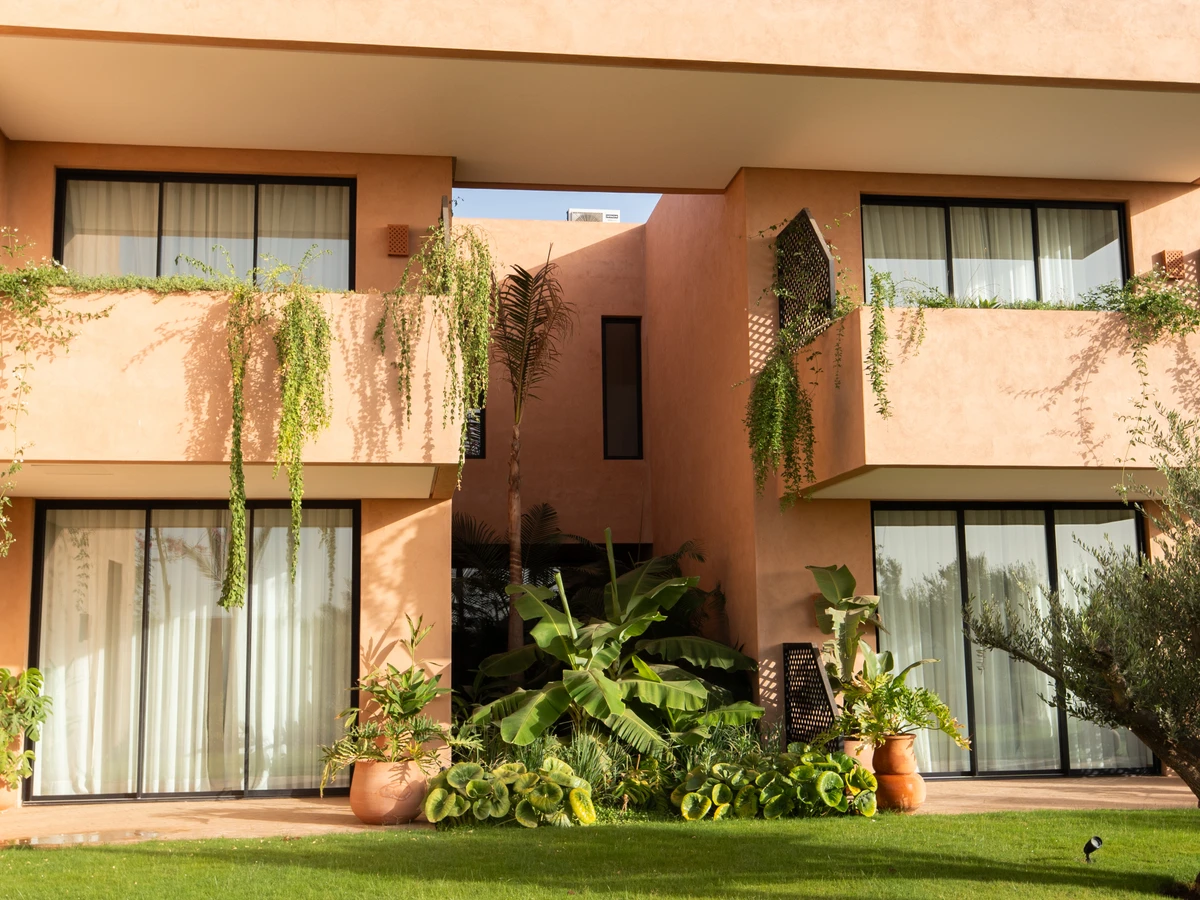
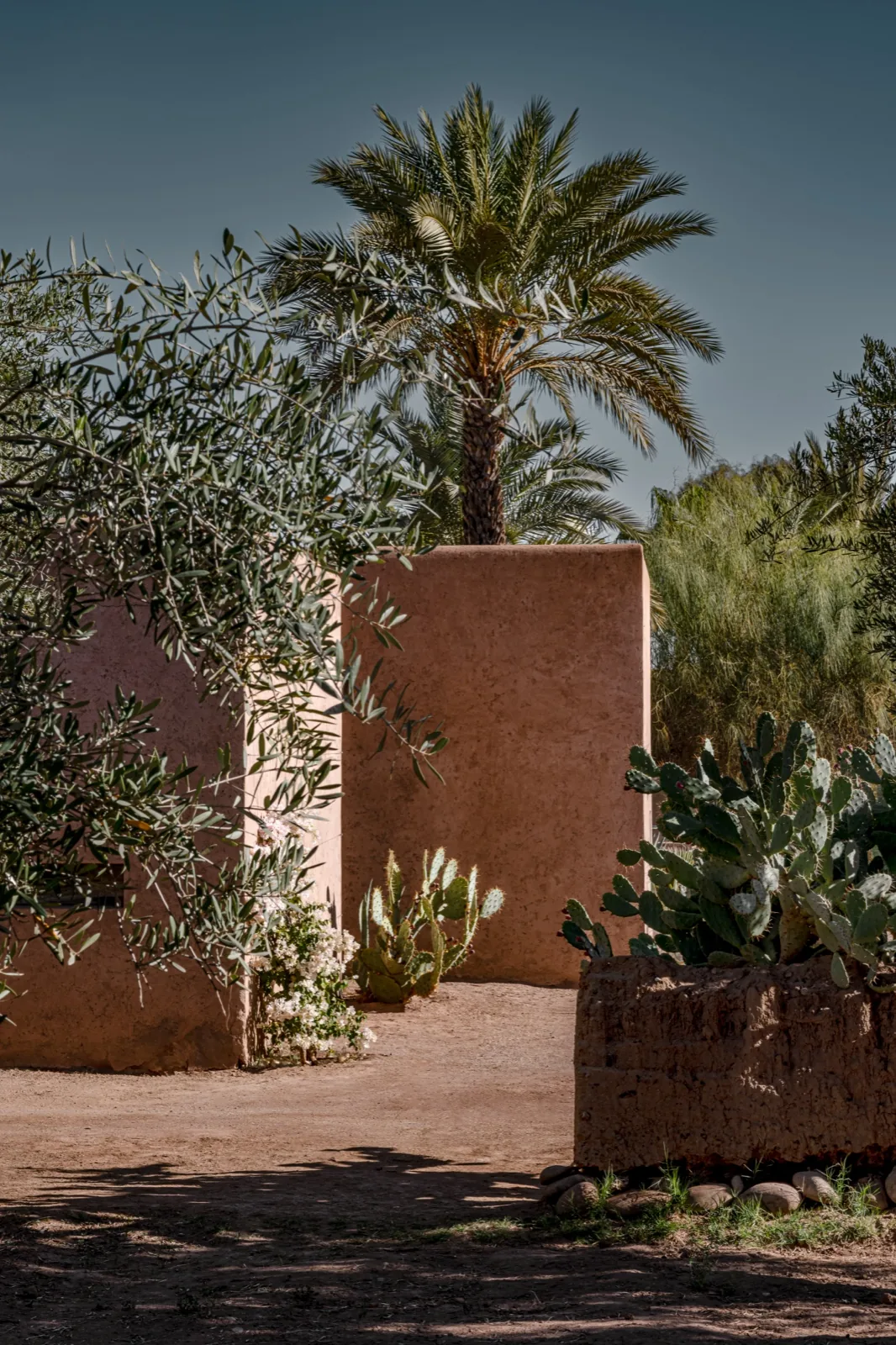
Dar Tafza is the property that solves a specific problem: groups of up to 20 that need a line of separation between sub-groups. It sits on the road to Ouarzazate, 15 km southeast of the Medina, on six hectares of olive grove, juniper and desert garden. Seven bedrooms are in the main villa: four along a corridor, two pavilion rooms with their own bathrooms, and a master suite on the upper floor panelled in patinated metal. Three more are in a separate farmhouse with its own front door. Ten bedrooms, sleeping 20. Not every room is en-suite: the four corridor bedrooms share one large bathroom with two showers and two toilets, which suits a family more than a team of colleagues.
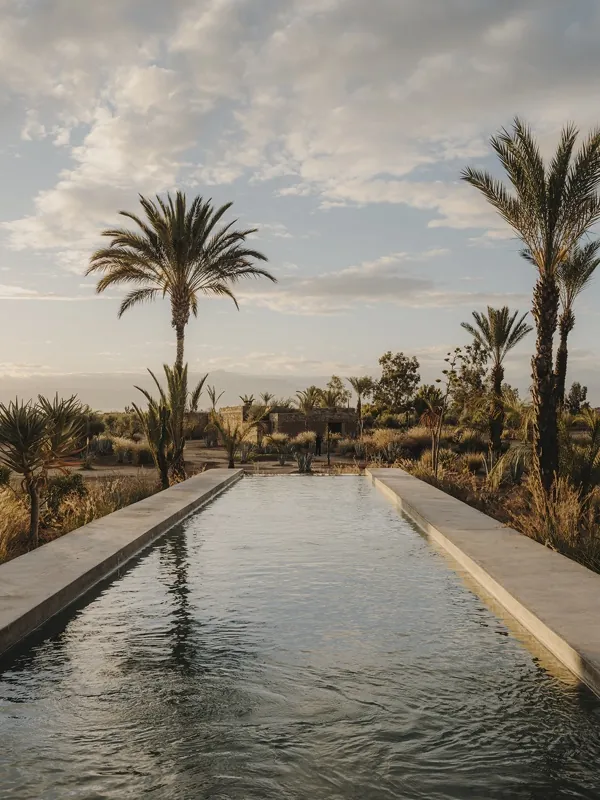
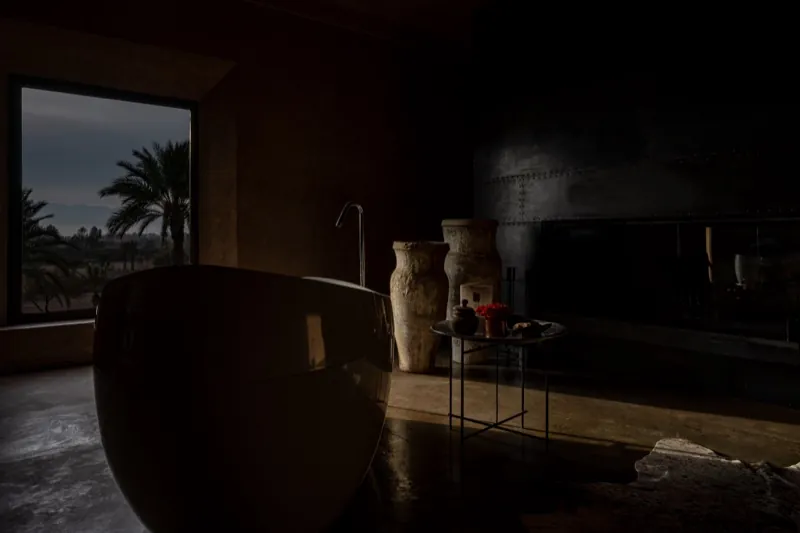
It was the first Moroccan project by Studio KO, the practice behind the Musée Yves Saint Laurent, and the walls are pisé, earth rammed on site into juniper formwork, so the house is the color of the ground it stands on. The living rooms have ceilings that reach roughly six meters, with a wood-burning fireplace for cool evenings. A 25-meter infinity pool runs along the main terrace, facing the High Atlas. A resident chef, Mrs. Houriya, runs the kitchen, and breakfast and daily housekeeping are included. The farmhouse is genuinely separate, which is the load-bearing detail.
Palais Eliah: The Palace
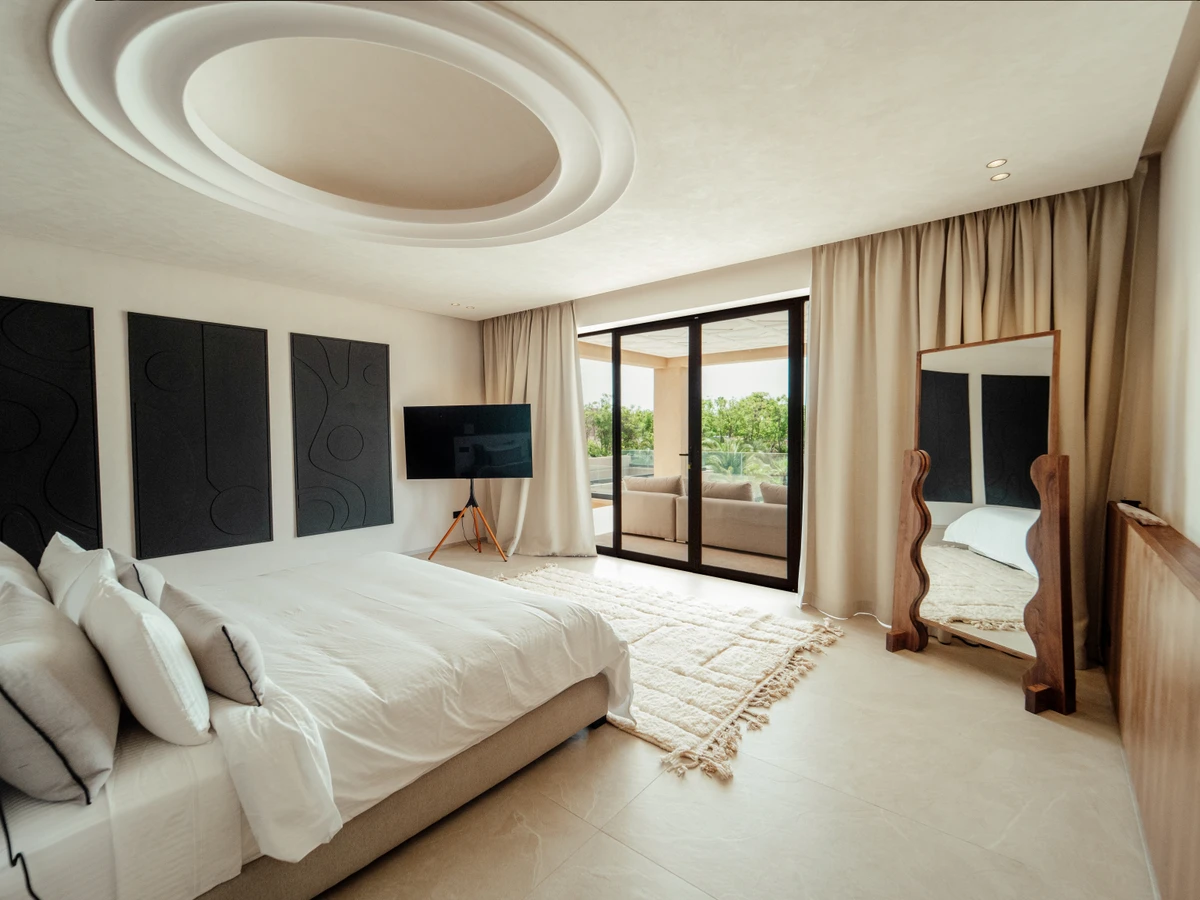
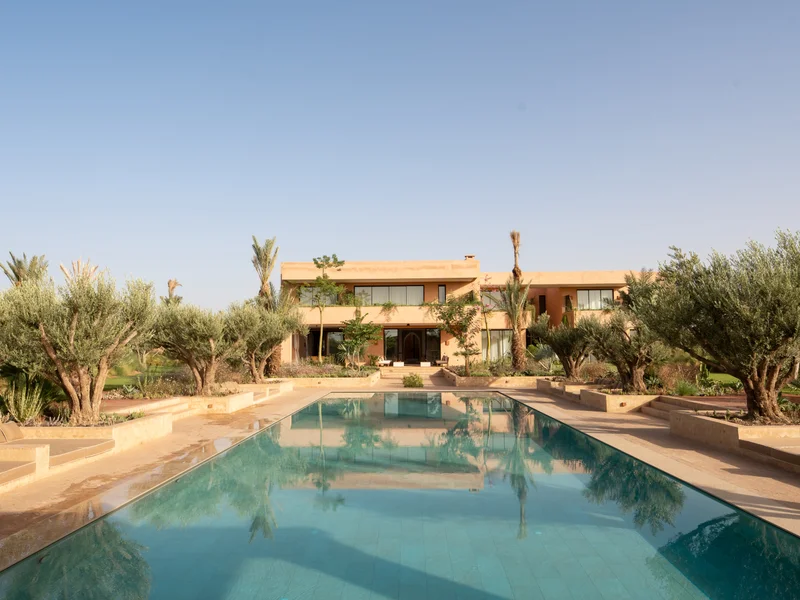
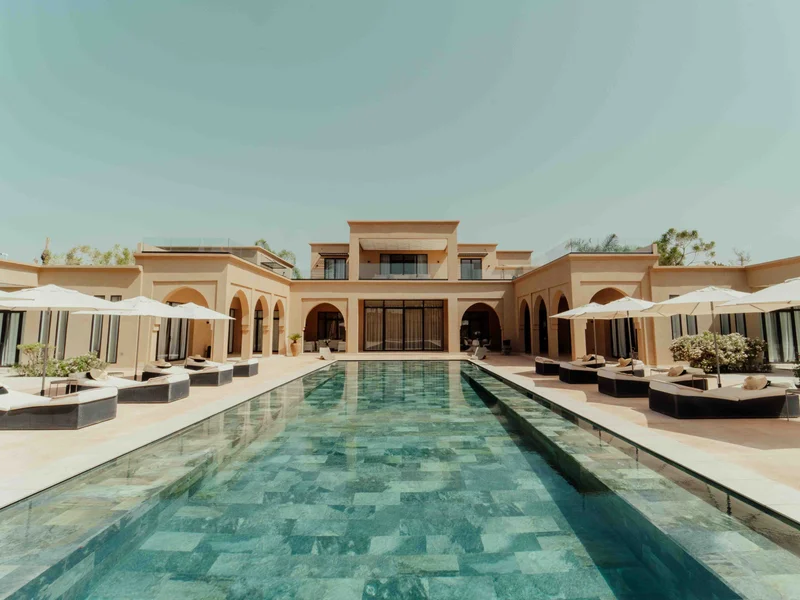
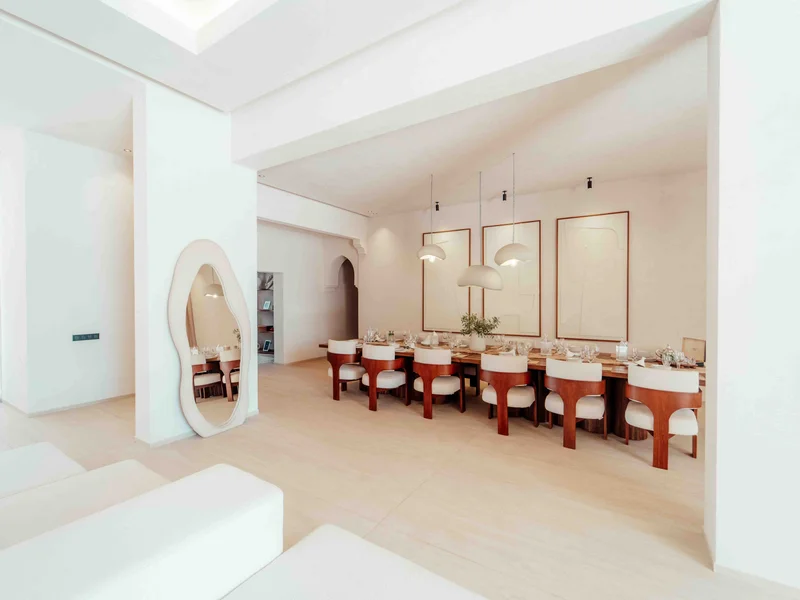
Palais Eliah is the largest property in our Marrakech collection by bedrooms (12) and by amenity density. 10,000 m2 of grounds in a nature setting a few minutes from the centre of Marrakech. The architecture is palatial in the literal sense: grand arches frame the entrance, a green zellige-tiled pool runs the length of the central courtyard, fountains anchor every transition between zones. Twelve en-suite bedrooms across multiple wings with all-white minimalism inside (Togo sofas in caramel leather, walnut headboards, tadelakt baths) breaking against the palace-scale shell.
The amenity stack is what separates Eliah from a regular large villa. A full hammam complex inside the property: hammam steam room, sauna, massage room, and a plunge pool, all in one wing. Padel court. Tennis court. Private cinema. A formal dining hall that seats 24, which is the maximum sleeping capacity. Most palatial estates compromise somewhere (they have the bedrooms but not the dining for everyone, or the dining but not the wellness). Eliah does not. It is the property to book when 20 to 24 people are arriving with three different agendas (wellness, sport, celebration) and you need them all served in-house.
How to Choose, Honest Version
Group size 10 to 14, looking for authentic Moroccan architecture: Dar Manou. The courtyard is the room your week will actually live in.. Group size 14 to 20, needing visual and physical separation between sub-groups: Dar Tafza. The separate farmhouse is the reason to book it.. Group size 18 to 24, with a wellness or sport agenda alongside the celebration: Palais Eliah. The hammam plus padel plus tennis plus pool is the trinity.. Wedding ceremony for 24 indoors: Palais Eliah's formal dining hall is built for it.. Wellness-led retreat for a small leadership team (12 to 16): Dar Manou or Dar Tafza, depending on whether you want the riad voice or the Studio KO voice.. Photo or content shoot needing an architectural backdrop: Dar Tafza. The house is regularly used for editorial shoots.
The Common Logistics
Palais Eliah and Dar Manou run on the same local team and operating system: full house staff included (housekeepers and cook), 24/7 security, private chef bookable for traditional Moroccan or international cuisine, in-villa hammam and wellness treatments, Atlas Mountain and Agafay Desert excursions arranged through the on-site concierge. Dar Tafza has its own resident staff (chef, butler and housekeeping), with breakfast included and massages and Atlas excursions arranged through the concierge. Marrakech Menara